Showing posts with label thought piece. Show all posts

Wednesday, May 6, 2020

Collective Corona Memory | Pandemic Musings

Igor Levit on Twitter: "Heute Abend wieder: Livestream Hauskonzert ...
Igor Levit's recording setup
I've had a lot of time to think lately. Here are some of my thoughts. Disclaimer: they're not so optimistic.

Every night since the world started quarantining, German-Russian pianist Igor Levit has been reliably livestreaming short Twitter concerts from the living room of his tiny Munich apartment. Nothing extravagant, just a piano, an iPhone whose microphone occasionally cuts out, and a musician determined to improve someone’s—anyone’s—day. On one evening, Brahms’s left-hand arrangement of the Bach Chaconne. On another, some short selections of Schubert. To celebrate his 32nd straight day of streaming, Levit played Beethoven’s bizarre 32nd piano sonata for nearly 20,000 viewers.

Some musicians, like Levit, have been alarmingly productive in quarantine; others (myself included) not so much. As COVID-19 wiped my calendar cleaner than I’d seen it since middle school (from 20 hours of orchestra, choir, and opera rehearsal per week to a big, fat zero), I started to panic . But my solace fell in watching others make the music that I couldn’t; Levit and his colleagues came to the rescue, helping me to have the best of all possible quarantines in this best of all possible worlds (as my Grandpa Paul would have said, “How do you like them apples, Leibniz?”).

Concert halls all over the world are shuttered for the foreseeable future. Musical organizations lay on the verge of financial ruin, trying to retain their solvency without crucial revenue from the final three months of their seasons. Musicians are doing their best to make ends meet even though the market for their services has suddenly dried up.

And yet, one could argue that there is no better time to be a consumer of classical music. As physical concert halls close their doors, virtual concert halls have opened their Zoom rooms, scratching audiences’ itch for live music. Scroll through Facebook on any given day and you’ll find musical gems scattered among the fear and apprehension. A violinist friend playing a minute of a Kesha cover to a backing track. A full rebroadcast from a summer festival whose 2020 iteration has already been canceled. A piece of Renaissance polyphony rewritten as a handwashing song.

A favorite of mine from Singapore's Red Dot Baroque

Like everyone, I’m trying my best to live “in the moment” right now. Yet I can’t help but wonder how this crazy time will live on in the collective memories of musicians and musical consumers alike. People are more willing than ever to embrace the Internet as a means of sharing their musical talents with the world. But, despite this zeal, distanced live music now feels less like a serendipitous outpouring of artistic inspiration than a manifestation of crisis.

Take Igor Levit. I’ve been watching his livestreams as often as I can make the time. The idea of someone playing music for me in real time brings me some meaningful amount of solace as I’m quarantined alone in my apartment. But after COVID-19 is gone, I’ll probably never reach for those archived recordings. Why would I choose Levit recorded on an iPhone when I could listen to any of his masterfully engineered, “just one more take” studio albums?

Levit is doing the best he can in the face of crisis. But right now, we’re measuring “quality” on a different scale than usual. The mere existence of live performances supersedes our conventional notions of musical quality — who cares if these performances aren’t studio- or stage-quality as long as I can watch them from my living room? But five, ten, twenty years from now, once COVID is but a section in our history textbooks and we have renewed access to the live music we currently lack, will anyone remember the art that we are now finding so meaningful, or will we see it as compromised and unpolished? Will anyone want to remember that art, let alone anything of this traumatic era?

We’ve been continually looking to the Spanish flu of 1918 as a reference point. But another tragedy of the time offers damning clues as to what might happen to corona art. In 1914, at the start of World War I, the British army sent Harold Triggs to fight in the trenches of Ypres, Belgium. He brought with him a modified cello, little more than a hollow box outfitted with four strings and an endpin. The instrument brought joy to those rendered listless by an otherwise bleak battle theater. But after the war, it sat untouched on a luthier’s shelf for a hundred years before British cellist Stephen Isserlis used it to record part of an album of WWI-era music. Even then, the trench cello was merely a tool to recreate the historical soundscape of a generation that had since passed — no one who was alive during The Great War wanted to revive music that was so inexorably associated with trauma, loss, and suffering.


The trench cello may have been a viable wartime alternative to a Stradivari, but once the guns fell silent this ingenious instrument almost instantaneously became nothing but an artifact. I’m worried the same will happen for hundreds of innovative COVID-era projects, simply because they were realized in a time when resources were thin. Large-scale “corona” commissioning projects. Daily pajama-clad practice sessions from isolation. Multi-tracked videos captioned “Day __ in Quarantine.” All the tidbits that brought the world some semblance of light in a dark time, forgotten and gathering cyber-dust on a Facebook server in Altoona, Iowa.

The massive amounts of musical content that I’ve seen in the last six weeks have made me laugh, cry, ooh, and aah. After this period is over, of course I’m going to remember the suffering, the loss. But I want to remember the silver linings, too. And COVID-music is perhaps the biggest silver lining I’ve seen so far.

Everything from these few months will be labeled “corona,” whether it’s culture, politics, or cooking (who could forget when the world turned to sourdough for comfort?). It’s up to future us whether we probe beyond that label into the content itself.

Monday, December 9, 2019

Some Thoughts on the 2020 Grammys

Grammy Award 2002.jpg

The nominees for the 62nd Grammy Awards came out a few weeks ago. I was excited. Like, really excited. But of course, as you guys have probably gathered by now, I'm easily excitable.

I sent the link to all of my top contacts. Responses included:

"Oh sick, I'll take a look tomorrow when I'm not stoned out of my mind!"

"Go away, I have a [math words that I don't understand] problem set due in two hours."

"It's 3am, go to sleep dammit!"

Can you guess which one was my mother?

Naturally, I had thoughts -- it's almost a reflex at this point. So, I figured that as long as I have this repository for my unsolicited opinions, I may as well throw these on the pile. So here are a few of my thoughts on the 2020 classical Grammy nominees.

Image result for andrew norman sustain

A Big Year for New Music

The Grammys have a category for the best new classical composition of the year -- they've awarded it yearly since 1985 -- so there's always been some representation for new music. But overwhelmingly, contemporary classical music is starting to take over the other categories:
  • The LA Phil (woot!) is up for an award for their performance of Andrew Norman's new composition Sustain (also up for best new composition) alongside recordings of Bruckner, Copland, and Stravinsky.
  • One of the Best Opera Recording nominees is the world premiere recording of George Benjamin's Lessons in Love & Violence with the original Royal Opera House cast, and they have a good chance of winning, too.
  • Four of the five nominees for Best Choral Performance are albums containing world premiere recordings -- and, in my eyes, the fifth album (Duruflé's complete choral works with the Houston Chamber Choir) simply is not going to win.
  • Best Chamber Music/Small Ensemble Performance is also peppered with world premieres -- a little more on that down below.
  • Best Classical Instrumental Solo -- you guessed it -- has three premiere recordings.
The times, they are a-changing. Good thing the Recording Academy recognizes this, too -- fair to say the more conservative members are slowly phasing out and being replaced with credible young voices.

Image result for shaw orange

Caroline Shaw. Yes, Again.

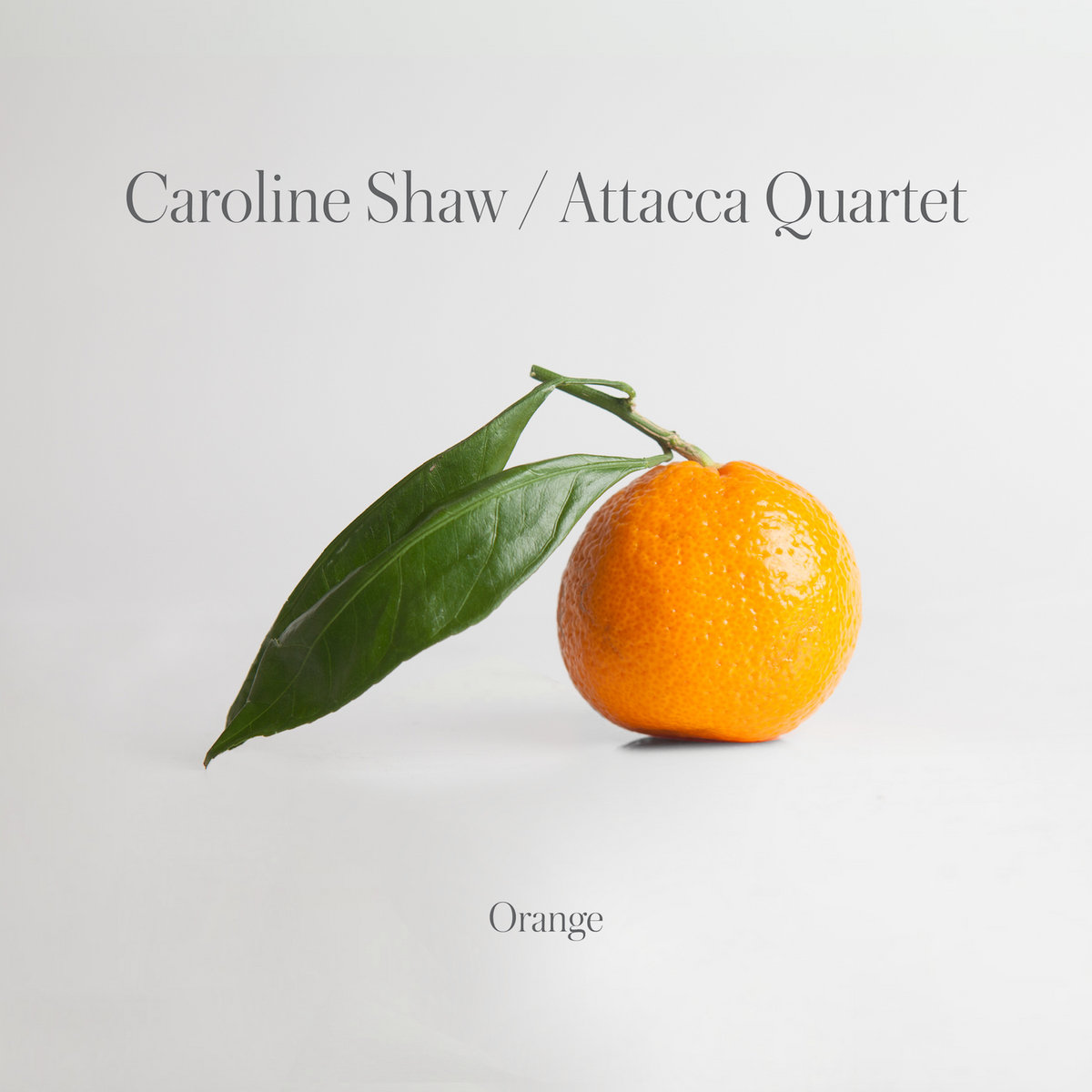
The Grammys have proven erratic in the past, but there is one decision upon which I will happily bet money. I think that the Attacca Quartet's May 2019 Caroline Shaw album, entitled Orange, is going to win Best Chamber Music/Small Ensemble performance. Never have I seen a classical album that has gone so mainstream as soon as it hit the shelves. I have yet to see a bad review of the album -- it's definitely on my top 10 list for albums of the year, and probably up there on my albums of the decade too.

This is not to detract from the other four nominees, three of which are also world premiere recordings. But I think the buzz that surrounded Orange's release is a good indicator that it's headed straight for Grammy territory -- the Academy loves buzz.

Image result for joyce didonato songplay
For all the things I don't love about this album, I have to admit
that top-hat-and-ruffles is DEFINITELY Joyce's look

Songplay

I know I'm usually loath to give a negative review. I mean, I'm young. I can't afford to make lifelong enemies. But sometimes, something comes my way that just annoys me so much that I have to say something.

Hey, I'm an anti-establishment 20 year old, so if I'm going to rail on someone it better be someone good. So I'm going to tell you what I really thought of Joyce DiDonato's most recent album, Songplay.

On the off-chance Joyce is reading this (although I'm not going to @ her on Twitter for obvious reasons) I just want to say that I absolutely adore her. Her 2018 live-from-Wigmore recital with the Brentano Quartet was one of the many soundtracks of my past summer of blogging. I will stand by her work forever.

Except for this album.

The thing is, there are so many people right now who are experimenting at the intersection of jazz and early music, and they are succeeding very well. Baroque ensemble L'Arpeggiata has released jazz fusion takes on Monteverdi, Purcell, and Handel, all to great acclaim. Harpsichordist Jean Rondeau will often play the Bach Goldberg Variations at 8pm followed by an improvised jazz piano set at 10:30.

Putting a swing beat behind the 24 Italian Art Songs and Arias doesn't cut it. At least not today.

I'm a quite surprised and a little bit taken aback that this was nominated. It feels like it was perhaps put on the list out of obligation. But think of all the other phenomenal vocal albums from the past year that didn't make the cut. Christian Gerhaher's latest Schumann albums. Iestyn Davies's album of new works for voice and viol consort. For fuck's sake, Lise Davidsen's debut album, which propelled her to the international stage and got her not one, but two features in the New York Times leading up to her Met Premiere.

Yeah, Songplay is kind of a waste of Grammy spot, if you ask me.

My Predictions

If I'm going to talk the talk, I figure I should make some predictions for winners in each category.

First, I'm going to say that I rarely agree with the Grammy committee's decisions. They are often reluctant to choose albums from smaller labels -- it all feels a little bit biased from the get-go. That being said, I'll be choosing based on my perception of both the performances at hand and the Grammy committee's selection process. So here goes nothing:

Best Orchestral Performance: Manfred Honeck and Pittsburgh have a great Grammy track record, so it wouldn't surprise me if their Bruckner 9 won. That being said, the Cincinnati Symphony Orchestra's nominated album got fabulous press, so that could happen too. Of course, I'm rooting for Mirga Gražinytė-Tyla's Weinberg symphonies album, both because it's fabulous album and because the award has never gone to a female-conducted ensemble and it's about f*cking time. Oh, and LA Phil <3.

Best Opera Performance: God, I swear if Lohengrin wins I'm going to kill someone. Especially considering that Christian Thielemann is an expert in Wagner's music partially because he practices his values...ugh. I think the aforementioned George Benjamin recording has a good chance -- Barbara Hannigan is tremendous and beat Joyce against all odds for Best Solo Vocal a couple years ago, so the Grammy committee obviously likes her. But the Academy are suckers for a good Wozzeck...

Best Choral Performance: I would be astonished if the award didn't go to The Crossing for the third year in a row. The Philadelphia-based new music-focused choir is pushing the boundaries of what is and is not singable, and they deserve every ounce of every award they get. Oh, and they're nominated in the category not once, but twice.

Best Chamber Music/Small Ensemble: see above.

Best Classical Instrumental Solo: Yuja Wang's The Berlin Recital, I think. She's simply beastly. Nothing more to say except that Nicola Benedetti has a chance for her premiere of Wynton Marsalis's new violin concerto (as much as I'm mad at Wynton Marsalis for his views on jazz fusion and free jazz, but that's another story for another day). Would love to see a win for Tessa Lark (I saw her this summer after my big project was over, she was amazing), but I don't think the Academy is going to spring for such a small record label.

Best Classical Solo Vocal Album: I think Matthias Goerne's Schumann album has it in the bag -- it's a ridiculously strong album among many others that are not as remarkable (@Songplay). Would love to see a win for L'Arpeggiata, but I honestly didn't think that their album from last year was as remarkable as some of the others they've done in the past.

Best Classical Compendium: I seriously have no idea. I'm rooting for Harold Meltzer because he's a family friend of sorts (we were reading chamber music together at Bennington and then we discovered that my mother was his first date...small world), but I also don't love Paul Appleby, who was the featured singer on the Meltzer compendium. The Saariaho album has a good chance, I think.

Best Contemporary Classical Composition: I know I said I'd bet money on Caroline Shaw for best chamber album, but I'm not as sure for the composition category, mainly due to Julia Wolfe's Fire In My Mouth, which made a huge splash when it premiered at the NY Phil last winter. I was lucky enough to see it, and it was indeed tremendous. That's where I'm placing my bets.

God, I have a mouth on me. But hey, I'm a 20-something aspiring critic, it's basically my job to have strong and immovable opinions, no?

Friday, August 30, 2019

[Finale Pt. 1] The Serious Post: Reflections | #1Summer50Concerts

It feels like just yesterday...

Fifty concerts. FIFTY CONCERTS.

Quite frankly, I don't know where those 50 reviews came from. It's almost like writing an all-nighter paper: the words are all there, and I definitely wrote each and every one of them. But the whole process is kind of a haze.

But alas, 'tis done. 50 concerts. One summer. It happened. I learned a lot.

I learned that hopping on the subway and going to 50 concerts is not that hard. I also learned that writing 50 reviews is significantly harder and more time-consuming.

I learned that my writing leans far too heavily on em dashes, semicolons, and parenthetical asides, but I've been told that's just a phase.

But most of all, I learned that I love going to concerts. Everyone who questioned this project (and there were a lot of people who did so) was right: 50 concerts is really too many. I spent an inordinate amount of time this summer seeing, writing about, and talking about concerts. But thinking back on it, what would I have been doing instead? Sitting on my ass and watching Netflix? Rest assured, I did plenty of that too -- the last season of Orange is the New Black wasn't going to watch itself.

The concert experience, I now realize, can be so many things. Go to a concert alone and it's a night off. Go with one friend and it's date night. Go with a group and it's a party. Concert in a neighborhood you don't know? Field trip. Concert three blocks from your house? Home-court advantage. One hour long? Time for dinner after. Four hours long? Better bring snacks.

It's not like I was trying to run 50 miles or taste 50 cups of coffee. The only common vein running through my 50 concerts was, well, music. Variety is key. I would have torn my hair out if I was working towards, say, 50 Beethoven performances in one summer.

So guys, I know this project was mostly self-serving (I have a portfolio for job applications now!), but there is a moral to the story. Go hear live music. Yes, I pay $10 a month for Spotify, too. But there's nothing quite like seeing a real, live human make real, live music in person. They are literally there to please you, and you are there to be pleased.

And more than just going to concerts, dig deeper than the surface. I ended up at so many tiny little concerts that I only found out about thanks to Facebook's alarmingly sophisticated suggestions algorithm. Don't just siphon money into your local symphony orchestras and opera companies. Find out what the community is doing. Go see a concert where you're on your own and don't think you know anyone; chances are the people running it will greet you with a smile, pour you a glass of wine, and make small talk with you until you're one of the family.

It's been a great summer, guys. Thanks for following along, and stay tuned for more ridiculous concert projects -- ten concerts in five days during my October break, maybe?