Showing posts with label choral. Show all posts

Sunday, April 26, 2020

Donizetti and Desperation: Some Tracks From This Week | Pandemic Musings

Remember that time I whined about being in "day umpteen" of quarantine on, like, day 10? Ha. Haha. HAHAHAHA.

Apparently I've been busy, because I haven't written for almost a month. But of course I've still been listening to lots of music -- what else am I going to do while I cook meals for five and then eat the entire pot in one night?

Side note: any of you ever make a whole loaf of bread and then finish it in 24 hours? I'm down to a heel of the focaccia I made yesterday. Note to self: solo quarantine is terrible for the waistline.

Anyway, here are a few memorable bits of music from the past couple weeks.


David Lang: "penance and remorse" from the little match girl passion
Theatre of Voices; Paul Hillier, conductor

A few nights ago, in some sort of tired, cranky, stir-crazy fever dream, I seriously considered mounting this piece as the capstone to my music degree. The next morning, I woke up and decided that maybe post-midnight quarantine Emery shouldn't be calling the shots.


Dieterich Buxtehude: O clemens, o mitis, o coelestis pater
Julie Roset, soprano; Ensemble Clematis

According to Julie Roset's Facebook fanpage, she got her bachelor's in 2019 -- and in Europe, bachelor's degrees are three years. So basically, she's a year older than I am. Her first solo album dropped, like, a week ago. What have I done with my life? (I should mention that the first phrase of this Buxtehude was so perfect that I forgot about the dish I was washing and spent the next fifteen minutes sweeping ceramic shards from my kitchen floor...maybe that says more about me than about Julie Roset though?)


Meredith Monk: "Wa-Lie-Oh" from Songs from the Hill
Marc Mauillon, baritone

An album to be experienced, not to be talked about.


Richard Strauss: the last five minutes of Ein Heldenleben
Gothenburg Symphony; Kent Nagano, conductor

I'm never in the mood to listen to Strauss. Except yesterday, I was. Brought me right back to Disney Hall, watching an aging, but ever lively Zubin Mehta conduct Heldenleben with the LA Phil on the weekend of my 18th birthday. I've said it once and I'll say it again: thank god for the $10 student ticket.


Marin Marais: "La Polonoise" from Suite in d minor (Second Book of Pieces for Viol)
François Joubert-Caillet; L'Achéron

I watched this one video ~20 times the other day. My findings: harp is just so totally the best continuo instrument. Plus, how cool is that 10th century church they're recording in?


Gaetano Donizetti: "Chacun le sait" from La fille du régiment
Erin Morley, soprano and piano; from the Metropolitan Opera's livestreamed gala

I go on a lot of walks in the only New Haven neighborhood with living rooms that big, I wonder if I've walked by Erin Morley's house? (also, what a performance holy crap) (also also, bel canto usually gives me hives but for some reason yesterday I only wanted to listen to music I don't usually like? I think quarantine broke me)


Anaïs Mitchell: Way Down Hadestown
From the original 2010 concept album

There's something so comforting about this original version -- no pomp, no circumstance, no huge swing-band dance number. With the call-and-response, it's almost campfire-y in a way. Intimate, muted, warm, fuzzy.

My first day at Kinhaven, circa 2010

Thomas Ford: Since First I Saw Your Face

Virtual madrigals were exactly what my aching heart needed this week. Look hard, you might see some familiar faces. (video here)

Monday, March 23, 2020

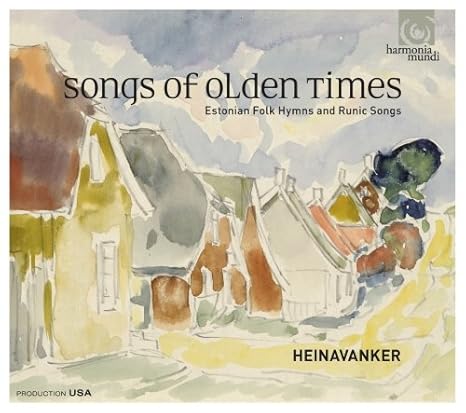
Album Review: "Songs of Olden Times" by Heinavanker | An Album a Day Keeps the Doctor Away

Image result for heinavanker songs of olden times

WHO: Heinavanker; Margo Kõlar, director
WHAT: Estonian runic songs
RELEASED: September 2013
LABEL: Harmonia Mundi

I've mentioned this album more than once before. I know that.

But this morning, I woke up to day umpteen of isolation and it was slushy and gray and blah outside. It put me in a bad mood. This album was all I could think to listen to. So I listened as I was cooking, and it hit the spot.

Frankly, now that I'm through the album, I still can't think of listening to anything else. I may start from the beginning and listen through again.

Happy first day back to "school," guys. Stay strong.

Monday, March 16, 2020

Review: Ensemble Graindelavoix at The Met Cloisters


WHO: Ensemble Graindelavoix; Björn Schmelzer, director
WHAT: JOSQUIN Stabat mater; BROWNE Salve regina; OBRECHT Salve regina à 6; ASHWELL "Sanctus" and "Agnus Dei" from Missa Ave Maria
WHERE: Fuentidueña Chapel at The Met Cloisters
WHEN: March 7, 2020 at 3pm

What a week it's been.

I try to be an optimist when I can. So, when the Yale Glee Club's tour got canceled two hours before we were supposed to leave, I decided I'd hop down into NYC and see a couple weeks of concerts instead. Foolproof, right?

Well, I only got to three concerts before all my other tickets started getting canceled. So now I'm back in my apartment in New Haven, leaving only to make apocalyptica runs to Trader Joe's or to take long, brooding walks with friends (maintaining a distance of six feet, of course). Sigh.

But hey, more time for writing, I guess? Optimism!

Whoever curates The Cloisters' live arts series deserves a medal. I've now seen four concerts this year in the Fuentidueña Chapel, and each one has left me significantly happier than when I sat down. This one was no different. Despite the surgical-mask-clad couple next to me and the stenches of hand sanitizer and hysteria in the air, Graindelavoix provided a perfect, hour-long vacation.

And it was after-hours on a Friday too. Meryl, if you're reading this, you're a saint.
I consume a lot of Renaissance polyphony -- it's my go-to stress relief music. Each ensemble has their signature sound. Tenebrae has wobbly basses. Voces8 has no vibrato at all (AT ALL). Vox Luminis has a distinctive ensemble crescendo (it's freaky how together they are).

Grandelavoix's hallmark seems to be a heftier take on polyphony. Tempos are majestically slow (not to be confused with boring), and the singers have this sinewy, almost buzzy tone that highlights harmonic clashes. Everything is prone to ebb and flow; the tempo stretches like taffy, then slowly regains its shape. The singers each add their own ornaments into the music, almost reminiscent of traditional folk polyphonies of Corsica or Sardinia.

Conductor Björn Schmelzer's degrees are not in conducting, but rather in musicology and anthropology. His interpretations stem from interdisciplinary approaches to music, clearly well-informed by early modern history as well as medieval vocal traditions. Merely a catalyst for an ensemble that clearly trusts each other, his large gesture pulls musicality from the ensemble like a stubborn cork from a wine bottle.

God, I'm in a metaphorical mood today. Gotta let the imagination run wild when you're inside all day, I suppose.

Anyway, I get the sense that Graindelavoix doesn't make it stateside so often, but if they're near you I'd recommend you go. In the meanwhile, they have many fabulous albums -- the one that I listened to on the way back downtown was Byzantine chant and 13th-century antiphons from the Codex Cyprus, one of few medieval manuscripts surviving the French court in Nicosia, Cyprus. And, according to one of their countertenors (s/o Andrew for chatting with me for like 20min), there's a new Josquin album dropping next year to celebrate 600 years since his death. Take that, #Beethoven250!

Saturday, January 18, 2020

Five Albums to Get You Through the First Week of Classes

"Who had this crazy idea to invent school all of a sudden? Charlemagne!"

I forgot how rough it is to go from doing absolutely nothing to absolutely everything. One day, I'm sitting on the recliner in my room at home watching Netflix, the next day I'm sprawled on my apartment couch after having carried twenty pounds of groceries back from my four classes and three rehearsals. But hey, such is the story of academic vacations.

Anyway, considering that many of you will be dealing with the same thing in the coming weeks, here are five albums that will help you through your first week back on the job (or any rough week, for that matter), whether you're a student or not.


If you ever wanted your classical music with a side of indie (or vice versa):
Love I Obey (Rosemary Standley & Helstroffer's Band)

To give you some context, this is the album I listened for comfort when I was stuck on the D train for almost two hours this summer. Rosemary Standley makes her career with indie band Moriarty. Bruno Helstroffer is a blues guitarist who plays early music as a day job. Together, they dreamed up this album of bluesy takes on British Renaissance airs. Standley's voice is (truly, in a non-cliché way) unlike any other singer I've ever heard, throaty and warm with a distinctive twang to the diction. And Helstroffer is just an incredible musician in all respects -- his solo debut is also among my favorite albums ever.

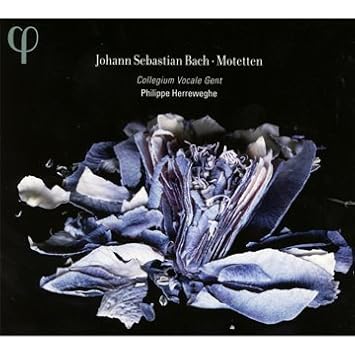
Image result for herreweghe bach motets

For a really, really good version of a piece you might know:
Bach: Motets (Collegium Vocale Gent, cond. Philippe Herreweghe)

This recording is just squeaky clean. Most of the motets are only one singer to a part on this album; the intimate accuracy gives me chills every time. The cast includes Vox Luminis soprano Zsuzsi Tóth; superstar French countertenor Damien Guillon; Bach specialist bass Peter Kooij; and a smattering of other big names in the European early music scene. When I want Bach, this album is my first stop (this version of Jesu, meine Freude is also my go-to tipsy soundtrack, something I can safely say now that I'm 21 😉).

Image result for jazz pa svenska

For an album that will replace your dinner party jazz playlist:
Jazz på svenska (Jan Johansson, piano; Georg Riedel, bass)

I usually spring for new jazz over old jazz, but this album is a classic (just ask the quarter of a million people who have bought copies). Sparse and smooth, Jan Johansson takes Swedish folk tunes and adapts them for a low-key duo of piano and bass. He treats the original folk tunes with such respect -- from his adaptations, I know exactly how the original was meant to sound. There's a good reason why it's the best-selling Swedish jazz album of all time, and still maintains a degree of relevance more than 55 years after its release.

*swoon*

If you want to hear the best music written for the best instrument you've never heard of:
Marais: Pièces favorites (François Joubert-Caillet, viol; L'Achéron)

Marin Marais wrote hours and hours of music for the viol (an earlier predecessor of the modern double bass that looks kind of like a cello -- if you're curious, watch Tous les Matins du Monde starring Gérard Dépardieu). It's all great, but some movements are simply transcendent. François Joubert-Caillet is the single viol player who has most consistently impressed me; here, he's selected a representative sample of Marais's most outstanding works and compiled them onto one phenomenal album. His continuo team is outstanding (continuo is a group of instruments that together comprise accompaniment for baroque music -- usually a melodic instrument and an instrument that plays chords e.g. a second viol and a harpsichord) and help to cement this album among the most satisfying Marais albums on the market today. And if you really like it, you can listen to his most recent album, a six-hour recording of one of Marais's complete books for viol.

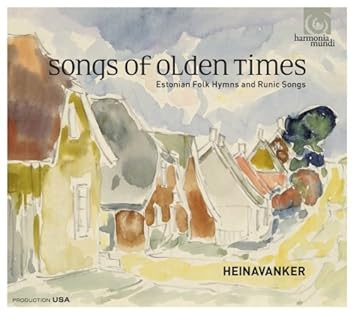
Image result for heinavanker songs of olden times

If you really just want to get lost in the sauce:
Songs of Olden Times: Estonian Folk Hymns and Runic Songs (Heinavanker, dir. Margo Kõlar)

I've sung Heinavanker's praises before, but I'm truly hooked on their album. It's the perfect album for a low-key, relaxing evening -- tonight, I put it on while waiting for my focaccia dough to rise. I'd say I listen at least twice a month, if not more. Cannot recommend highly enough. Cook to it. Meditate to it. Sleep to it. Work to it. Seriously.

Monday, December 9, 2019

Some Thoughts on the 2020 Grammys

Grammy Award 2002.jpg

The nominees for the 62nd Grammy Awards came out a few weeks ago. I was excited. Like, really excited. But of course, as you guys have probably gathered by now, I'm easily excitable.

I sent the link to all of my top contacts. Responses included:

"Oh sick, I'll take a look tomorrow when I'm not stoned out of my mind!"

"Go away, I have a [math words that I don't understand] problem set due in two hours."

"It's 3am, go to sleep dammit!"

Can you guess which one was my mother?

Naturally, I had thoughts -- it's almost a reflex at this point. So, I figured that as long as I have this repository for my unsolicited opinions, I may as well throw these on the pile. So here are a few of my thoughts on the 2020 classical Grammy nominees.

Image result for andrew norman sustain

A Big Year for New Music

The Grammys have a category for the best new classical composition of the year -- they've awarded it yearly since 1985 -- so there's always been some representation for new music. But overwhelmingly, contemporary classical music is starting to take over the other categories:
  • The LA Phil (woot!) is up for an award for their performance of Andrew Norman's new composition Sustain (also up for best new composition) alongside recordings of Bruckner, Copland, and Stravinsky.
  • One of the Best Opera Recording nominees is the world premiere recording of George Benjamin's Lessons in Love & Violence with the original Royal Opera House cast, and they have a good chance of winning, too.
  • Four of the five nominees for Best Choral Performance are albums containing world premiere recordings -- and, in my eyes, the fifth album (Duruflé's complete choral works with the Houston Chamber Choir) simply is not going to win.
  • Best Chamber Music/Small Ensemble Performance is also peppered with world premieres -- a little more on that down below.
  • Best Classical Instrumental Solo -- you guessed it -- has three premiere recordings.
The times, they are a-changing. Good thing the Recording Academy recognizes this, too -- fair to say the more conservative members are slowly phasing out and being replaced with credible young voices.

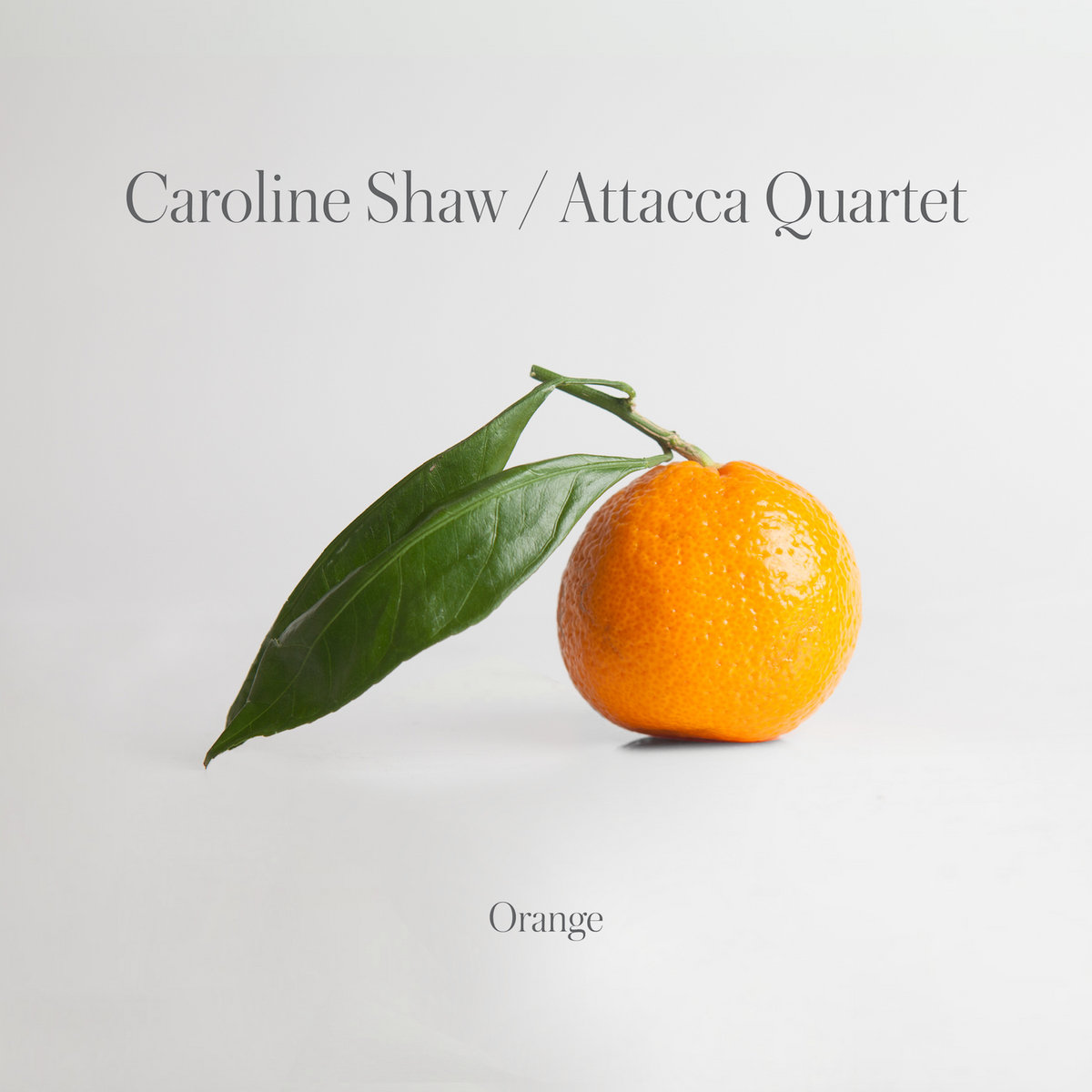
Image result for shaw orange

Caroline Shaw. Yes, Again.

The Grammys have proven erratic in the past, but there is one decision upon which I will happily bet money. I think that the Attacca Quartet's May 2019 Caroline Shaw album, entitled Orange, is going to win Best Chamber Music/Small Ensemble performance. Never have I seen a classical album that has gone so mainstream as soon as it hit the shelves. I have yet to see a bad review of the album -- it's definitely on my top 10 list for albums of the year, and probably up there on my albums of the decade too.

This is not to detract from the other four nominees, three of which are also world premiere recordings. But I think the buzz that surrounded Orange's release is a good indicator that it's headed straight for Grammy territory -- the Academy loves buzz.

Image result for joyce didonato songplay
For all the things I don't love about this album, I have to admit
that top-hat-and-ruffles is DEFINITELY Joyce's look

Songplay

I know I'm usually loath to give a negative review. I mean, I'm young. I can't afford to make lifelong enemies. But sometimes, something comes my way that just annoys me so much that I have to say something.

Hey, I'm an anti-establishment 20 year old, so if I'm going to rail on someone it better be someone good. So I'm going to tell you what I really thought of Joyce DiDonato's most recent album, Songplay.

On the off-chance Joyce is reading this (although I'm not going to @ her on Twitter for obvious reasons) I just want to say that I absolutely adore her. Her 2018 live-from-Wigmore recital with the Brentano Quartet was one of the many soundtracks of my past summer of blogging. I will stand by her work forever.

Except for this album.

The thing is, there are so many people right now who are experimenting at the intersection of jazz and early music, and they are succeeding very well. Baroque ensemble L'Arpeggiata has released jazz fusion takes on Monteverdi, Purcell, and Handel, all to great acclaim. Harpsichordist Jean Rondeau will often play the Bach Goldberg Variations at 8pm followed by an improvised jazz piano set at 10:30.

Putting a swing beat behind the 24 Italian Art Songs and Arias doesn't cut it. At least not today.

I'm a quite surprised and a little bit taken aback that this was nominated. It feels like it was perhaps put on the list out of obligation. But think of all the other phenomenal vocal albums from the past year that didn't make the cut. Christian Gerhaher's latest Schumann albums. Iestyn Davies's album of new works for voice and viol consort. For fuck's sake, Lise Davidsen's debut album, which propelled her to the international stage and got her not one, but two features in the New York Times leading up to her Met Premiere.

Yeah, Songplay is kind of a waste of Grammy spot, if you ask me.

My Predictions

If I'm going to talk the talk, I figure I should make some predictions for winners in each category.

First, I'm going to say that I rarely agree with the Grammy committee's decisions. They are often reluctant to choose albums from smaller labels -- it all feels a little bit biased from the get-go. That being said, I'll be choosing based on my perception of both the performances at hand and the Grammy committee's selection process. So here goes nothing:

Best Orchestral Performance: Manfred Honeck and Pittsburgh have a great Grammy track record, so it wouldn't surprise me if their Bruckner 9 won. That being said, the Cincinnati Symphony Orchestra's nominated album got fabulous press, so that could happen too. Of course, I'm rooting for Mirga Gražinytė-Tyla's Weinberg symphonies album, both because it's fabulous album and because the award has never gone to a female-conducted ensemble and it's about f*cking time. Oh, and LA Phil <3.

Best Opera Performance: God, I swear if Lohengrin wins I'm going to kill someone. Especially considering that Christian Thielemann is an expert in Wagner's music partially because he practices his values...ugh. I think the aforementioned George Benjamin recording has a good chance -- Barbara Hannigan is tremendous and beat Joyce against all odds for Best Solo Vocal a couple years ago, so the Grammy committee obviously likes her. But the Academy are suckers for a good Wozzeck...

Best Choral Performance: I would be astonished if the award didn't go to The Crossing for the third year in a row. The Philadelphia-based new music-focused choir is pushing the boundaries of what is and is not singable, and they deserve every ounce of every award they get. Oh, and they're nominated in the category not once, but twice.

Best Chamber Music/Small Ensemble: see above.

Best Classical Instrumental Solo: Yuja Wang's The Berlin Recital, I think. She's simply beastly. Nothing more to say except that Nicola Benedetti has a chance for her premiere of Wynton Marsalis's new violin concerto (as much as I'm mad at Wynton Marsalis for his views on jazz fusion and free jazz, but that's another story for another day). Would love to see a win for Tessa Lark (I saw her this summer after my big project was over, she was amazing), but I don't think the Academy is going to spring for such a small record label.

Best Classical Solo Vocal Album: I think Matthias Goerne's Schumann album has it in the bag -- it's a ridiculously strong album among many others that are not as remarkable (@Songplay). Would love to see a win for L'Arpeggiata, but I honestly didn't think that their album from last year was as remarkable as some of the others they've done in the past.

Best Classical Compendium: I seriously have no idea. I'm rooting for Harold Meltzer because he's a family friend of sorts (we were reading chamber music together at Bennington and then we discovered that my mother was his first date...small world), but I also don't love Paul Appleby, who was the featured singer on the Meltzer compendium. The Saariaho album has a good chance, I think.

Best Contemporary Classical Composition: I know I said I'd bet money on Caroline Shaw for best chamber album, but I'm not as sure for the composition category, mainly due to Julia Wolfe's Fire In My Mouth, which made a huge splash when it premiered at the NY Phil last winter. I was lucky enough to see it, and it was indeed tremendous. That's where I'm placing my bets.

God, I have a mouth on me. But hey, I'm a 20-something aspiring critic, it's basically my job to have strong and immovable opinions, no?

Wednesday, December 4, 2019

Review: Les Arts Florissants at The Met Cloisters


WHO: Les Arts Florissants; Paul Agnew, director
WHAT: GESUALDO Tribulationem et dolorem; Responses for Maundy Thursday; Miserere mei Deus (Psalm 50)
WHERE: Fuentidueña Chapel at The Met Cloisters
WHEN: October 20, 2019 at 1:00pm (yes, I know I'm late)

I think I'm starting to get the hang of these concerts at The Cloisters. I usually don't get lost on my way from the subway station anymore. I know where all of the good views across the Hudson are (#doitforthegram -- except I'm not on Instagram because I'm a #grandma). And when I walked into the Fuentidueña Chapel for the second time in 24 hours, the 12th-century statue of Jesus hanging from the cross started chatting me up as if we were old friends.

Divine intervention? Sleep deprivation? The world may never know.

I missed Les Arts Florissants when they did a huge French baroque opera spectacle at the Brooklyn Academy of Music last year. Unfortunately, I have to prioritize school first (much as I wish I didn't) -- I occasionally drop down into NYC for a concert here or there, but I often pay the price of a sleepless week to follow.

I saw the listing for this concert. I checked my calendar. October break. It was destiny. Or maybe just luck. But either way, I had to go. I grabbed a ticket.

So, for those of you who don't know Les Arts Florissants, let me tell you a bit about the ensemble. They have an orchestra and a choir, both of which are fantastic. They got their start in France in the late '70s; American expat harpsichordist William Christie was the director, and still is today (although British tenor Paul Agnew is starting to take over more and more responsibility -- Christie is getting up there in years). And their recordings are all immaculate. Unlike many similar ensembles, whose recordings have shown a steep quality incline in the last couple decades, Les Arts's 1980's recordings are just as clean as those of the last few years.

Considering that fact, I left the concert with a somewhat cynical opinion: "They were amazing -- who knew?"

Bottom line: Gesualdo is difficult. Very difficult. His harmonic language borders on non-functional, almost to contemporary levels. As my father so wisely told 13-year-old me: "You like Bartók? You should try Gesualdo." But I know Les Arts well enough to know that they wouldn't put up a mediocre performance.

Of particular note were the singers at the lower ends of the ensemble. Bass Edward Grint had this plaintive musk to his voice, one that provided a stable resting place for the other five vocalists. Paul Agnew was great as usual (ah, what I would give to be a tenor...), though most of his focus went to shaping the music with tiny, unobtrusive hand gestures. Mélodie Ruvio gave a particularly thrilling performance, a phrase that I don't think I've ever used to describe a choral alto part before. And, when the whole group came together for the chants between verses of scripture...chills.

I don't think there's anything more to say. Les Arts Florissants can do no wrong. If they come around to your neighborhood, DO NOT miss them at any cost. And that's an order.

Monday, November 25, 2019

Review: Miller Theatre presents Vox Luminis at Church of St. Mary the Virgin

Image result for vox luminis
My hot take: all concert dress that is not
concert-black-with-pop-of-color should be outlawed.

WHO: Vox Luminis; Lionel Meunier, artistic director
WHAT: ANONYMOUS (XII CENTURY) Lamentation de la Vierge au Croix; LOTTI Crucifixus
a 8; MONTEVERDI Lamento della ninfa; Adoramus te Christe; DELLA CIAIA Lamentatio Virginis in despositione Filii de cruce; D. SCARLATTI Stabat Mater for ten voices and basso continuo
WHERE: Church of St. Mary the Virgin
WHEN: October 19, 2019 at 8pm

When I saw this concert, I had been waiting to see Vox Luminis live for a good long while. I was all slated to go see them last year in southern Connecticut, but a friend called me in at the last second to sub in his run of 25th Annual Putnam County Spelling Bee. I wasn't angry at the time -- I love that show, and I figured I'd get to see Vox Luminis again relatively soon. They tour the US every year, and always end up in NYC at least once.

Well I ran into that friend on the street a couple weeks ago. And told him very matter-of-factly that I'm now angry that he tore me away from that concert. Retroactively. Because, I've decided, any moment that I don't spend listening to Vox Luminis is necessarily inferior to any moment that I do spend listening to Vox Luminis. And any moment I spend listening to Vox Luminis live is better than any moment I spend doing anything else.

Yeah. This concert made me feel feelings. This concert made me cry tears. This concert might be the best I've reviewed on this site thus far.

Vox Luminis changes size based on the performance. They numbered fifteen in this concert -- eleven rotating singers (SSSSAATTTBB) plus a four-person continuo team. They brought along their own organist and viola da gamba player, they hired a lutenist (one of my professors, as it happens -- hi Grant!) and a harpist from the NYC freelance pool.

The concert started with a 12th century French lamentation, sung facing the altar by Vox Luminis's wondrous first soprano, Zsuzsi Tóth. She's kind of my idol -- the soprano I'd want to be in another life. Her voice is too light to float; it just transcends. She has this perfect straight tone that makes her both an ensemble singer and a soloist. Everything that passes through her vocal chords turns to pure syrupy goodness. I even tolerate the low-def YouTube video of her singing the final lament from Carissimi's Jephthe. Because she's that good. I keep hoping she'll release a solo album of her own, though she hasn't yet; I'd give my left arm to hear her team up with a lutenist to record some Josquin or Dowland.

I've been told we resemble each other -- what do we think, peanut gallery?

Their Lotti Crucifixus was great as always, preceded and followed by profound improvisations by organist Anthony Romaniuk, but the thing that brought tears to my eyes was Lamento della ninfa, Claudio Monteverdi's classic tale of lost love. The narrators, a consort of two tenors and bass, stood behind the continuo team; they set the scene with a short introduction. The continuo then started the Lamento's hallmark tetrachord -- A, G, F, E, repeated ad nauseum. Usually, the soprano (la ninfa) gets at most four bars before she makes her entrance. But this time, seven, eight, nine repetitions, and no sign of the soprano.

But...why were the hairs on my neck standing on end? Why did I have chills up my spine? What was that clicking noise coming from next to me?

Clack. Clack. Clack. The slow steps of Estonian soprano Marta Paklar echoed throughout the sanctuary. The continuo must have done close to twenty cycles before she finally got up to the stage -- just further proof that four chords can get you very, very far in the music world. Anyway, Paklar turned around, her face as if she had just finished crying and was about to start again. And then she started singing. And I welled up with tears because her singing was like the most beautiful sobs you've ever heard.

To cap the concert off, Vox Luminis pulled out their signature piece: Domenico Scarlatti's Stabat Mater for ten voices and basso continuo. This was the piece that inspired Lionel Meunier to bring the ensemble together for the first time fifteen years ago. I first heard it on their premiere album from 2007, and their live version did not disappoint. They're have such a forceful composite sound, and yet each vocalists remains a soloist -- how?

I'm hooked. Vox Luminis is my crack. As soon as I left the concert, I put on one of their albums for the walk home. The next day, another. I'm just counting down the days until their next USA tour -- ten months to go I think?

Oh, and by the way, Lionel Meunier says Yale has been holding out against bring Vox Luminis to campus -- I'm about to @ every Yale music handle on Twitter and see if I can change that. Plus, Lionel said he'd buy me a drink if I convinced Yale to have them for a concert -- help a guy out.

Fun fact: Lionel Meunier also plays recorder. Really well.
On the first eight tracks of this album.

Tuesday, November 12, 2019

Review: Heinavanker at The Cloisters

Image result for heinavanker
I bet their shoulders are really warm.

WHO: Heinavanker; Margo Kõlar, artistic director
WHAT: "From runic songs to Pärt"
WHERE: Fuentidueña Chapel at The Met Cloisters
WHEN: October 20, 2019, 8:00pm

"From runic songs to Pärt," could mean just about anything. I mean, I sort of assumed that the nucleus of their program would be....runic songs....and Pärt. But safe to say that this was the only concert from my October break where I didn't really know what I was getting myself into.

Well, the first thing I noticed, and the first thing I should say: god, I wish my choir robes were that cool.

Heinavanker's program did, indeed, include runic songs and Pärt, along with some 14th-century polyphony. A couple of anonymous French mass movements went off well, as did a Te Deum by artistic director Margo Kõlar, who sang while conducting minimally. The Pärt was also quite good.

But for now, I'm going to dismiss those pieces, because I remember almost nothing of them. Even right after I left, my mind was full of one thing and one thing only: Estonian runic song.

And here's the crazy thing -- Estonian runic song is so, so, so repetitive. Much of it is the same couple lines of music that just keep coming back to different text; occasionally the music changes a bit, but the changes are really very little, barely discernible. But thirty seconds in and you're entranced.

Heinavanker incorporated some simple choreography into their set, mostly stepping behind one another in some sort of hypnotized, down-beat conga line. As soon as they brought out their first runic song, the Kõlar arrangement that leads their 2013 album (which I've listened to at least four times since the performance [and may or may not be listening to now]), it as if this wash of calm descended over the audience. Something about the cyclic repetition combined with the kind of music that is just so....comfortable. No one's voice was stretched, no one's ear was challenged. It was just nice, good music.

I seriously cannot recommend this enough. Seriously.

And they were so in the zone. The verses and verses of text were second-nature to the ensemble, who performed mostly from memory. The voices blended effortlessly in the boomy-but-not-overly-so chapel; the plain chords were perfectly in tune.

I want to make one thing clear -- Heinavanker's program contained some of the simplest music I've ever reviewed. But they showed that simple does not necessarily equal unimpressive. They performed these simple runic pieces with the same focus and accuracy that they might have used for something fifteen times its difficulty.

This was another of those times that I came out of a concert and said: "I would sit through that again in a heartbeat." I was speechless. It's one thing to go into a concert knowing full well it's going to be fantastic; but the feeling of euphoria that follows uncertainty is even better.

Please, Heinavanker. Come back to the US. Pretty please, with Estonian runes on top.

P.S. This is one of their basses. Turns out he's an Estonian pop star. Who woulda thunk it?

Monday, August 5, 2019

[40] Teatro Nuovo presents Bellini's "La straniera" at Rose Theater @ Jazz at Lincoln Center | #1Summer50Concerts

PC: Steven Pisano

WHO: Soloists, Chorus, and Orchestra of Teatro Nuovo; Will Crutchfield, maestro al cembalo; Jakob Lehmann, primo violino e capo d'orchestra
WHAT: BELLINI La straniera
WHERE: Rose Theater @ Jazz at Lincoln Center
WHEN: July 17, 2019 at 7:30pm

I open my computer. My stomach is in knots. The clock is counting down. Sweat pours down my face. I begin to hyperventilate. The stress is killing me. My hand, shaking violently, reaches for the mouse.

Yeah, that's what happened last time I had to choose between two concerts I really wanted to go see. Sometimes I think I'm too invested, y'know?

Anyway, I know I said at the beginning of the summer that I was choosing concerts based on what thought I would like most. Unfortunately, I like a lot of things, and sometimes I can't choose. So I've had to rely on another metric for deciding on concerts: the reproducibility factor. I always take into account the likelihood of getting to see a given concert (or one similar) at some point in the future. That's why I decided to go see the SEM Ensemble instead of Beethoven's Eroica at the NY Phil for the first concert in this series; why I went to go see ChamberQUEER instead of Boston Early Music Festival at Caramoor; why (in part) I decided to go see Vivica Genaux instead of going to NYC Pride.

So, when Teatro Nuovo's staged operas rolled around, I cleared my schedule, put on a tie, and walked up the five flights of stairs to the Jazz at Lincoln Center lobby.

Okay no, not really. I took the elevator. But the necktie part is real.

The formal-clad choir (PC: Steven Pisano)

Bellini's La straniera ("The Stranger") barely ever gets performed, falling at the feet of his more famous Norma, Puritani, and Sonnambula. The plot, as with many bel canto operas, is predicated upon a misunderstood love triangle -- Arturo loves Alaïde (the straniera in question), but thinks she is having an affair with Valdeburgo. Arturo tries to kill Valdeburgo until the "oh shit!" moment when he realizes that Valdeburgo is Alaïde's brother. Valdeburgo survives the attempt, Alaïde is dragged off for the murder, Arturo is urged to marry the woman he was originally planning to marry before any of this started (her name is Isoletta, she's only mildly relevant).

Except then it turns out that Alaïde is actually queen of France. So when Arturo botches his own wedding to beg Alaïde to run off with him, she is summoned back to the throne. Arturo is understandably sad. He kills himself. Alaïde is also sad. She threatens to kill herself. Curtain.

Ah yes, the Italian tragedy: only distinguishable from the Italian comedy in that, at the end, everyone dies instead of marrying each other.

So, I'm going to go out on a limb here and say something. I think comparing the Teatro Nuovo orchestra and choir is unfair. The singers are part of a young artists' program, still gaining valuable experience in the operatic field. The orchestra is the usual circuit of period-performance freelancers, many of whom I've already seen elsewhere this summer. So here are their separate reviews:

THE SINGERS: Great voices up on that stage. Tenor Derrek Stark was a poignant and relatable Arturo; soprano Christine Lyons's arias brought Alaïde's alienation to the forefront; baritone Steven LaBrie's Valdeburgo was rich and sweet, but not overly covered; mezzo Alina Tamborini rocked a confused Isoletta. But, for the great singing tone, the acting was somewhat anemic. Perhaps if there had been more staging to work off of, it would have been better, but the body movements were muted and awkward, the facial expressions barely expressive at all. Only LaBrie seemed to occupy the full character of his role. The chorus, made up of the rest of the young artists in the program, sounded as good as any professional opera chorus, their Italian perfect even in those infamous tongue-twister passages.

LaBrie as Valdeburgo (PC: Steven Pisano)

THE ORCHESTRA: Teatro Nuovo has a 60-piece orchestra that functions as a chamber ensemble. The concertmaster, sitting on the podium at the front, shares conducting responsibility with the maestro, sitting at a keyboard instrument (a late-model fortepiano, in this case) in the middle of the orchestra. The configuration of the orchestra is strange, to say the least -- the violins face each other (firsts facing the stage, seconds with their backs to the singers), the winds sit in an octet in the middle, the basses are split on either side of the ensemble. It made for an interesting sound, from the audience's perspective. The first violins and wind soloists are the center of attention in a bel canto orchestra, and they came through loud and clear. I'm not going to pretend that the modern configuration, with a real conductor serving solely as a musical interpreter and everyone facing the same way, isn't an innovation -- there's a reason the MET orchestra doesn't sit like Teatro Nuovo. But the orchestra's seating didn't seem to affect their accuracy and poise; they were fantastic in every sense of the word. I buy the configuration both as a musical and intellectual exercise. Special nod to harpist Parker Ramsay, who sat onstage to accompany two arias with very, VERY prominent parts.

Overall, an enjoyable evening. The entire concept had a novel sparkle to it, enough to offset any blandness in the acting. I was entirely satisfied -- the reproducibility factor seldom steers me wrong.

Wednesday, July 10, 2019

[27] Miho Hazama's Jazz Mass at Saint Peter's Church | #1Summer50Concerts #JazzWeek

Image result for miho hazama
Hazama conducting her ensemble, the Danish Radio Big Band

WHO: Choir of Saint Peter's; Miho Hazama, piano
WHAT: MIHO HAZAMA Jazz Mass
WHERE: Saint Peter's Church
WHEN: June 26, 2019 at 6:00pm

Okay guys, real talk: we're over halfway through. I'm starting to feel the burnout. Not from going to concerts, but 50 reviews, it's a lot to write. So tonight, I'm gonna take it easy: get ready for my bullet-point review of Miho Hazama's Jazz Mass.


I loved...
  • how the whole thing felt relaxing, suave, and not intended to blow the roof off.
  • how the Sanctus kept switching from 11/8 to 10/8 and then back again -- just as you got into the groove, the choir pulled the rug out from under you
  • Miho Hazama's piano part. Half the time it was an exact doubling of the choir, but the other half of the time it was soloistic and full of flourish.
  • the sermon, to be honest. You know I'm not man of religion, but their hearts, minds, and (most importantly) politics were in the right place.
I'm still thinking about...
  • the tenors who traded four-bar solos. They were very consciously walking the thin line between being creative and offending the pious Wednesday churchgoers.
  • the Kyrie, which lasted all of one or two minutes -- mostly homophonic, full of cool chords.
  • the sanctuary at Saint Peter's. Like, what is that shape?
I wish...
  • they had advertised better! I only heard about it because a friend was singing, and there were maybe ten people there. I was the only one (other than members of the choir) who didn't take communion.
  • I could hear the piece outside of a service. In the service, it was weird and clunky. Outside the service, it would have been a super cool 15 minutes of music.
  • we were allowed to applaud. Church is weird.

Saturday, July 6, 2019

[25] ChamberQUEER Closing Concert at Brooklyn Arts Exchange | #1Summer50Concerts #MyBigGayClassicalWeekend

Throwback to the short phase where my brother was convinced he
wanted to learn hurdy-gurdy -- talk about college application padding

WHO: ChamberQUEER
WHAT: Works by Hildegard, Tallis, Caroline Shaw, Mazz Swift, Cavalli, Saunder Choi, and Monteverdi
WHERE: Brooklyn Arts Exchange
WHEN: June 22, 2019 at 8:00pm

“this isn’t about god
well it could be about god
it just depends how wide your perception of god is”

We're at the halfway point guys!

I sometimes feel like I need one of those Hermione Granger time-turner gadgets, because choosing between two phenomenal concerts always gets me stressed. In this particular case, it was either the second performance of ChamberQUEER or the Boston Early Music Festival’s stagings of three short French baroque operas. And in the end, I decided to go ChamberQUEER — French baroque opera makes my brain happy, but ChamberQUEER makes my heart happy.

Besides which, after the first concert, I had this lingering feeling that I was going to miss something monumental if I didn’t go to ChamberQUEER. And boy, would I have.

So I arrived back in Park Slope for the second concert, greeted again by the same lovely crew, and sat down in the tiny, stuffy room for another night of great music. Word had gotten out to at least some extent, so the audience was full, and mostly not of the same people from the other night. The performers, too, were all different (with the exception of the founder core and the harpsichordist) — they comprised an octet of singers, a couple of new violinists, and an electric guitarist.

Again, the program was pretty varied — everything from renaissance classics to new pieces, all tremendous. So here goes the laundry list again:

The concert started with a sing-in of original-feminist Hildegard von Bingen’s O quam magnum miraculum, accompanied by a real live hurdy-gurdy (played by harpsichordist extraordinaire Kevin Devine), followed immediately by a lovely Tennyson setting by ChamberQUEER friend and violist Jessica Meyer (she performed extensively at the first concert). A couple in manus tuas followed — first Tallis’s from a quintet of vocalists, then Caroline Shaw’s, as performed by attacca quartet cellist Andrew Yee.

There was only one fully instrumental piece on the entire program: excerpts from Mazz Smith’s 16 Hits or Misses. The name in itself is a disclaimer to the audience, but Smith, a lauded inter-genre violinist, was sure to provide her own warning that this piece “might not be that good.” I don’t know why she bothered to do that — the piece was charming. Modeled after the Bartók violin duos, Smith’s Hits or Misses straddled that ever-growing gap between classical tradition and popular music. I never thought I wanted to hear techno-funk played by two violins. But now I want to hear it again.

The final act of the first half was a series of scenes from Francesco Cavalli’s La Calisto — the basic gist being that Calisto rejects Jove, so Jove dresses up like the goddess Diana in hopes of wooing Calisto. Calisto, then wooed, attempts to nuzzle up to the real Diana and is swiftly rebuffed — FIN. Kind of a crazy gender-bent story from the beginning, with a ton of big gay energy (I thought homosexuality was taboo in the renaissance?) — perfect for ChamberQUEER! Mezzo Liz Bouk’s (he/him) passionate Jove was only outdone by his disgusted Diana — he has the PERFECT what-the-fuck face for the role. Danielle Buonaiuto’s (they/she) Calisto was suave and sensual, aided by their complete and utter comfort on the stage. Oh, and the sass-flecked subtitles set on a plain PowerPoint were a riot.

I know I put this in the first review, but I'm going to put it here again
because it's important! Support ChamberQUEER!

A short intermission switched the concert's gears to a cappella choral music sung one-to-a-part. The opener, Saunder Choi's American Breakfast, was a powerful statement about...well, everything. Gun violence, LGBTQ+ issues, all set against a bleak and boring all-American backdrop. It's a piece easily capable of gutting anyone with half a conscience, as it did to me.

The finale to the weekend-long ChamberQUEER experience was a set of four Monteverdi madrigals, but with a “ChamberQUEER twist,” as the founders put it. Guitarist Grey McMurray improvised connective material between each of the pieces, a prospect which bewildered me until the music actually began. McMurray’s experimental interludes essentially filled in all the genres that the Monteverdi couldn’t fill, with looping and microtones and echoes beyond belief — the perfect character foil to the similarly emotional, though stark and strict Monteverdi. The one that particularly stuck with me was the interlude before the final lament, the famous Lamento della ninfa in which a nymph bemoans her unrequited love; McMurray pointed out the essential crux of the renaissance madrigal by repeating the quote above. Lamento della ninfa itself was tremendous, with the nymph represented by countertenor Jonathan May; the gender-bend was refreshing, and May himself only got better as the part extended more into the nymph’s soprano range. Plus, McMurray used some of his pre-recorded loops to fill in the continuo line, which was just another layer of innovation.

Well, let’s just say I got exactly what I expected. The concert was fabulous. My pre- and post-concert banter was tolerated gladly. I turned down drinks again because I had work the next day.

Long story short: ChamberQUEER makes beautiful music in a space that questions the canon that has been shoved forth into our hands since early childhood. They are the future. Keep ChamberQUEER in mind, because one day they will be big. Mark my words.

Sunday, June 23, 2019

[19] Downtown Voices and NOVUS NY perform Bartók and Orff at St. Paul's Chapel | #1Summer50Concerts

                                         Image result for st paul's chapel nyc

WHO: Downtown Voices; NOVUS NY; Stephen Sands, conductor
WHAT: BARTÓK Sonata for Two Pianos and Percussion; ORFF Carmina burana
WHERE: St. Paul's Chapel
WHEN: June 16, 2019, 3:00pm

"Blessed are those who make classical music accessible by putting on free Sunday matinee concerts."
-- God, probably

I had a good hour and a half to kill before the concert started, so I decided to pop into a Starbucks and blog a bit. I sauntered on over to the chapel with plenty of time to spare -- it was maybe 25 minutes until the concert started -- and I arrived to find out that a) there were no full-view seats left and I had to go sit in the balcony and b) St. Paul's Chapel has free wifi, so I could have sat in the front row and worked while I waited for the concert to start.

It was just not my day, I guess.

When I got up to the balcony, I looked out over the audience and any shred of resent I had immediately melted. The great thing about a matinee concert is that it isn't too early or too late for anyone. That meant that parents brought their children, all sat in a row and clad in frilly dresses and bows and cute little button-down shirts. I felt a little underdressed in my usual t-shirt and jeans ensemble, but then a guy wearing shorts sat down next to me. Phew.

I don't know what Trinity Wall Street's worship services are like, but I can tell you one thing: their music programs are outstanding. Their flagship ensembles are a full professional choir and one of the leading baroque orchestras in NYC, but they also have burgeoning new music, youth, and community programs.

One of the best things about the Trinity music program is that all of their different levels collaborate often. This particular concert drew from almost all of their programs; the age range was approximately 6 (the youngest members of the Carmina children's choir) to 86 (the oldest members of Downtown Voices).

Needless to say, most of the audience was there for Carmina burana, but that didn't stop NOVUS NY from delivering a compelling version of the Bartók sonata (in this case, more like Bartok's Sonata for Two Pianos, Percussion, Police Sirens, and Brooklyn-Bound 6 Train -- but that's not their fault). Pianists Daniel Schlosberg and Lee Dionne had their backs to each other, but it was blatantly obvious that their heartbeats and pulses had synced -- it was as if one person was playing two parts. Percussionists Ian Rosenbaum and Victor Caccese worked as an impressive team, pushing the unpitched percussion parts to the front, almost treating them as melody instead of emphasis.

                               Image result for wind gif spongebob
Me at the beginning of Carmina burana, colorized (2019)

At the start of Carmina, it became clear that Downtown Voices was not just any community choir. I would have been content seeing them on stage with the New York Philharmonic, or with any visiting orchestra at Carnegie Hall -- in fact, I think I liked their performance more than I usually like the NY Phil's house choir. They felt well-rehearsed, but still interested; no one was 'dialing it in' and everyone looked like they couldn't imagine being anywhere else at that moment in time.

Soloist-wise, tenor Brian Giebler stole the show with his roasted swan-song ("Olim lacus colueram"). He paraded onstage in a black-and-red reversible sequined jacket and proceeded to full-voice the entire movement, which is a feat in and of itself. What made his version particularly impressive was how he delivered it -- it read almost like a country ballad, the way he occupied the back of the conductor's podium and swung his legs off. Country-classical crossover -- talk about a thing I never thought I'd enjoy.

Baritone soloist Christopher Dylan Herbert shouldered the largest musical load of any of the soloists, and did so with grace and accuracy. His "Estuans interius" was particularly noteworthy, his passionate high range not buckling under the emotional weight of the movement. Also of particular note was the children's chorus, which wrenched the hearts of audience members with their toothy-grinned "Amor volat undique."

There was not a single person in that room that wasn't having fun. From the pianists, to the four percussionists, to the choir and soloists, to the audience, even to Trinity's music director Julian Wachner, who did nothing but work the microphone the whole time -- the energy in the room was electric. Even the youngest children in the audience sat wide-eyed the whole time, as if under Carl Orff's spell.

This concert just cemented a hunch that I've had for awhile: if Trinity puts it on, then it's bound to be good. Trinity doesn't deal in mediocre music, but it's not like that's a prohibitive factor. They have perfected the art of getting the most out of every musician, and making every musician feel like they're giving the most they can. And if that doesn't satisfy you, then consult a doctor: you might be a sociopath.

Friday, June 14, 2019

[13] Cavalieri's "Rappresentatione di Anima, et di Corpo" at Saint Peter's Church | #1Summer50Concerts

Very Authentic™

WHO: Choir and Period Orchestra of Saint Peter's
WHAT: Rappresentatione di Anima, et di Corpo by Emilio de' Cavalieri
WHEN: June 8, 2019, 4:00pm

My religion of choice is music.

I know it's a little weird to think of music as a religion, but in my mind it makes perfect sense. I love music unconditionally. Music is often my first thought when I wake up in the morning, and my last thought when I go to sleep. I follow music to great lengths, even when it wrongs me and almost leaves me stranded in Riverdale after a concert because did you know NYC express buses cost $6.25 a pop?

Anyway, where was I? Ah yes, religion.

My preferred place of worship for the Church of the Holy Harmonies™ is, naturally, the concert hall. But, sometimes I find myself engaging in religious crossover, so to speak. And that's how I found myself at Saint Peter's for their annual Memorial Vespers service.

What is a memorial vespers? I didn't really know then, and quite frankly I don't really know now. Here's what I do know: I walked into the sanctuary at 4:02pm, after I stupidly chose to climb the stairs at the 53rd/Lex E train station instead of taking the escalator, and we immediately launched into a hymn -- not the Cavalieri itself, mind you, but the thing that was like "okay God, it's Cavalieri time" I guess? At least, that's my agnostic view of it.

No one really performs this Cavalieri, but it has a crucial role in music history as the "first" of so many things: first opera, first sacred opera, first explanation of figured bass notation, the list goes on and on, as I found out by reading the 30 pages of program notes at the back of the 60-page church bulletin.

For what this performance was, I was absolutely blown away. Often, church choirs do a great job of contributing to the worship service, but don't really satisfy beyond that. Cantor Bálint Karosi, a doctoral candidate in composition at Yale, must be a miracle worker, because the mostly-amateur choir sounded fabulous -- prepared, confident, and like they were having the time of their lives.

I'm not really sure what this space is supposed to be -- it's vaguely octagonal at the top, but then
pares down to...a diamond? A square? I don't know, it kinda looks like a sci-fi escape pod.

The professional section leaders from the choir sang most of the solos, but they hired out for a few extra singers to round out the cast. Baritone Anicet Castel (Corpo) and soprano Nola Richardson (Anima) sang and bickered convincingly as the dueling desires of the soul and the body; soaring tenor Elliot Encarnación (Intelletto) set the scene perfectly as an omniscient, intellectual character. The smaller parts of virtues and concepts were all well-sung by members of the choir.

But the highlight came in the form of Filipino-American tenor Enrico Lagasca. I briefly heard Lagasca sing earlier this year in TENET and The Sebastians' performance of Bach's St. Matthew Passion. He only had a couple small parts in addition to his role in the choir, but when he sang those three or four lines (he was, like, third Nazarene or Pilate after he's eaten but before he's crucified Jesus or something like that), my eyes widened, my ears perked up, and I whispered a big fat "holy SH*T" to the friend sitting next to me. Lagasca, despite his small role in this Cavalieri, gave a performance to remember, his rich bass commanding the attention of the audience without a second thought. He's still pretty young -- I truly can't wait until he (inevitably) makes it big and we can go see him as the headliner on concerts.

The orchestra was mostly area freelancers; they sounded extremely well-polished under Karosi, who conducted from the harpsichord. The continuo team, despite being distributed all over the stage, played like a well-oiled machine, and the Italian wind- and viol-consorts provided impressive variety in color. Violinist Isabelle Seula Lee opened the work with an impressive solo from the top of the choir risers, as if an angel coming down from heaven (at least that's what I assume it's supposed to represent? don't quote me on that).

Overall, big fat yes to this concert. Saint Peter's is programming music that other people don't program, and it's not only expanding the minds of church-goers, but appealing to the musical community as well. Keep on the lookout for their season next year -- I'm expecting great things.

Monday, June 10, 2019

[11] NY Philharmonic premieres David Lang's "prisoner of the state" at David Geffen Hall | #1Summer50Concerts


WHO: New York Philharmonic; Jaap van Zweden, conductor; vocal soloists; tenors and basses of the Concert Chorale of New York (Donald Nally, choirmaster)
WHAT: prisoner of the state, by David Lang (world premiere)
WHERE: David Geffen Hall
WHEN: June 6, 2019, 7:30pm

I'm not going to lie, prisoner of the state was gritty, gritty, gritty. Like, I just sat here for half an hour trying to think of an opening joke for this post. And I couldn't think of one. Because there was not a single uplifting moment in this 70-minute opera.

The stage of David Geffen was surrounded by a chain-link fence laced with barbed wire. The orchestra players wore all-black with optional black skull caps (the horn section looked particularly good in their matching hats). In the front was a faux-stone stage (with two trap doors, only clearly visible from directly above, which of course I was because I got seats on the side of the stage in the third tier because I am CHEAP), and in back, behind the fence from most vantage points, was a cell-block-looking stage that was unequivocally too small for the forty-some men of the choir.

The chorus processed out in yellow jumpsuits, wrist chains, and possibly the most convincing dirt-makeup I've ever seen. Granted, a couple of them still had perfectly coiffed hair that didn't exactly shout "prison," but the aesthetic was there.

David Lang's music exists in a strange quantum state (to the extent I understand what that means -- physicists, comment below and let me know if I'm an idiot). The way his music sounds and feels, one thinks it's simultaneously racing forward and dawdling. Many of the orchestral figures were frantic and exceedingly precise; yet, there was so much repetition that forward motion was quasi-nonexistent.

prisoner of the state was Lang's take on Beethoven's Fidelio, a convoluted plot that, without any subplots, essentially concerns itself with a political prisoner (Fidelio), who is to be killed by gradual starvation, and his devoted wife, who dresses as a guard to sneak her way into the prison and reveal the twisted reasons for her husbands unfair detainment. It's a happy ending: Fidelio is freed, his opponent is detained, joy, triumph, yay!

Lang essentially strips the two-hour-plus Fidelio of all its subplots, casting a modern light on the main story line. The characters are all deranged in one way or another, and each gets an aria to explain his or her affliction. The dehumanized "assistant" (the character of the wife) sings of how she once was a woman, but is no longer; the power-hungry "governor" sings of his obsession with fear over love; the sadistic guard sings of his willingness to do anything for wealth; the prisoner (congruent to Beethoven's Fidelio) sings of the solitary confinement that has driven him to the brink of extinction.

Thing I did not mention: my job got me into a press rehearsal a couple days before the
actual performance. It was us and a bunch of classical music "influencers" -- I didn't know those existed

French soprano Julie Mathevet, who played the assistant, was perfect in her character. Mathevet portrayed not an ounce of emotion until the (seemingly uplifting) end, very clearly on purpose. The governor, played by British tenor Alan Oke (who really really channeled the Patrick-Stewart-circa-Macbeth look for this role), almost struck like a Herod-type character: obsessive, whiny, and opinionated. MET regular Eric Owens (the guard) struck a perfect balance between capitulating and strong-willed. But the prize for most convincing goes to Jarrett Ott, the prisoner of the state himself (oh, THAT'S why they called it that!), whose bloody makeup and languid appearance did not compromise his operatic presence one bit.

The Concert Chorale sounded tremendous -- they beefed up their ranks significantly for this one. On the roster were are few names I recognized from spectating around the NYC and New Haven concert scenes. And holy crap, did they have tenors. High Bb's for days. Even with the choreography, which mostly included stomping and walking, the music was forceful, stark, and effective.

Lang has a knack for social commentary. I was fortunate enough to sing a piece of his earlier this year which sets the pre-sentencing speech of Eugene Debs, who was convicted under the Sedition Act for his anti-WWI speeches. To quote Lang himself: "I was mad, so I wrote this." And that seemed to be more or less the case for prisoner as well -- except in this case he had control over his own libretto. At what would be an otherwise happy ending, Lang throws in the caveat that technically we *are* still prisoners in the world, and that the only difference in a real prison is that you can see the chains. Nice.

All else aside, this was a tremendous performance. And even if you didn't get to see it, I'm certain it's going to come back. This is the kind of thing that was far too much work to truly only last for one weekend. My guess is that this production will make its way around the major symphony orchestras and opera houses and eventually get recorded. Good thing, too; it's catchy as hell and it's going to be stuck in my head until I can get my hands on a recording.

I hummed this at a concert two days later, and a lady who was sitting in front of me
turned around and said, "Is that prisoner of the state?" I think I've found my people <3