Showing posts with label Monteverdi. Show all posts

Wednesday, March 18, 2020

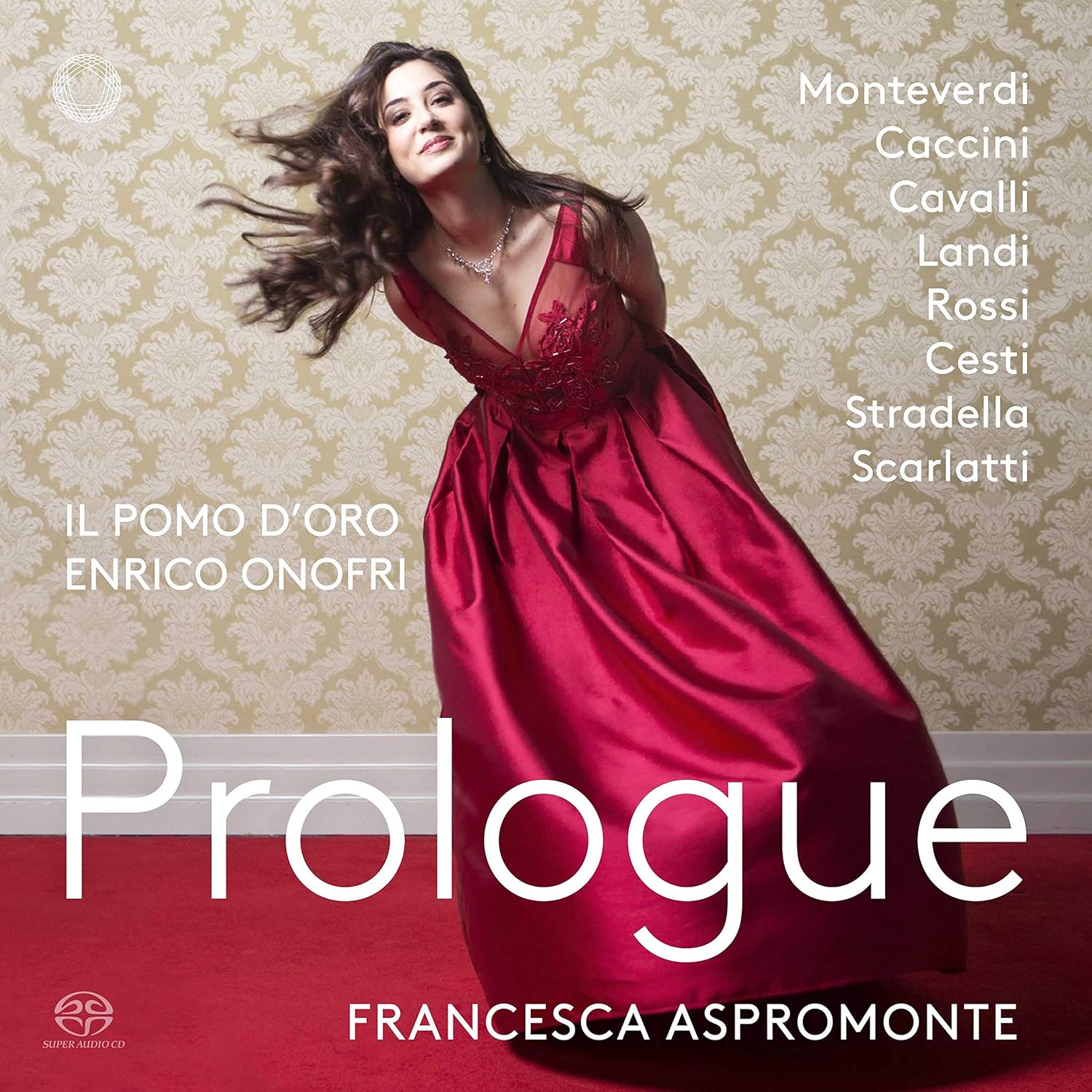
Album Review: "Prologue" by Francesca Aspromonte and Il Pomo d'Oro | An Album a Day Keeps the Doctor Away

Image result for aspromonte prologue

WHO: Francesca Aspromonte, soprano; Il Pomo d'Oro; Enrico Onofri, director
WHAT: Prologues to operas by Monteverdi, Caccini, Cavalli, Landi, Rossi, Cesti, Stradella, and A. Scarlatti
RELEASED: May 2018
LABEL: Pentatone

Guys, I'm really fucking bored. My brain is kinda turning to mush. I've turned to practicing cello to give myself something to do. Do you know how much I hate practicing? A lot. I hate practicing a lot.

Anyway, one thing I think we could all use during this weird, crazy time is music to listen to -- according to an email that one of my professors sent a couple hours ago, "music can be at its most powerful in times of crisis and uncertainty." Musicians always know how to cheer up a crowd, huh?

So I'm going to try to review an album every day that I'm stuck inside. No particular theme, just what I happen to be listening to at the moment. They're not going to be long, but hopefully they'll keep me busy and give you some new music to try out.

One thing that you should know about me is that I organize all the music I have yet to listen to into 60 or so playlists according to instrumentation and time period. "Romantic Keyboard"; "20th-Century Choral"; you get the idea. My "Baroque Solo Vocal" list is on the long side -- up around 170 hours (but I'm also terrible about clearing out what I've already listened to).

Today, I wanted Italian baroque opera, probably because I'm mourning the cancellation of Yale's annual baroque opera project (Cavalli's Doriclea, for anyone who cares -- good luck finding a recording). Luckily, this was near the top of my list.

Though prologues have fallen out of fashion in opera today, they were among the most important parts of early operatic structure. An allegorical character -- usually just named "Prologue" -- would come onstage and address the audience directly, breaking the fourth wall and foreshadowing the overarching themes of the plot to come. Usually, this takes the form of a recitative (imagine you're speaking, but while singing one note over and over again) with instrumental interludes (usually ornamented versions of a single theme).

Owning a recitative is hard. I've tried (and failed) myself -- it takes a lot of energy to make a repeated note interesting. You wouldn't know that from Francesca Aspromonte's performance. Recitative is clearly second-nature to her; her text stresses land with gravity, but don't halt forward momentum. Her voice is clear and sweet, blooming beautifully in the brief arias where she has less text to worry about.

Il Pomo d'Oro somehow put out six albums in 2018 alone, and all of the ones I've listened to are fantastic. This pared-down ensemble of a couple violins and a continuo section hits the mark; the violinists clearly play together rather than following one another, and the harpsichordist's improvisations combine pinpoint precision with wild, unhinged improvisation.

Great album, would recommend.

Monday, November 25, 2019

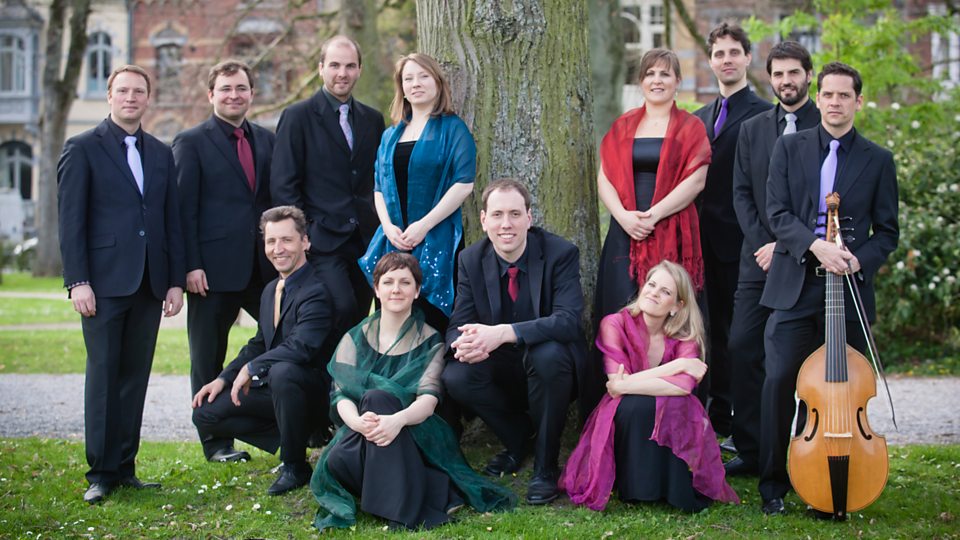
Review: Miller Theatre presents Vox Luminis at Church of St. Mary the Virgin

Image result for vox luminis
My hot take: all concert dress that is not
concert-black-with-pop-of-color should be outlawed.

WHO: Vox Luminis; Lionel Meunier, artistic director
WHAT: ANONYMOUS (XII CENTURY) Lamentation de la Vierge au Croix; LOTTI Crucifixus
a 8; MONTEVERDI Lamento della ninfa; Adoramus te Christe; DELLA CIAIA Lamentatio Virginis in despositione Filii de cruce; D. SCARLATTI Stabat Mater for ten voices and basso continuo
WHERE: Church of St. Mary the Virgin
WHEN: October 19, 2019 at 8pm

When I saw this concert, I had been waiting to see Vox Luminis live for a good long while. I was all slated to go see them last year in southern Connecticut, but a friend called me in at the last second to sub in his run of 25th Annual Putnam County Spelling Bee. I wasn't angry at the time -- I love that show, and I figured I'd get to see Vox Luminis again relatively soon. They tour the US every year, and always end up in NYC at least once.

Well I ran into that friend on the street a couple weeks ago. And told him very matter-of-factly that I'm now angry that he tore me away from that concert. Retroactively. Because, I've decided, any moment that I don't spend listening to Vox Luminis is necessarily inferior to any moment that I do spend listening to Vox Luminis. And any moment I spend listening to Vox Luminis live is better than any moment I spend doing anything else.

Yeah. This concert made me feel feelings. This concert made me cry tears. This concert might be the best I've reviewed on this site thus far.

Vox Luminis changes size based on the performance. They numbered fifteen in this concert -- eleven rotating singers (SSSSAATTTBB) plus a four-person continuo team. They brought along their own organist and viola da gamba player, they hired a lutenist (one of my professors, as it happens -- hi Grant!) and a harpist from the NYC freelance pool.

The concert started with a 12th century French lamentation, sung facing the altar by Vox Luminis's wondrous first soprano, Zsuzsi Tóth. She's kind of my idol -- the soprano I'd want to be in another life. Her voice is too light to float; it just transcends. She has this perfect straight tone that makes her both an ensemble singer and a soloist. Everything that passes through her vocal chords turns to pure syrupy goodness. I even tolerate the low-def YouTube video of her singing the final lament from Carissimi's Jephthe. Because she's that good. I keep hoping she'll release a solo album of her own, though she hasn't yet; I'd give my left arm to hear her team up with a lutenist to record some Josquin or Dowland.

I've been told we resemble each other -- what do we think, peanut gallery?

Their Lotti Crucifixus was great as always, preceded and followed by profound improvisations by organist Anthony Romaniuk, but the thing that brought tears to my eyes was Lamento della ninfa, Claudio Monteverdi's classic tale of lost love. The narrators, a consort of two tenors and bass, stood behind the continuo team; they set the scene with a short introduction. The continuo then started the Lamento's hallmark tetrachord -- A, G, F, E, repeated ad nauseum. Usually, the soprano (la ninfa) gets at most four bars before she makes her entrance. But this time, seven, eight, nine repetitions, and no sign of the soprano.

But...why were the hairs on my neck standing on end? Why did I have chills up my spine? What was that clicking noise coming from next to me?

Clack. Clack. Clack. The slow steps of Estonian soprano Marta Paklar echoed throughout the sanctuary. The continuo must have done close to twenty cycles before she finally got up to the stage -- just further proof that four chords can get you very, very far in the music world. Anyway, Paklar turned around, her face as if she had just finished crying and was about to start again. And then she started singing. And I welled up with tears because her singing was like the most beautiful sobs you've ever heard.

To cap the concert off, Vox Luminis pulled out their signature piece: Domenico Scarlatti's Stabat Mater for ten voices and basso continuo. This was the piece that inspired Lionel Meunier to bring the ensemble together for the first time fifteen years ago. I first heard it on their premiere album from 2007, and their live version did not disappoint. They're have such a forceful composite sound, and yet each vocalists remains a soloist -- how?

I'm hooked. Vox Luminis is my crack. As soon as I left the concert, I put on one of their albums for the walk home. The next day, another. I'm just counting down the days until their next USA tour -- ten months to go I think?

Oh, and by the way, Lionel Meunier says Yale has been holding out against bring Vox Luminis to campus -- I'm about to @ every Yale music handle on Twitter and see if I can change that. Plus, Lionel said he'd buy me a drink if I convinced Yale to have them for a concert -- help a guy out.

Fun fact: Lionel Meunier also plays recorder. Really well.
On the first eight tracks of this album.