Showing posts with label sacred. Show all posts

Monday, November 25, 2019

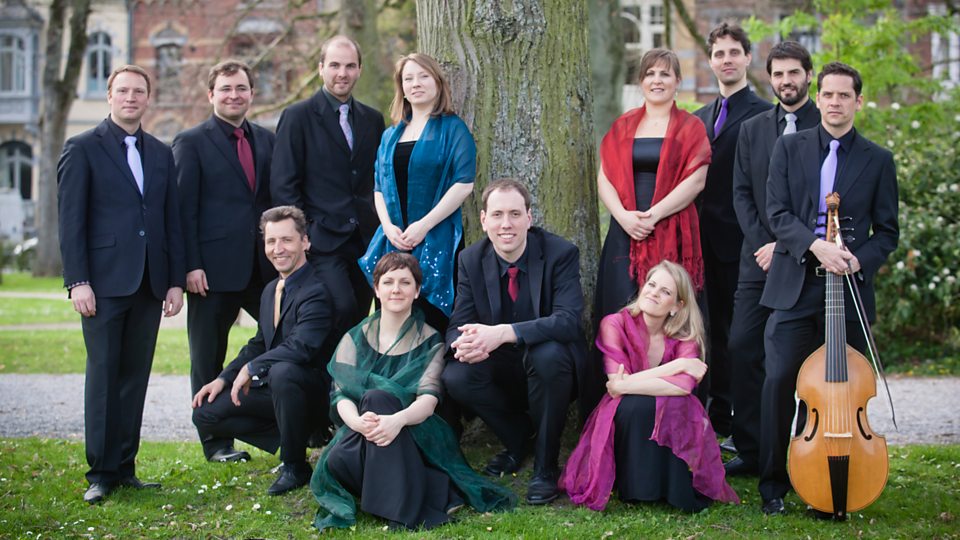
Review: Miller Theatre presents Vox Luminis at Church of St. Mary the Virgin

Image result for vox luminis
My hot take: all concert dress that is not
concert-black-with-pop-of-color should be outlawed.

WHO: Vox Luminis; Lionel Meunier, artistic director
WHAT: ANONYMOUS (XII CENTURY) Lamentation de la Vierge au Croix; LOTTI Crucifixus
a 8; MONTEVERDI Lamento della ninfa; Adoramus te Christe; DELLA CIAIA Lamentatio Virginis in despositione Filii de cruce; D. SCARLATTI Stabat Mater for ten voices and basso continuo
WHERE: Church of St. Mary the Virgin
WHEN: October 19, 2019 at 8pm

When I saw this concert, I had been waiting to see Vox Luminis live for a good long while. I was all slated to go see them last year in southern Connecticut, but a friend called me in at the last second to sub in his run of 25th Annual Putnam County Spelling Bee. I wasn't angry at the time -- I love that show, and I figured I'd get to see Vox Luminis again relatively soon. They tour the US every year, and always end up in NYC at least once.

Well I ran into that friend on the street a couple weeks ago. And told him very matter-of-factly that I'm now angry that he tore me away from that concert. Retroactively. Because, I've decided, any moment that I don't spend listening to Vox Luminis is necessarily inferior to any moment that I do spend listening to Vox Luminis. And any moment I spend listening to Vox Luminis live is better than any moment I spend doing anything else.

Yeah. This concert made me feel feelings. This concert made me cry tears. This concert might be the best I've reviewed on this site thus far.

Vox Luminis changes size based on the performance. They numbered fifteen in this concert -- eleven rotating singers (SSSSAATTTBB) plus a four-person continuo team. They brought along their own organist and viola da gamba player, they hired a lutenist (one of my professors, as it happens -- hi Grant!) and a harpist from the NYC freelance pool.

The concert started with a 12th century French lamentation, sung facing the altar by Vox Luminis's wondrous first soprano, Zsuzsi Tóth. She's kind of my idol -- the soprano I'd want to be in another life. Her voice is too light to float; it just transcends. She has this perfect straight tone that makes her both an ensemble singer and a soloist. Everything that passes through her vocal chords turns to pure syrupy goodness. I even tolerate the low-def YouTube video of her singing the final lament from Carissimi's Jephthe. Because she's that good. I keep hoping she'll release a solo album of her own, though she hasn't yet; I'd give my left arm to hear her team up with a lutenist to record some Josquin or Dowland.

I've been told we resemble each other -- what do we think, peanut gallery?

Their Lotti Crucifixus was great as always, preceded and followed by profound improvisations by organist Anthony Romaniuk, but the thing that brought tears to my eyes was Lamento della ninfa, Claudio Monteverdi's classic tale of lost love. The narrators, a consort of two tenors and bass, stood behind the continuo team; they set the scene with a short introduction. The continuo then started the Lamento's hallmark tetrachord -- A, G, F, E, repeated ad nauseum. Usually, the soprano (la ninfa) gets at most four bars before she makes her entrance. But this time, seven, eight, nine repetitions, and no sign of the soprano.

But...why were the hairs on my neck standing on end? Why did I have chills up my spine? What was that clicking noise coming from next to me?

Clack. Clack. Clack. The slow steps of Estonian soprano Marta Paklar echoed throughout the sanctuary. The continuo must have done close to twenty cycles before she finally got up to the stage -- just further proof that four chords can get you very, very far in the music world. Anyway, Paklar turned around, her face as if she had just finished crying and was about to start again. And then she started singing. And I welled up with tears because her singing was like the most beautiful sobs you've ever heard.

To cap the concert off, Vox Luminis pulled out their signature piece: Domenico Scarlatti's Stabat Mater for ten voices and basso continuo. This was the piece that inspired Lionel Meunier to bring the ensemble together for the first time fifteen years ago. I first heard it on their premiere album from 2007, and their live version did not disappoint. They're have such a forceful composite sound, and yet each vocalists remains a soloist -- how?

I'm hooked. Vox Luminis is my crack. As soon as I left the concert, I put on one of their albums for the walk home. The next day, another. I'm just counting down the days until their next USA tour -- ten months to go I think?

Oh, and by the way, Lionel Meunier says Yale has been holding out against bring Vox Luminis to campus -- I'm about to @ every Yale music handle on Twitter and see if I can change that. Plus, Lionel said he'd buy me a drink if I convinced Yale to have them for a concert -- help a guy out.

Fun fact: Lionel Meunier also plays recorder. Really well.
On the first eight tracks of this album.

Wednesday, July 10, 2019

[27] Miho Hazama's Jazz Mass at Saint Peter's Church | #1Summer50Concerts #JazzWeek

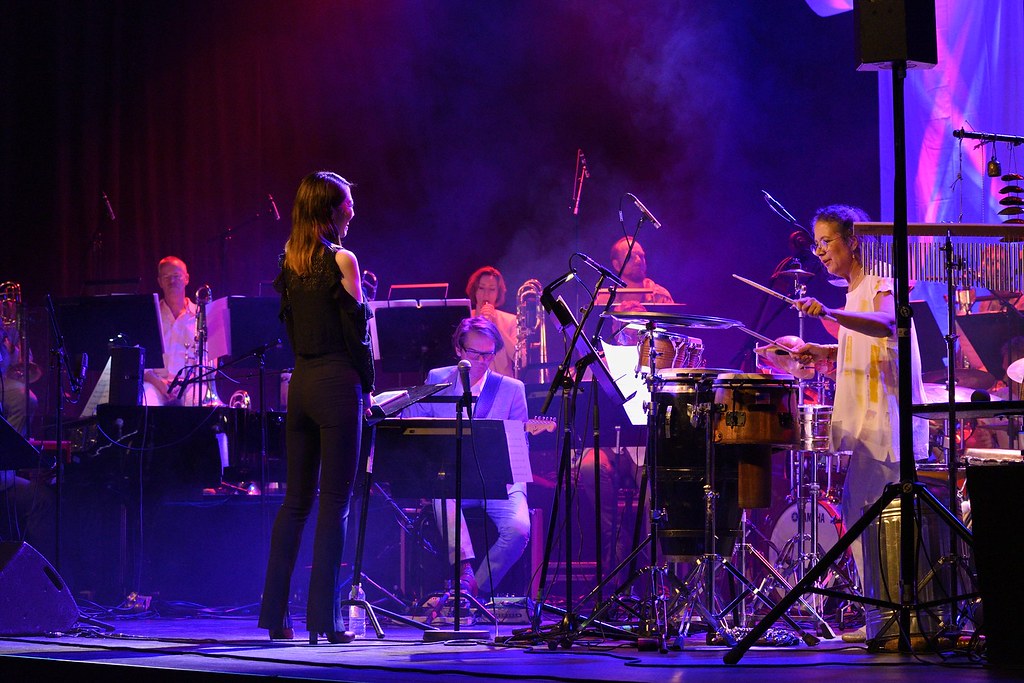
Image result for miho hazama
Hazama conducting her ensemble, the Danish Radio Big Band

WHO: Choir of Saint Peter's; Miho Hazama, piano
WHAT: MIHO HAZAMA Jazz Mass
WHERE: Saint Peter's Church
WHEN: June 26, 2019 at 6:00pm

Okay guys, real talk: we're over halfway through. I'm starting to feel the burnout. Not from going to concerts, but 50 reviews, it's a lot to write. So tonight, I'm gonna take it easy: get ready for my bullet-point review of Miho Hazama's Jazz Mass.


I loved...
  • how the whole thing felt relaxing, suave, and not intended to blow the roof off.
  • how the Sanctus kept switching from 11/8 to 10/8 and then back again -- just as you got into the groove, the choir pulled the rug out from under you
  • Miho Hazama's piano part. Half the time it was an exact doubling of the choir, but the other half of the time it was soloistic and full of flourish.
  • the sermon, to be honest. You know I'm not man of religion, but their hearts, minds, and (most importantly) politics were in the right place.
I'm still thinking about...
  • the tenors who traded four-bar solos. They were very consciously walking the thin line between being creative and offending the pious Wednesday churchgoers.
  • the Kyrie, which lasted all of one or two minutes -- mostly homophonic, full of cool chords.
  • the sanctuary at Saint Peter's. Like, what is that shape?
I wish...
  • they had advertised better! I only heard about it because a friend was singing, and there were maybe ten people there. I was the only one (other than members of the choir) who didn't take communion.
  • I could hear the piece outside of a service. In the service, it was weird and clunky. Outside the service, it would have been a super cool 15 minutes of music.
  • we were allowed to applaud. Church is weird.

Friday, June 14, 2019

[13] Cavalieri's "Rappresentatione di Anima, et di Corpo" at Saint Peter's Church | #1Summer50Concerts

Very Authentic™

WHO: Choir and Period Orchestra of Saint Peter's
WHAT: Rappresentatione di Anima, et di Corpo by Emilio de' Cavalieri
WHEN: June 8, 2019, 4:00pm

My religion of choice is music.

I know it's a little weird to think of music as a religion, but in my mind it makes perfect sense. I love music unconditionally. Music is often my first thought when I wake up in the morning, and my last thought when I go to sleep. I follow music to great lengths, even when it wrongs me and almost leaves me stranded in Riverdale after a concert because did you know NYC express buses cost $6.25 a pop?

Anyway, where was I? Ah yes, religion.

My preferred place of worship for the Church of the Holy Harmonies™ is, naturally, the concert hall. But, sometimes I find myself engaging in religious crossover, so to speak. And that's how I found myself at Saint Peter's for their annual Memorial Vespers service.

What is a memorial vespers? I didn't really know then, and quite frankly I don't really know now. Here's what I do know: I walked into the sanctuary at 4:02pm, after I stupidly chose to climb the stairs at the 53rd/Lex E train station instead of taking the escalator, and we immediately launched into a hymn -- not the Cavalieri itself, mind you, but the thing that was like "okay God, it's Cavalieri time" I guess? At least, that's my agnostic view of it.

No one really performs this Cavalieri, but it has a crucial role in music history as the "first" of so many things: first opera, first sacred opera, first explanation of figured bass notation, the list goes on and on, as I found out by reading the 30 pages of program notes at the back of the 60-page church bulletin.

For what this performance was, I was absolutely blown away. Often, church choirs do a great job of contributing to the worship service, but don't really satisfy beyond that. Cantor Bálint Karosi, a doctoral candidate in composition at Yale, must be a miracle worker, because the mostly-amateur choir sounded fabulous -- prepared, confident, and like they were having the time of their lives.

I'm not really sure what this space is supposed to be -- it's vaguely octagonal at the top, but then
pares down to...a diamond? A square? I don't know, it kinda looks like a sci-fi escape pod.

The professional section leaders from the choir sang most of the solos, but they hired out for a few extra singers to round out the cast. Baritone Anicet Castel (Corpo) and soprano Nola Richardson (Anima) sang and bickered convincingly as the dueling desires of the soul and the body; soaring tenor Elliot Encarnación (Intelletto) set the scene perfectly as an omniscient, intellectual character. The smaller parts of virtues and concepts were all well-sung by members of the choir.

But the highlight came in the form of Filipino-American tenor Enrico Lagasca. I briefly heard Lagasca sing earlier this year in TENET and The Sebastians' performance of Bach's St. Matthew Passion. He only had a couple small parts in addition to his role in the choir, but when he sang those three or four lines (he was, like, third Nazarene or Pilate after he's eaten but before he's crucified Jesus or something like that), my eyes widened, my ears perked up, and I whispered a big fat "holy SH*T" to the friend sitting next to me. Lagasca, despite his small role in this Cavalieri, gave a performance to remember, his rich bass commanding the attention of the audience without a second thought. He's still pretty young -- I truly can't wait until he (inevitably) makes it big and we can go see him as the headliner on concerts.

The orchestra was mostly area freelancers; they sounded extremely well-polished under Karosi, who conducted from the harpsichord. The continuo team, despite being distributed all over the stage, played like a well-oiled machine, and the Italian wind- and viol-consorts provided impressive variety in color. Violinist Isabelle Seula Lee opened the work with an impressive solo from the top of the choir risers, as if an angel coming down from heaven (at least that's what I assume it's supposed to represent? don't quote me on that).

Overall, big fat yes to this concert. Saint Peter's is programming music that other people don't program, and it's not only expanding the minds of church-goers, but appealing to the musical community as well. Keep on the lookout for their season next year -- I'm expecting great things.