"Who had this crazy idea to invent school all of a sudden? Charlemagne!"
I forgot how rough it is to go from doing absolutely nothing to absolutely everything. One day, I'm sitting on the recliner in my room at home watching Netflix, the next day I'm sprawled on my apartment couch after having carried twenty pounds of groceries back from my four classes and three rehearsals. But hey, such is the story of academic vacations.
Anyway, considering that many of you will be dealing with the same thing in the coming weeks, here are five albums that will help you through your first week back on the job (or any rough week, for that matter), whether you're a student or not.
If you ever wanted your classical music with a side of indie (or vice versa): Love I Obey (Rosemary Standley & Helstroffer's Band)
To give you some context, this is the album I listened for comfort when I was stuck on the D train for almost two hours this summer. Rosemary Standley makes her career with indie band Moriarty. Bruno Helstroffer is a blues guitarist who plays early music as a day job. Together, they dreamed up this album of bluesy takes on British Renaissance airs. Standley's voice is (truly, in a non-cliché way) unlike any other singer I've ever heard, throaty and warm with a distinctive twang to the diction. And Helstroffer is just an incredible musician in all respects -- his solo debut is also among my favorite albums ever.
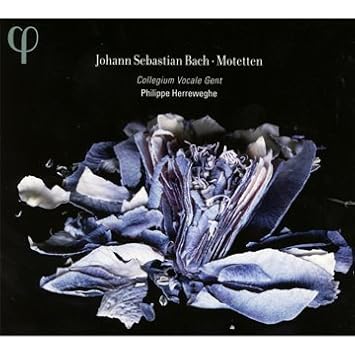
For a really, really good version of a piece you might know: Bach: Motets (Collegium Vocale Gent, cond. Philippe Herreweghe)
This recording is just squeaky clean. Most of the motets are only one singer to a part on this album; the intimate accuracy gives me chills every time. The cast includes Vox Luminis soprano Zsuzsi Tóth; superstar French countertenor Damien Guillon; Bach specialist bass Peter Kooij; and a smattering of other big names in the European early music scene. When I want Bach, this album is my first stop (this version of Jesu, meine Freude is also my go-to tipsy soundtrack, something I can safely say now that I'm 21 😉).
For an album that will replace your dinner party jazz playlist: Jazz på svenska(Jan Johansson, piano; Georg Riedel, bass)
I usually spring for new jazz over old jazz, but this album is a classic (just ask the quarter of a million people who have bought copies). Sparse and smooth, Jan Johansson takes Swedish folk tunes and adapts them for a low-key duo of piano and bass. He treats the original folk tunes with such respect -- from his adaptations, I know exactly how the original was meant to sound. There's a good reason why it's the best-selling Swedish jazz album of all time, and still maintains a degree of relevance more than 55 years after its release.
*swoon*
If you want to hear the best music written for the best instrument you've never heard of: Marais: Pièces favorites (François Joubert-Caillet, viol; L'Achéron)
Marin Marais wrote hours and hours of music for the viol (an earlier predecessor of the modern double bass that looks kind of like a cello -- if you're curious, watch Tous les Matins du Monde starring Gérard Dépardieu). It's all great, but some movements are simply transcendent. François Joubert-Caillet is the single viol player who has most consistently impressed me; here, he's selected a representative sample of Marais's most outstanding works and compiled them onto one phenomenal album. His continuo team is outstanding (continuo is a group of instruments that together comprise accompaniment for baroque music -- usually a melodic instrument and an instrument that plays chords e.g. a second viol and a harpsichord) and help to cement this album among the most satisfying Marais albums on the market today. And if you really like it, you can listen to his most recent album, a six-hour recording of one of Marais's complete books for viol.
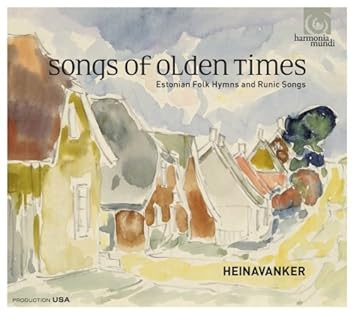
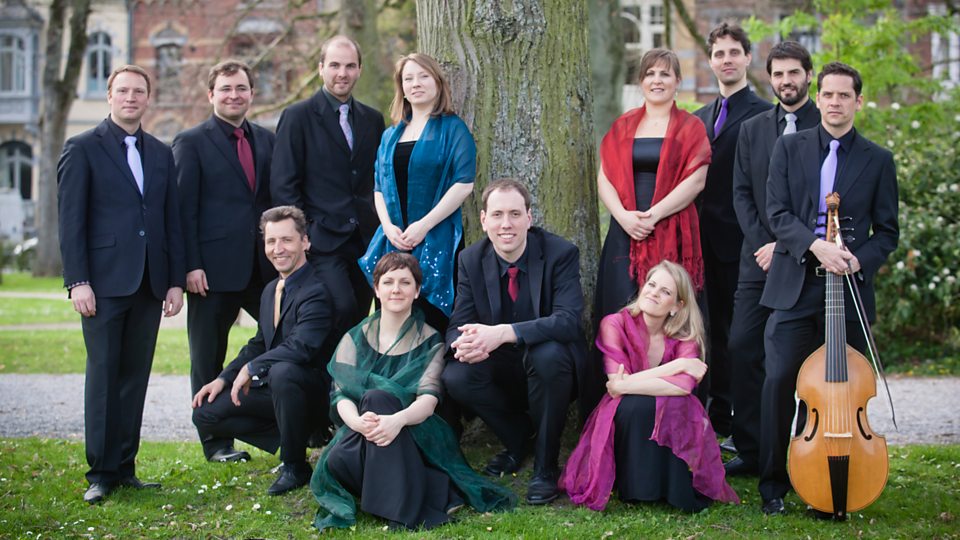
I've sung Heinavanker's praises before, but I'm truly hooked on their album. It's the perfect album for a low-key, relaxing evening -- tonight, I put it on while waiting for my focaccia dough to rise. I'd say I listen at least twice a month, if not more. Cannot recommend highly enough. Cook to it. Meditate to it. Sleep to it. Work to it. Seriously.
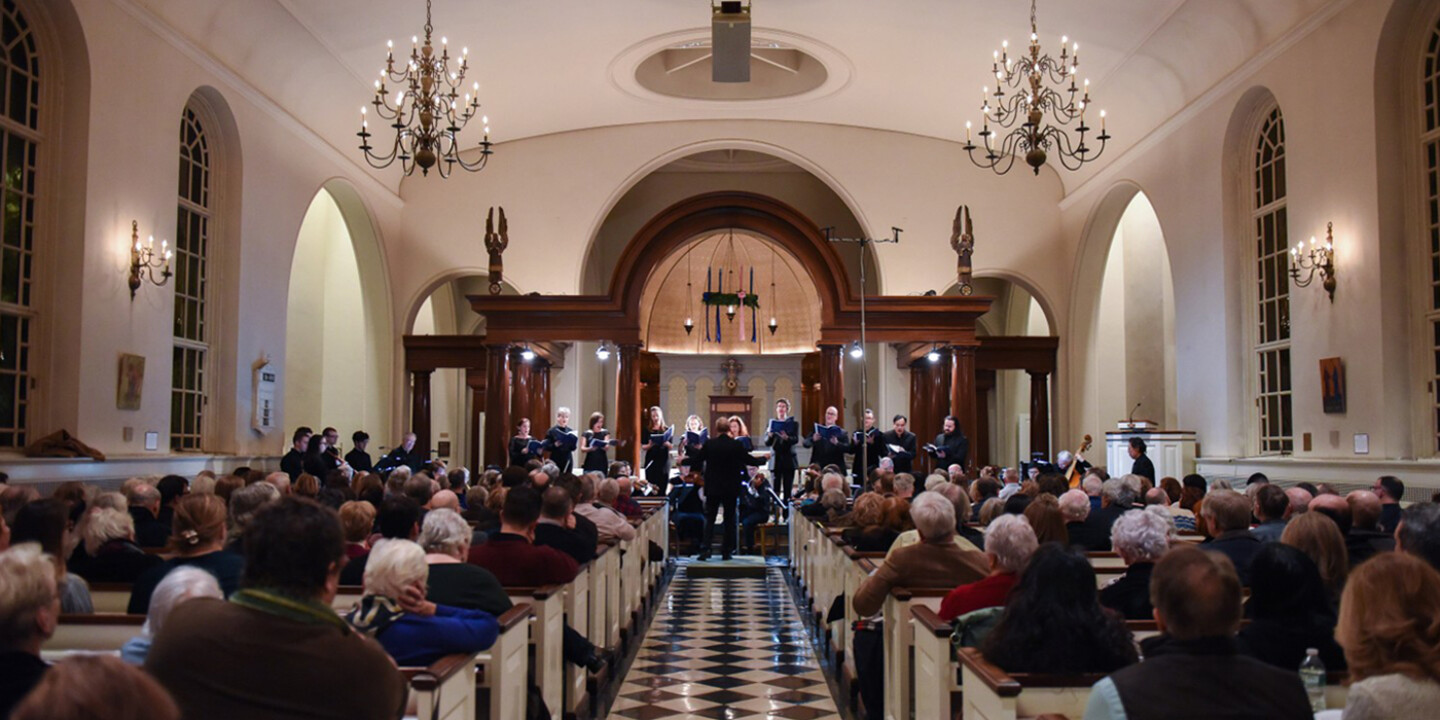
concert-black-with-pop-of-color should be outlawed.
WHO: Vox Luminis; Lionel Meunier, artistic director
WHAT: ANONYMOUS (XII CENTURY) Lamentation de la Vierge au Croix; LOTTI Crucifixus a 8; MONTEVERDI Lamento della ninfa; Adoramus te Christe; DELLA CIAIA Lamentatio Virginis in despositione Filii de cruce; D. SCARLATTI Stabat Mater for ten voices and basso continuo WHERE: Church of St. Mary the Virgin WHEN: October 19, 2019 at 8pm
When I saw this concert, I had been waiting to see Vox Luminis live for a good long while. I was all slated to go see them last year in southern Connecticut, but a friend called me in at the last second to sub in his run of 25th Annual Putnam County Spelling Bee. I wasn't angry at the time -- I love that show, and I figured I'd get to see Vox Luminis again relatively soon. They tour the US every year, and always end up in NYC at least once.
Well I ran into that friend on the street a couple weeks ago. And told him very matter-of-factly that I'm now angry that he tore me away from that concert. Retroactively. Because, I've decided, any moment that I don't spend listening to Vox Luminis is necessarily inferior to any moment that I do spend listening to Vox Luminis. And any moment I spend listening to Vox Luminis live is better than any moment I spend doing anything else.
Yeah. This concert made me feel feelings. This concert made me cry tears. This concert might be the best I've reviewed on this site thus far.
Vox Luminis changes size based on the performance. They numbered fifteen in this concert -- eleven rotating singers (SSSSAATTTBB) plus a four-person continuo team. They brought along their own organist and viola da gamba player, they hired a lutenist (one of my professors, as it happens -- hi Grant!) and a harpist from the NYC freelance pool.
The concert started with a 12th century French lamentation, sung facing the altar by Vox Luminis's wondrous first soprano, Zsuzsi Tóth. She's kind of my idol -- the soprano I'd want to be in another life. Her voice is too light to float; it just transcends. She has this perfect straight tone that makes her both an ensemble singer and a soloist. Everything that passes through her vocal chords turns to pure syrupy goodness. I even tolerate the low-def YouTube video of her singing the final lament from Carissimi's Jephthe. Because she's that good. I keep hoping she'll release a solo album of her own, though she hasn't yet; I'd give my left arm to hear her team up with a lutenist to record some Josquin or Dowland.
I've been told we resemble each other -- what do we think, peanut gallery?
Their Lotti Crucifixus was great as always, preceded and followed by profound improvisations by organist Anthony Romaniuk, but the thing that brought tears to my eyes was Lamento della ninfa, Claudio Monteverdi's classic tale of lost love. The narrators, a consort of two tenors and bass, stood behind the continuo team; they set the scene with a short introduction. The continuo then started the Lamento's hallmark tetrachord -- A, G, F, E, repeated ad nauseum. Usually, the soprano (la ninfa) gets at most four bars before she makes her entrance. But this time, seven, eight, nine repetitions, and no sign of the soprano.
But...why were the hairs on my neck standing on end? Why did I have chills up my spine? What was that clicking noise coming from next to me?
Clack. Clack. Clack. The slow steps of Estonian soprano Marta Paklar echoed throughout the sanctuary. The continuo must have done close to twenty cycles before she finally got up to the stage -- just further proof that four chords can get you very, very far in the music world. Anyway, Paklar turned around, her face as if she had just finished crying and was about to start again. And then she started singing. And I welled up with tears because her singing was like the most beautiful sobs you've ever heard.
To cap the concert off, Vox Luminis pulled out their signature piece: Domenico Scarlatti's Stabat Mater for ten voices and basso continuo. This was the piece that inspired Lionel Meunier to bring the ensemble together for the first time fifteen years ago. I first heard it on their premiere album from 2007, and their live version did not disappoint. They're have such a forceful composite sound, and yet each vocalists remains a soloist -- how?
I'm hooked. Vox Luminis is my crack. As soon as I left the concert, I put on one of their albums for the walk home. The next day, another. I'm just counting down the days until their next USA tour -- ten months to go I think?
Oh, and by the way, Lionel Meunier says Yale has been holding out against bring Vox Luminis to campus -- I'm about to @ every Yale music handle on Twitter and see if I can change that. Plus, Lionel said he'd buy me a drink if I convinced Yale to have them for a concert -- help a guy out.
Fun fact: Lionel Meunier also plays recorder. Really well.
WHO: Matthew Cramer, bass-baritone; Stephen Gamboa-Diaz, harpsichord; Michael Rigsby, viola da gamba WHAT: Works by Dowland, Lambert, d'Ambruys, Purcell, and Bach WHERE: Bethesda Lutheran Church, New Haven CT WHEN: July 7, 2019 at 4:00pm
Concert #34: In Which I Immediately Review Someone Else I Know, Even Though I Just Said That It's A Bad Idea
I discovered this 4th-of-July weekend that New Haven is a ghost town in the summer. Some students stay behind for research; a moderate horde of high schoolers come for summer sessions. But when you walk around, the thing that strikes you is the quiet -- other than the cars, there's no student chatter around campus. It's part eerie and part relaxing.
I was only there for three days (I took a day go to visit my brother in Boston), but by the time my trip was ending it had been five days since I had seen a concert. Far too long, in my humble opinion.
Luckily, a couple of friends decided to beat the summer boredom (not the heat, mind you -- there is no air conditioning at Bethesda) with a half-hour concert of renaissance and baroque music. It was an intimate affair -- maybe twenty people in the audience, half of them wearing shorts and/or crocs (myself included).
I think Matt Cramer sang it in a better key, to be honest, but this is the best recording out there.
So, again with the reviewing-people-I-know thing -- it feels weird to write formal reviews about friends and colleagues, but here goes nothing. The programming for the concert was fantastic, full of tunes that I heard for the first time that afternoon and am still humming right now. Matt Cramer, though a choral conductor by trade, lent inventive and clearly-sung ornamentations. Stephen Gamboa-Diaz showed his harpsichord prowess both as an accompanist and as a soloist; Michael Rigsby rounded out the crew.
But the charm of this concert came not in the music-making, but in the purpose. This wasn't part of a summer concert series or anything like that. When I asked Stephen what compelled him to put on a concert like this, he shrugged and said, "I don't know, Matt was in town for a little while and it was time to do something other than sightread in our living room." And if that's not inspirational, I don't know what is.
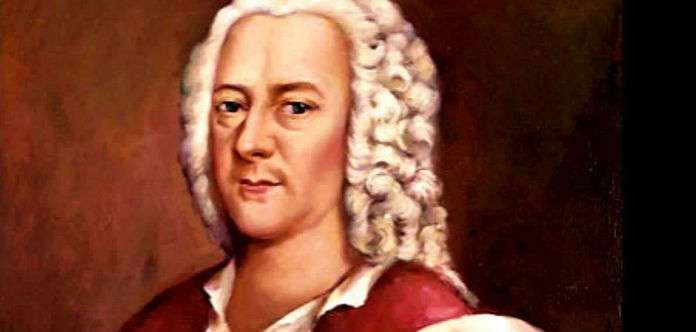
Telemann came at an unfortunate time in music history, at least from a modern perspective. His music is, for the most part, tremendously well-written and creative, but he's been wholly overshadowed by a composer we all know and love: Bach.
The two are, on paper, very similar. They both lived around the same time (though Telemann has a few years over Bach on either end); in fact, Telemann was the first choice for the job of cantor of the Thomaskirche in Leipzig, the job that eventually went to Bach and caused him to write so much of his sacred organ and vocal works. Telemann ended up with a similar, better-paid job in Hamburg.
Twelve solo violin works to Bach's six; twelve solo flute works to Bach's one; twelve fantasias for solo bass instrument (viola da gamba as opposed to Bach's cello) to Bach's six; there is no question that Telemann was equally prolific to Bach. And I would argue that Bach is not "better" in the strictest sense, he was just lucky enough to have fiery revivalists on his side (namely Felix Mendelssohn in the 1820s).
I'm always thrilled when people choose to put on Telemann concerts. It feels to me like they're uncovering a hidden gem, one that people don't hear nearly often enough. So I dragged my friend to this lovely, free (free!) Sunday afternoon concert in the West Village. From what I gathered, the concert was another effort of the fine folks over at Gotham Early Music Scene: bringing early music to the masses since who knows when.
On tap were a smattering of Telemann's Paris Quartets, published in two volumes (1730 and 1738). The catch is that Telemann didn't actually visit Paris until 1737; the first set of quartets is no more Parisian than anything else coming out of Hamburg at the time. But, the second set was so associated with Telemann's celebrity visit to Paris that they were all sort of lumped together in history's ever-reductive eye. A few of Telemann's aforementioned solo works rounded out the program.
"What do you mean you've never heard of me? I'll have you know I'm VERY famous in Paris."
Can you tell I resent the fact that we didn't learn about Telemann in my music history class? I'm having flashbacks to the time I asked my TA why we skipped over Telemann and it ended in a ten-minute rant session about how good Telemann is. And that all happened by shouting/sign-languaging across an opera pit. Oop.
Some parts of this particular performance shone brightly. Flautist Immanuel Davis, a frequent duo partner of Berthold Kuijken (a member of the Kuijken family, three of whose five children are partially credited with the recent resurgence of historically-informed performance). His solo pieces, two fantasias played without pause, were impressively virtuosic without compromising the flavor of the music. His slower passages oozed aristocracy and nobility, while his faster runs were nimble and deft. In the quartets, he shone both as a leader and an instrumentalist.
Harpsichordist Dongsok Shin's fulfilled both of his roles in the performance -- first and foremost as an accompanist, but later on also a soloist -- with admirable flair. His continuo underpinnings were never too flashy so as to take away from the solo players, but were always reliable and tactfully timed. As a soloist, he approached his fantasia with restrained abandon, milking every ounce of passion he could out of a temperamental instrument like the harpsichord.
My friend: "That's A LOT of Telemann." Me: "TELEMANN TIME!!!!!"
Motomi Igarashi, the viola da gamba player for this performance, had her highs and lows. In the slower passages, her interpretation and tone were impressively strong; in the faster passages though, the bow seemed to often slip out from under her. Of course, I should give her the benefit of the doubt because the gamba parts for the Paris Quartets are twice as hard as the flute part and the violin part combined -- read: unplayable by mortals. Igarashi is a specialist on the lirone, an instrument that is like if the gamba could only play chords and nothing else; considering her strengths and weaknesses, I can easily see her being a master of this unusual instrument.
Violinist Leah Gale Nelson, though equally impassioned to her peers, fell a bit short in the technique department. It appeared that she was putting an inordinate amount of pressure on her bow, causing notes to crack or -- worse yet -- not to sound at all. That, combined with her sometimes *interpretive* intonation, detracted from an otherwise musical and enjoyable performance.
I'm of the opinion that it's hard to go wrong with a free concert, and I'm very glad I happened upon this one -- shout-out to Fred, the greeter from the Abendmusik concert I went to last Friday, for letting me know about this concert! Overall, I'm glad I went and I'm looking forward to GEMS's next season.
The Cloisters are pretty inaccessible to anyone who does not have a car. It's super easy to get there if you can drive -- there's a road that dumps you straight outside the ominous stone doors. I, however, am confined to the subway.
The Met Museum website claims that 190th Street is the best subway stop for The Cloisters, but last time I tried to go that way I got very lost in the web of paths that calls itself Fort Tryon Park -- all roads supposedly lead to The Cloisters, except I managed to find all the ones that don't? So, I tried my luck with the next station, Dyckman Street.
Google Maps said 0.2 miles. Little did I know that it's 0.2 miles on a path that basically goes straight up the side of a sheer rock face. And I still managed to get lost. Sigh. There really is no winning.
But I did manage to get there eventually, dripping with sweat (humidity plus out-of-shapeness plus oh yeah literally rock-climbing to the museum), and I got to use the one phrase that I always have dreamed of using: "I'm with the musicians."
The path goes straight up the hill behind this building. No stairs. Just a 50-degree incline and a landing that reeks eternally of weed and sad glutes.
I *may or may not* have begged a professor of mine for a ticket to this concert, in which he was playing recorder, lute, guitar, cittern and percussion (a motley array of instruments, more on that later). I have a bone to pick with the Met museums: their concerts don't offer student ticket pricing, and are often prohibitively expensive, to the tune of $70+ per ticket for the most desirable concerts. I understand that they have to turn a profit, I really do. But they have ticket sales to profit from. The New York Phil offers student tickets, and they turn a profit. What gives?
Anyway, I was offered a comp ticket on the condition that I sell CD's before and after the concert. Troubles with the Square card reader notwithstanding, I had lots of fun trying to come up with one sentence to explain what was on each CD. Sonnambula's album was relatively easy to explain: consort music by Leonora Duarte (mid 1600s Flemish) and her contemporaries. The Piffaro album, which had everything from Obrecht to Lassus to Praetorius to Bach, that was a little bit harder; I ended up settling for "everything before Bach" (conveniently, the album is called "Before Bach").
I slinked into my chair approximately 30 seconds before the show was to start; I barely had time to look at the program before the ensembles paraded onstage, bowed, and proceeded to play their first selection: a bransle (if you see a word you don't know in this post, chances are it's a French dance) for recorders, guitars, and....bagpipes?
I never thought I'd say this, but the bagpipes were nice.
The general format of the concert was grouped into different dance forms: the winds (Piffaro) would play a dance, then the strings (Sonnambula) would play a similar dance, then they'd all do it together. The contrast was always stark, but never jarring; the groups were acutely aware of each others' musical decisions and played off of each other like they had been doing it forever.
Of particular note was the set of volte that finished the concert, starting with a William Byrd arrangement from the Fitzwilliam Virginal Book as expertly interpreted by harpsichordist James Kennerly, which Sonnambula spryly repeated with gusto and joie de vivre. I had to leave (to reset the CD table) before the encore, but rest assured there was an encore, and it's currently stuck in my head even though I haven't the foggiest idea what it is.
There is no question that Sonnambula is a fabulous ensemble comprised of some of the best historically-informed string players (and one harpsichordist) in the NYC area. You will, without fail, have a lovely concert experience with them. Piffaro, though, is the real pièce de résistance of the concert. Each member of Piffaro played no fewer than four instruments, ranging from recorders of all sizes to krummhorns and dulcians and percussions and guitars and...the list goes on. Piffaro's concerts not only exhibit the highest level of musicianship -- the sackbut players played their instruments better than most of the trombone playing I've heard in my life -- but each concert is also an educational event. Co-director Bob Wiemken gives a humorous, yet thorough description of the millions of instruments that the group plays, rendering the concert appropriate for all ages.
The view on the way out of the park -- I tried to take it where the car was out
of the frame but....just kidding, I didn't even try to get the car out because I am LAZY
As I left, I decided I would try my hand at getting back to the 190th Street A train stop. I was treated to the most gorgeous view -- I think Fort Tryon Park may be the most beautiful spot in Manhattan. And what's more, I didn't even get lost. Are you proud of me?
WHO: Abendmusik, sponsored by Gotham Early Music Scene WHAT: Fantasias and Consort Sets by John Jenkins and William Lawes WHERE:Church of St. Luke in the Fields WHEN: May 31, 2019, 8:00pm
I didn't know this when I started the week, but my office closes at 2pm on Fridays, which is super nice. So, I did what any sensible person would do with a free Friday afternoon: I took a nap. And we're not talking a graceful little catnap. When I say I took a nap, I mean one-hour-plus, spider-sprawled on my bed, snoring, mouth wide open. You know the kind.
I set my alarm to go to this concert, and when I woke up, I could barely move. But, like a good person, I dragged myself out of bed and hopped the 1 train downtown -- I figure if I set a precedent where I don't go to concerts because I'm "too tired" (a concept that college students quickly learn is merely a construct), then I'm never going to get to 50 this summer.
I'm still rubbing sleep from my eyes when I get to St. Luke in the Fields, a gorgeous Episcopal church in the West Village. I step inside and go to the ticket desk; the person selling tickets seems remarkably chipper. I ask for a student ticket, and the look on the ticket-seller's face turns from chipper to chipper-er.
The beautiful interior of St. Luke in the Fields
It's at that point that I look around and realize that I'm the youngest person there by a margin of probably 30 years. The guy behind the desk is just thrilled that someone under the age of 40 is at this concert.
This happens all the time. I'm used to it at this point, but usually I'm the only one who notices. Anyway, we get to talking, and I learn about Gotham Early Music Scene (GEMS), which is an organization dedicated to scheduling and programming interesting early music in NYC. They give free weekly concerts (Thursdays 1:15-2:15, I'll definitely keep that in mind for when I retire) as well as weekend concerts. They do everything from Bach to Renaissance polyphony, and I was even told about a concert of English song from 650AD put on by a couple of retired musicologists. Overall, a good organization.
Abendmusik's de facto director, Patricia Ann Neely, is as much musicologist as she is performer. Her viola da gamba playing was nimble and musical, but even her best performance moments paled in comparison to the program notes she wrote. The turn of the 16th century is a supremely unrelatable time for modern audiences, so Neely framed the program (consort sets by William Lawes and John Jenkins) starting with the works' rediscovery circa the British industrial revolution. The notes wove a unique narrative, one that evidently required a good deal of research and general knowledge.
The performance itself was charming. It really makes me sad that barely anyone performs this early English string music, because the pieces are really gems. They have a perfect balance of simplicity and complexity, not so boring that your ear has nothing to latch onto, but also not so complex that...well...your ear has nothing to latch onto.
Abendmusik played with gusto and spirit -- it was clear that they had all played together a good deal. Occasionally, one of the members would get lost -- because of the imitative nature of this kind of music, if you get lost it's nearly impossible to correct yourself -- but that only contributed to the lovely and intimate nature of the concert. It was as if the ensemble was expressly stating that they cared more about conveying a message than conveying it perfectly, a message that I agree with and that I wish reverberated a bit more with the rest of the classical music community.
Abendmusik performs regularly at GEMS's free concert series, so if you get the chance to see them you definitely should. Even if they're not as perfect as some of the full-time viol consorts (*ahem* FRETWORK *ahem*), they still play underperformed works at a remarkably high level and with a great amount of audience camaraderie. A fabulous low-key way to spend an evening.
An accidental photo that I took of a friend's viola da gamba scroll -- it happened to turn out very *aesthetically*