Showing posts with label flute. Show all posts

Thursday, August 22, 2019

[49] Faculty Concert at Chamber Music Conference of the East, Bennington, VT | #1Summer50Concerts #ConcertGetaway

Image result for bennington chamber music conference

WHO: Faculty of Chamber Music Conference of the East
WHAT: SCOTT WHEELER Piano Trio No. 2 "Camera Dances"; HINDEMITH Kleine Kammermusik, Op. 24 No. 2; BRAHMS Piano Quintet, Op. 34
WHERE: Greenwall Auditorium, Bennington College, Bennington, VT
WHEN: August 3, 2019 at 8:00pm

An abridged list of things I did during my week at Bennington:
  • Play the Beethoven "Ghost" trio
  • Play Shostakovich's 7th string quartet
  • Play a Beethoven quartet (Op. 18 No. 6, for those who are counting)
  • Play a Mendelssohn quartet (Op. 12)
  • Explain to my friends approximately 47 times that yes, I go to a music camp that requires me to learn four full pieces in one week, and yes, this is my idea of fun
  • Get called a masochist approximately 47 times
  • Have a conversation with the Bennington College music librarian that ended with, "I'm so glad that score of Schoenberg's Book of the Hanging Gardens (which was on sale for $2 at the annual music sale) is going to a good home." Why yes, I'll feed it and water it and turn it towards the sunlight, just like I do with the rest of my....scores?
  • Read Shostakovich's second piano trio (read: really really hard) with one of those pianists who is like "oh yeah, I'm just sightreading" and then proceeds to nail 90% of the notes at full tempo. She may be reading this. She knows who she is.
  • Eat lots of dining hall food, reminding me that yes, I am happy to have a kitchen this upcoming year
  • Pitch the #1Summer50Concerts project approximately 47 times
  • Explain approximately 47 times that yes, I went to 50 concerts and yes, I enjoyed myself
  • Get called a masochist approximately 47 times
  • Blog while sitting on a bench that overlooks miles and miles of open field (with a little path weed-whacked into it so people can go on walks through the waist-high grass) while listening to Alexandre Tharaud's recordings of the last three Beethoven piano sonatas (would recommend)
  • Explore said open field, for shits and giggles
  • Come across a mystical forest path that looked something like this:
  • Enter the forest path
  • Come out the other side to this view:
  • Scare a mama deer a little further down the path
  • Stargaze
  • Obsess over shoes and Bruno Helstroffer (the world's sexiest lute player) with a group of snarky childless 40-somethings
  • Sweat. A lot. The music building wasn't air conditioned.
An unabridged list of things I did not do during my week at Bennington:
  • Sleep

Wednesday, August 7, 2019

[41] Teatro Nuovo presents Rossini's "La gazza ladra" at the Rose Theater @ Jazz at Lincoln Center | #1Summer50Concerts

Hannah Ludwig welcoming the audience as Pippo (PC: Steven Pisano)

WHO: Soloists, Chorus, and Orchestra of Teatro Nuovo; Rachelle Jonck, maestro al cembalo; Jakob Lehmann, primo violino e capo d'orchestra
WHAT: ROSSINI La gazza ladra
WHERE: Rose Theater @ Jazz at Lincoln Center
WHEN: July 18, 2019 at 7:30pm

Concert #41: In Which I See a Three-And-A-Half-Hour Opera That Usually Gets Cut Down to Two Hours for a Reason

Don't get me wrong, I'm not faulting Teatro Nuovo for this. I totally understand wanting to play every note that the composer wrote.

But Rossini wrote this opera for a different audience. Back in the early 1800s, the opera was as much a place for social hour as it was a place for musical edification. The 20-minute scenes sung by the protagonist's first cousin's husband's servant were the perfect opportunity for Signore and Signora Garganelli to go over and play cards with their aristocratic friends.

But it's the 21st century. Friends are obsolete. Our phones are the new "friends."

Okay, maybe that's kind of a dystopian read on things. But Wagner invented this idea that music should be all-consuming and everyone should be quiet and do nothing but listen. And now we just sit and listen and roll our eyes at people who cough (don't lie, I do it too -- concert halls literally provide free cough drops, but you can't be bothered to pick a few up before the performance?).

Anyway, this is all a long-winded way of saying that I understand why The Met cuts Gazza ladra to two hours. But I'm glad I got to see the whole thing -- again with that reproducibility factor!

You've definitely at least heard the overture to La gazza ladra ("The Thieving Magpie"). It's a favorite among film producers, most notably used in A Clockwork Orange. Couldn't tell you where in the movie -- I don't do psycho-crime movies.

ANYWAY, now that my anti-establishment cynicism is out of the way, I really really enjoyed Teatro Nuovo's performance. The orchestra sounded as great as ever, and I think they saved their real A-cast for this performance. The acting was more acute, though that could possibly be because the staging was slightly more...well, staged. There was a long table in the middle of the stage that at least gave the performers something to work with.

The many faces of Hans Tashjian (PC: Steven Pisano)

The highlight of the performance was mezzo Hannah Ludwig as Pippo, the cheeky trouser-role servant who eventually exonerates the protagonist from her execution (have I mentioned that Italian tragedies are indistinguishable from Italian comedies until the last ten minutes?). Not only did she sing beautifully, but she sparkled in the role, at once naive and all-knowing. Bass Erik van Heyningen's constantly-concerned portrayal of the defected soldier Fernando Villabella was poignant, coupled with a sweetly roaring bass. Hans Tashjian, the main villain, brought an intentional apathy to his character, reinforcing his nuanced vocal technique with an impressive repertoire of cunning smirks, each distinct from the last. And of course, I'd be remiss if I didn't mention the sorrowful song of the protagonist herself, Alisa Jordheim as the condemned (then not) Ninetta.

To the uncredited chorus member who played the magpie: the feather-boa-plus-tuxedo look is a keeper. He managed to be the funniest character, even though he only sang two solo lines -- the way he raced around the stage had a Road Runner-esque flair.

The orchestra, as usual, sounded great; a few of them even joined in on some of the buffo fun, the principal flautist and oboist each in their own little solo world until the oboist "realized" that everyone was concentrating on the flute player's thirty-second notes instead of her quarter notes.

So yes, I sat through three and a half hours of opera on this one Thursday night. But I don't have a single regret. I've said it once, and I'll say it again: reproducibility factor never steers me wrong!

Tuesday, June 25, 2019

[21] The Knights play Jacobsen, Sanna, Britten, Bielawa, and Mendelssohn at Temple Emanu-El | #1Summer50Concerts

The gorgeous (GORGEOUS!!!!) Temple Emanu-El

WHO: The Knights; Colin and Eric Jacobsen, directors; Kristina Nicole Miller, narrator and vocals; Nicholas Cords, viola; Alex Sopp, flute; Michael Atkinson, horn
WHAT: C. JACOBSEN, E. JACOBSEN, KYLE SANNA Compositions after Walt Whitman; BRITTEN Lachrymae; LISA BIELAWA Fictional Migration; MENDELSSOHN Octet, Op. 20
WHERE: Temple Emanu-El
WHEN: June 18, 2019, 7:00pm

"Don't fart."

That's all I can think when I sit in the audience of live-broadcast concerts. A cough is forgivable; a sneeze even more so. But if those WQXR microphones are poised just right, your toot could be the talk of the nine people who still listen to live concerts on the radio.

God, look at me. Potty humor, radio jokes, you'd think I grew up in the 2000's or something.

This concert was the opening of this year's Naumburg Orchestral Concerts, so named for the Naumburg Orchestral Shell in Central Park where they're usually played. However, 114 years of free orchestral concerts can take its toll, and the shell was in dire need of some TLC, so the concerts were moved for this year to the gorgeous (GORGEOUS) Temple Emanu-El on E 65th. Good thing, too -- it was rainy and disgusting while we were standing in the long, long line to get inside.

The Knights are one of the more active independent orchestras in New York City, the kind that starts with friends playing chamber music in someone's living room. This was their tenth consecutive appearance at the Naumburg series, and you could tell they felt right at home. This concert was a dual celebration: first and foremost, they were celebrating the 200th anniversary of Walt Whitman's birth. However, they also managed to get their hands on a tremendous Amati viola which was celebrating its 400th birthday -- move over, Whitman!

The full WQXR broadcast from the other night, fart-free!

Though Kristina Nicole Miller was credited in the program as a "narrator," her singing was one of the highlights of the first half. Kyle Sanna's Whitman composition, after a section of Song of Myself, morphed into something of a Disney-meets-modernism situation -- very interesting indeed. Miller would have been right at home as a Belle or Ariel, but her clear understanding of the complex Whitman propelled her far ahead of any Disney aspiration.

Lisa Bielawa's piece took many a cue from composer and amateur ornithologist Olivier Messiaen, weaving birdsong in and out of the gossamer orchestral texture with impressive aptitude -- though Bielawa's birdsongs were not taken from real birds, they were just as convincing as any material Messiaen drew from. Flautist Alex Sopp channeled her inner avian as though she'd been doing it regularly all her life; hornist Michael Atkinson played similarly well, but the gorgeous (GORGEOUS) Temple Emanu-El's acoustics did him a disservice by swallowing him completely.

The Amati came out in the hands of violist Nicholas Cords for Britten's Lachrymae, a piece modeled after John Dowland's 17th-century consort work of the same name. Cords played ridiculously well, from what I could hear of him -- Emanu-El is harsh on all mid-range instruments, not just horns. Too often, modern reinterpretations of early pieces suffer from hypermodernization; Cords and The Knights, under the functional baton of Eric Jacobsen, infused the Lachrymae with almost as much Dowland as Britten.

As for the Mendelssohn -- well, it certainly did the job. Eric Jacobsen pulled out his cello and joined the lively octet with his brother (concertmaster Colin Jacobsen), Nicholas Cords (400-year-old Amati in his hands), and five others from the orchestra. It was great. It was everything you wanted from chamber music. By the time the ensemble played the final E-flat chord, I was fully convinced that a) they had been playing together as an octet for years, and that b) they were all best of friends. Whether either of those were true, who knows, but that's the kind of emotion they exuded, and let me tell you, I couldn't wipe the grin off my face for the rest of the evening.

Free concerts are always worth it, but that doesn't mean that some free concerts aren't better than others. The Knights have impressed once again that not all great music has to come at a great price; some organizations care more about serving their audiences than they do about turning a profit. All musical ensembles want to serve their communities to at least some extent. And I think the Naumburg series has refined that art down to a T.

Stay tuned for the next Naumburg concert on July 10: Venice Baroque Orchestra with Anna Fusek, recorder!

Thursday, June 6, 2019

[7] Baroque in the Fields presents Telemann at St. Luke in the Fields | #1Summer50Concerts

WHO: Baroque in the Fields sponsored by Gotham Early Music Scene
WHAT: Telemann Paris Quartets and solo fantasias
WHERE: Church of St. Luke in the Fields
WHEN: June 2, 2019, 3:00pm

Telemann came at an unfortunate time in music history, at least from a modern perspective. His music is, for the most part, tremendously well-written and creative, but he's been wholly overshadowed by a composer we all know and love: Bach.

The two are, on paper, very similar. They both lived around the same time (though Telemann has a few years over Bach on either end); in fact, Telemann was the first choice for the job of cantor of the Thomaskirche in Leipzig, the job that eventually went to Bach and caused him to write so much of his sacred organ and vocal works. Telemann ended up with a similar, better-paid job in Hamburg.

Twelve solo violin works to Bach's six; twelve solo flute works to Bach's one; twelve fantasias for solo bass instrument (viola da gamba as opposed to Bach's cello) to Bach's six; there is no question that Telemann was equally prolific to Bach. And I would argue that Bach is not "better" in the strictest sense, he was just lucky enough to have fiery revivalists on his side (namely Felix Mendelssohn in the 1820s).

I'm always thrilled when people choose to put on Telemann concerts. It feels to me like they're uncovering a hidden gem, one that people don't hear nearly often enough. So I dragged my friend to this lovely, free (free!) Sunday afternoon concert in the West Village. From what I gathered, the concert was another effort of the fine folks over at Gotham Early Music Scene: bringing early music to the masses since who knows when.

On tap were a smattering of Telemann's Paris Quartets, published in two volumes (1730 and 1738). The catch is that Telemann didn't actually visit Paris until 1737; the first set of quartets is no more Parisian than anything else coming out of Hamburg at the time. But, the second set was so associated with Telemann's celebrity visit to Paris that they were all sort of lumped together in history's ever-reductive eye. A few of Telemann's aforementioned solo works rounded out the program.
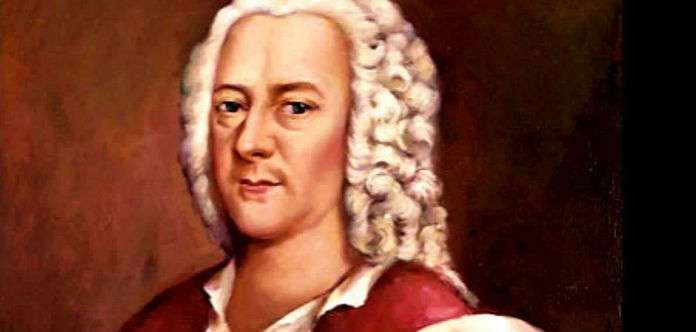
Image result for telemann
"What do you mean you've never heard of me? I'll have you know I'm VERY famous in Paris."

Can you tell I resent the fact that we didn't learn about Telemann in my music history class? I'm having flashbacks to the time I asked my TA why we skipped over Telemann and it ended in a ten-minute rant session about how good Telemann is. And that all happened by shouting/sign-languaging across an opera pit. Oop.

Some parts of this particular performance shone brightly. Flautist Immanuel Davis, a frequent duo partner of Berthold Kuijken (a member of the Kuijken family, three of whose five children are partially credited with the recent resurgence of historically-informed performance). His solo pieces, two fantasias played without pause, were impressively virtuosic without compromising the flavor of the music. His slower passages oozed aristocracy and nobility, while his faster runs were nimble and deft. In the quartets, he shone both as a leader and an instrumentalist.

Harpsichordist Dongsok Shin's fulfilled both of his roles in the performance -- first and foremost as an accompanist, but later on also a soloist -- with admirable flair. His continuo underpinnings were never too flashy so as to take away from the solo players, but were always reliable and tactfully timed. As a soloist, he approached his fantasia with restrained abandon, milking every ounce of passion he could out of a temperamental instrument like the harpsichord.

My friend: "That's A LOT of Telemann." Me: "TELEMANN TIME!!!!!"

Motomi Igarashi, the viola da gamba player for this performance, had her highs and lows. In the slower passages, her interpretation and tone were impressively strong; in the faster passages though, the bow seemed to often slip out from under her. Of course, I should give her the benefit of the doubt because the gamba parts for the Paris Quartets are twice as hard as the flute part and the violin part combined -- read: unplayable by mortals. Igarashi is a specialist on the lirone, an instrument that is like if the gamba could only play chords and nothing else; considering her strengths and weaknesses, I can easily see her being a master of this unusual instrument.

Violinist Leah Gale Nelson, though equally impassioned to her peers, fell a bit short in the technique department. It appeared that she was putting an inordinate amount of pressure on her bow, causing notes to crack or -- worse yet -- not to sound at all. That, combined with her sometimes *interpretive* intonation, detracted from an otherwise musical and enjoyable performance.

I'm of the opinion that it's hard to go wrong with a free concert, and I'm very glad I happened upon this one -- shout-out to Fred, the greeter from the Abendmusik concert I went to last Friday, for letting me know about this concert! Overall, I'm glad I went and I'm looking forward to GEMS's next season.