Showing posts with label soprano. Show all posts

Saturday, March 28, 2020

Album Reviews: My Liederabend | An Album a Day Keeps the Doctor Away

You may notice I haven't posted in a few days. This week, I learned that online school is still a full-time job when you procrastinate as much as I do. Oh well.

But that doesn't mean I haven't been listening -- in fact, as assignments pile up, I've been listening more than ever!

A few nights ago, I had a particularly difficult and long-winded problem set. Long enough that I feel like I can put "reconstructing sounds of proto-Quechuan" on my resumé now. I found myself hankering for lieder, so I put on one album after another and next thing I knew, I had gone through four full albums.

I figured it prudent for my time (and yours) to do a mini-reviews post rather than four full-length posts. So here you go: a summary of my liederabend.


1. The Contrast: English Poetry in Song
Carolyn Sampson, soprano; Joseph Middleton, piano. Works by Walton, Vaughan Williams, Bridge, Quilter, and Huw Watkins. Released on BIS in February 2020.

I don't believe in God. But I do believe in Carolyn Sampson. And that's kind of the same thing.

I think there might have been a time when Carolyn Sampson was a strict early music specialist, but thankfully she's branched out. Of course, her Bach solo cantatas are still my favorite out there, but her musical sensibility applies so well to everything and anything, from heavily stylized French baroque to quirkier selections like these. I'm not going to try to find words to describe her voice, but let's just say this: I sent this album to a good friend and her reaction was (verbatim): "Who is this angel, and when can I see her live?" Joseph Middleton has that perfect touch of a pianist who specializes in lieder, never overshadowing the voice and always magnifying its drama. They are the unstoppable duo.


2. A Lesson in Love
Kate Royal, soprano; Malcolm Martineau, piano. Works by pretty much anyone you can think of. Released on Warner Classics in February 2011.

The program of this album is all over the place in the best possible way. Cabaret songs, Schumann and Brahms, folk music of America, Britain, Ireland, France, all in some of the best versions I've heard. Case in point: almost every soprano has recorded "Gretchen am Spinnrade" at some point, and Royal's rendition is easily in my top three (right up there with Carolyn Sampson). Her American music is better than most American singers -- two different takes of William Bolcom's jazz-twinged "Waitin'" give the varied program a distinct contour and a resounding cadence, and a short pastorale of Copland left me halfway to tears. Malcolm Martineau accompanies the simple British airs -- think "Danny Boy" and "O Waly, Waly" -- with just as much tender attention as the more conventionally difficult music on the program.


3. Art Songs
Fiora, soprano; Paul Hankinson, piano. Works by a lot of people, look for yourself you lazy bum. Self-released in 2002.

I'm pretty sure Fiora hasn't thought about this album in awhile. She's now a successful singer-songwriter with 600,000 monthly listeners on Spotify. But before she hit her fame in that field, she released a single album of art songs -- she's a classically trained vocalist and composer. Honestly, I was really impressed. She's got this lovely syrup to her voice, fluid and unencumbered by excessive vibrato. Her program has a couple standouts, including the opening movement from Hindemith's "Das Marienleben" (a piece that makes me regret not being a soprano) and a beautiful original setting of "The Watcher" (couldn't figure out who the poet was).


4. The Divine Muse
Mary Bevan, soprano; Joseph Middleton, piano. Works by Haydn, Schubert, and Wolf. Released on Signum Classics in January 2020.

Haydn's vocal works never get the love they deserve. Recently, I've fallen in love with Arianna a Naxos, a virtuosic monodrama depicting the scene where Theseus abandons Ariadne on the island of Naxos. Fiery, passionate, and vocally demanding, the music suits Mary Bevan's full voice perfectly, Ariadne's agony clear from her frenzied inflections. She cools significantly for selections from Wolf's vast vocal opus, the crunchy harmonies providing latticework for her calming melodic overlay. And of course, you can never go wrong with Schubert. Overall, a fabulous album -- though maybe not as fabulous as her recording of Holst's set of four songs for soprano and violin, one of my favorite pieces ever (I have a lot of favorite pieces ever).

Wednesday, March 18, 2020

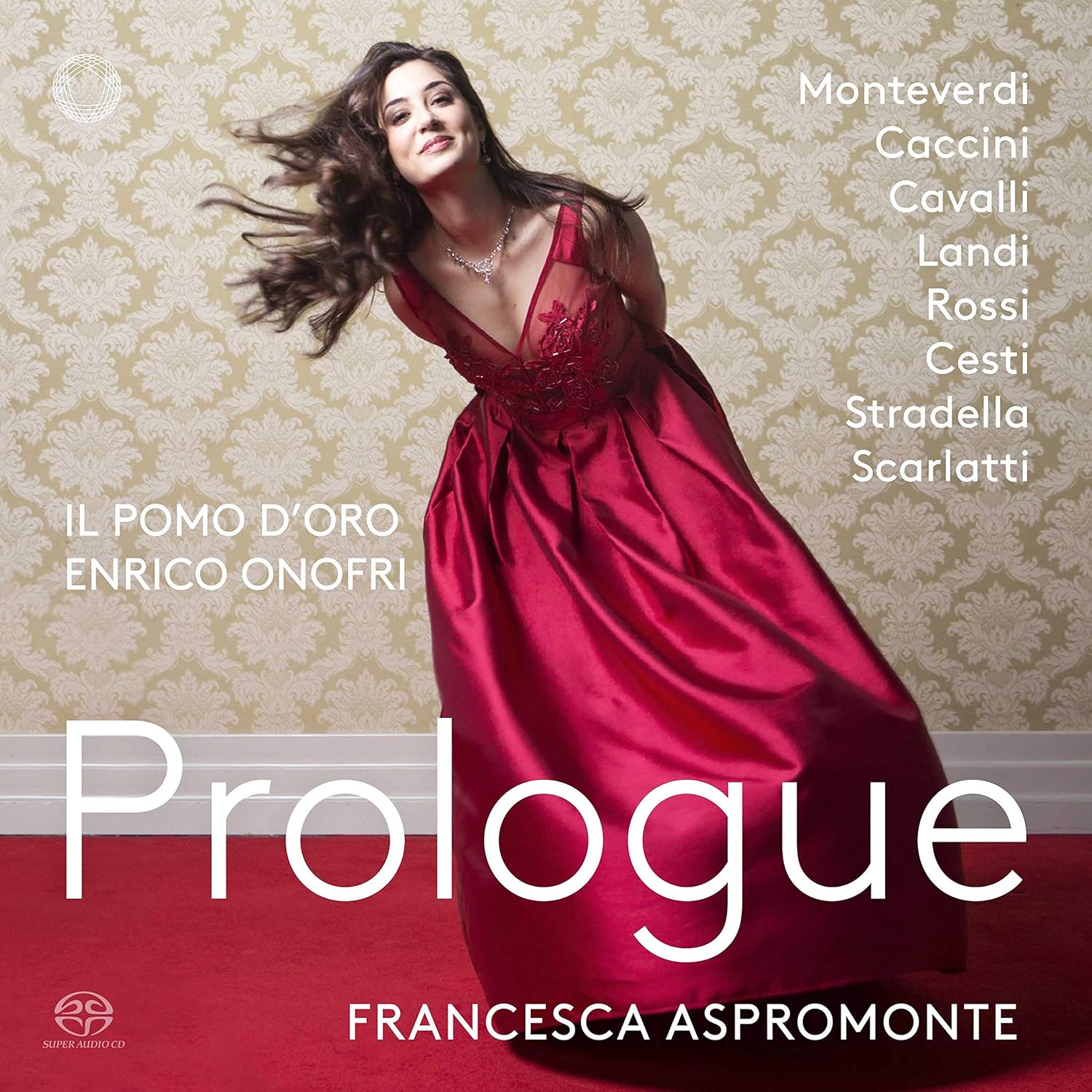
Album Review: "Prologue" by Francesca Aspromonte and Il Pomo d'Oro | An Album a Day Keeps the Doctor Away

Image result for aspromonte prologue

WHO: Francesca Aspromonte, soprano; Il Pomo d'Oro; Enrico Onofri, director
WHAT: Prologues to operas by Monteverdi, Caccini, Cavalli, Landi, Rossi, Cesti, Stradella, and A. Scarlatti
RELEASED: May 2018
LABEL: Pentatone

Guys, I'm really fucking bored. My brain is kinda turning to mush. I've turned to practicing cello to give myself something to do. Do you know how much I hate practicing? A lot. I hate practicing a lot.

Anyway, one thing I think we could all use during this weird, crazy time is music to listen to -- according to an email that one of my professors sent a couple hours ago, "music can be at its most powerful in times of crisis and uncertainty." Musicians always know how to cheer up a crowd, huh?

So I'm going to try to review an album every day that I'm stuck inside. No particular theme, just what I happen to be listening to at the moment. They're not going to be long, but hopefully they'll keep me busy and give you some new music to try out.

One thing that you should know about me is that I organize all the music I have yet to listen to into 60 or so playlists according to instrumentation and time period. "Romantic Keyboard"; "20th-Century Choral"; you get the idea. My "Baroque Solo Vocal" list is on the long side -- up around 170 hours (but I'm also terrible about clearing out what I've already listened to).

Today, I wanted Italian baroque opera, probably because I'm mourning the cancellation of Yale's annual baroque opera project (Cavalli's Doriclea, for anyone who cares -- good luck finding a recording). Luckily, this was near the top of my list.

Though prologues have fallen out of fashion in opera today, they were among the most important parts of early operatic structure. An allegorical character -- usually just named "Prologue" -- would come onstage and address the audience directly, breaking the fourth wall and foreshadowing the overarching themes of the plot to come. Usually, this takes the form of a recitative (imagine you're speaking, but while singing one note over and over again) with instrumental interludes (usually ornamented versions of a single theme).

Owning a recitative is hard. I've tried (and failed) myself -- it takes a lot of energy to make a repeated note interesting. You wouldn't know that from Francesca Aspromonte's performance. Recitative is clearly second-nature to her; her text stresses land with gravity, but don't halt forward momentum. Her voice is clear and sweet, blooming beautifully in the brief arias where she has less text to worry about.

Il Pomo d'Oro somehow put out six albums in 2018 alone, and all of the ones I've listened to are fantastic. This pared-down ensemble of a couple violins and a continuo section hits the mark; the violinists clearly play together rather than following one another, and the harpsichordist's improvisations combine pinpoint precision with wild, unhinged improvisation.

Great album, would recommend.

Wednesday, December 4, 2019

Review: Les Arts Florissants at The Met Cloisters


WHO: Les Arts Florissants; Paul Agnew, director
WHAT: GESUALDO Tribulationem et dolorem; Responses for Maundy Thursday; Miserere mei Deus (Psalm 50)
WHERE: Fuentidueña Chapel at The Met Cloisters
WHEN: October 20, 2019 at 1:00pm (yes, I know I'm late)

I think I'm starting to get the hang of these concerts at The Cloisters. I usually don't get lost on my way from the subway station anymore. I know where all of the good views across the Hudson are (#doitforthegram -- except I'm not on Instagram because I'm a #grandma). And when I walked into the Fuentidueña Chapel for the second time in 24 hours, the 12th-century statue of Jesus hanging from the cross started chatting me up as if we were old friends.

Divine intervention? Sleep deprivation? The world may never know.

I missed Les Arts Florissants when they did a huge French baroque opera spectacle at the Brooklyn Academy of Music last year. Unfortunately, I have to prioritize school first (much as I wish I didn't) -- I occasionally drop down into NYC for a concert here or there, but I often pay the price of a sleepless week to follow.

I saw the listing for this concert. I checked my calendar. October break. It was destiny. Or maybe just luck. But either way, I had to go. I grabbed a ticket.

So, for those of you who don't know Les Arts Florissants, let me tell you a bit about the ensemble. They have an orchestra and a choir, both of which are fantastic. They got their start in France in the late '70s; American expat harpsichordist William Christie was the director, and still is today (although British tenor Paul Agnew is starting to take over more and more responsibility -- Christie is getting up there in years). And their recordings are all immaculate. Unlike many similar ensembles, whose recordings have shown a steep quality incline in the last couple decades, Les Arts's 1980's recordings are just as clean as those of the last few years.

Considering that fact, I left the concert with a somewhat cynical opinion: "They were amazing -- who knew?"

Bottom line: Gesualdo is difficult. Very difficult. His harmonic language borders on non-functional, almost to contemporary levels. As my father so wisely told 13-year-old me: "You like Bartók? You should try Gesualdo." But I know Les Arts well enough to know that they wouldn't put up a mediocre performance.

Of particular note were the singers at the lower ends of the ensemble. Bass Edward Grint had this plaintive musk to his voice, one that provided a stable resting place for the other five vocalists. Paul Agnew was great as usual (ah, what I would give to be a tenor...), though most of his focus went to shaping the music with tiny, unobtrusive hand gestures. Mélodie Ruvio gave a particularly thrilling performance, a phrase that I don't think I've ever used to describe a choral alto part before. And, when the whole group came together for the chants between verses of scripture...chills.

I don't think there's anything more to say. Les Arts Florissants can do no wrong. If they come around to your neighborhood, DO NOT miss them at any cost. And that's an order.

Thursday, September 19, 2019

Quick Post: Kaleidoscope

Is this selfie terrible? Yes. Does it have (most) of Dashon Burton it it? Also yes.
Also, first person to comment "Nice glasses," gets a kick in the shins.
(left to right: baroque cellist Alice Robbins; Dashon Burton; soprano Michele Kennedy; a fraction of my face)

This is going to be really quick because I'm putting off a problem set that I haven't started (eek!) which is due tomorrow (double eek!).

Remember prisoner of the state (concert 11 of 50 from this summer)? Remember how I mentioned that my job got me into a rehearsal meant for "classical music influencers"? Well, I didn't mention that it was a rehearsal where the covers were singing instead of the main cast. And Eric Owens's cover was Yale grad and Roomful of Teeth member Dashon Burton.

Frankly, I thought he was as good as Owens, if not better. I got to tell him that tonight. And now he thinks I'm an influencer because I was at that rehearsal. So what the hell, let's keep up the façade.

Anyway, tonight the nascent Kaleidoscope vocal octet (nonet, actually, because one of their members was missing) had their second performance ever. I've mentioned a few of the singers here before, most notably Enrico Lagasca, the bass over whom I fawned in concert #13's Cavalieri. Plus Grammy-winning tenor Karim Sulayman, fantastic countertenor Reginald Mobley, early soprano (and my voice teacher because I'm the luckiest person EVER) Sherezade Panthaki, the list goes on, all-star after all-star. Their mission is to celebrate diversity in the classical music world.

Kaleidoscope did a workshop-concert, so they only sang for about 20 minutes. Bach, Caroline Shaw (*sigh*), and a premiere by absent member Jonathan Woody.

But from those 20 minutes, I can safely say they're going to be big. Like, really big. Music with a mission is more powerful, more important, more relatable. And Kaleidoscope isn't just people who can sing. It's people who can articulate a noble cause through music.

They don't have any recordings -- this is only their second concert, after all -- but keep an eye (and an ear) out. This won't be the last you hear of Kaleidoscope.

Tuesday, August 13, 2019

[43] Mostly Mozart Festival presents "The Magic Flute" at David H. Koch Theater | #1Summer50Concerts

Aaron Blake running from the dragon who, if you think about it, catalyzes the entire plot line
(© Stephanie Berger, courtesy of Lincoln Center)

WHO: Aaron Blake (Tamino); Vera-Lotte Böcker (Pamina); Evan Hughes (Papageno); Wenwei Zhang (Sarastro/Speaker); Aleksandra Olczyk (Queen of the Night); Mostly Mozart Festival Orchestra and Chorus; Louis Langrée, conductor; Susan Andrade and Barry Kosky, co-directors
WHAT: MOZART The Magic Flute
WHERE: David H. Koch Theater
WHEN: July 20, 2019 at 7:00pm

(Note: other than the headline photo, photos are of the alternate cast, not the one I'm reviewing)

I had my suspicions before seeing this production, but now I'm fully convinced: Barrie Kosky is a maniac.

Not the dangerous kind of maniac. But I have never heard tell of a Barrie Kosky production that was not weird, scary, or downright crazy in one way or another. And quite frankly, that's not a bad thing. I mean, who else would have the idea to do a silent film-themed, mostly-animated Magic Flute?

Yes, you read that right. White powdered faces. Bowler hats. A Nosferatu-clad Monostatos. And possibly the best (only?) animation design I've ever seen in an opera.

The Andrade/Kosky Magic Flute is the proprietary production of the Komische Oper Berlin, the Berlin opera company which at one point specialized in operetta. Their 2019-20 season is somewhat more varied (read: ungapatchka), including new interpretations of tragedies like La traviata, Händel's Jephtha, and Stravinsky's The Rake's Progress, alongside German translations of Fiddler on the Roof, The Wizard of Oz, and a new "football operetta" based on the 1938 film Roxy and the Wonderteam. So, the folks over at the Komische Oper are no strangers to wackadoodle ideas.

After achieving success in its original run in the 2016-17 season, the production has been making rounds worldwide. In the upcoming season, you can catch it in LA, Houston, Warsaw, and for yet another stint at home in Berlin. And it's not going to fade from the limelight anytime soon.

I don't know guys, the red high heels really don't go with the masks...
(© Stephanie Berger, courtesy of Lincoln Center)

The Lincoln Center cast was hand-picked from the many European productions, along with some American stars (both established and up-and-coming). Before I start in on the individual reviews, I just have to mention that the singers had a job that was infinitely harder than usual -- they had to sync themselves not just with the orchestra, but with the minute details of the animation. That meant military-precision blocking and timing. So I'm willing to give the performers something of a break (although Evan Hughes's torso *did* twirl the other direction from his animated legs at one point -- that was pretty funny, and entirely consistent with the goofy character of Papageno).

Vera-Lotte Böcker's Pamina was perfectly balanced for the production. Her acting was self-contained, but still leaned heavily on the animation for additional zing, just as it should when the animation is providing so much of the plot's drive. Her singing was beautifully emotional, especially in the famous "Bei männern" duet with Evan Hughes's Papageno. Despite his moderately constipated facial expression, Evan Hughes sang the part well, with a good dose of both buffo zeal and compassion-inducing eyelid-batting.

Dumbo sequel or indie rock album cover? Vote now on your phones.
(© Stephanie Berger, courtesy of Lincoln Center)

Aaron Blake, whose pointed face and pronounced makeup gave him the look of a ventriloquist dummy, played Tamino with overpronounced, wide-eyed facial expressions, as if to remind the audience that Mozart can be fun, too. He executed his arias with utmost bravura, his tenor soaring above Louis Langrée's finely-tuned orchestra. Wenwei Zhang wowed both as a tweed-clad Sarastro and an offstage speaker, possessing the perfect profundity to counteract Hughes and Blake. Only Aleksandra Olczyk fell short as the Queen of the Night -- her first aria was interesting enough, but a lagging tempo in the famous "Der Hölle Rache" kept her from imparting the necessary fire into the difficult bits.

Papageno and Papagena wishing that lovemaking wasn't so fun
(alternatively: Mozart's adaptation of 101 Dalmatians)
Stephanie Berger, courtesy of Lincoln Center)

Oh, and the first thing I thought when the trio of young muse-boys sang for the first time was, "Huh, why do these tiny children speak better German than any of the leads?" And then I read the program and realized that they were soloists from the famous Tölzer Knabenchor, the same choir that did the original period-performance recordings of the Bach Passions with Nikolaus Harnoncourt. God, I wish I could tell you their names. They sounded amazing. But they weren't listed. Sigh.

I have to give the production credit for being the most accessible I've ever seen. The production could entertain anyone, even people who say they hate opera. The animations were fast-paced, with added jokes and nods to popular culture -- Papageno has a brief kung-fu moment about ten minutes into the opera. Andrade and Kosky replaced the dialogues with silent-movie style panel-discussions, accompanied by a slightly out-of-tune fortepiano playing mostly Mozart works (an intentional nod to the festival?). The whole concept was ingenious, and Paul Barritt deserves a medal for those animations.
The speaker-head
(© Stephanie Berger, courtesy of Lincoln Center)

I only had a couple bones to pick with the production. The biggest one was that it sort of played a little too far into the stereotypical-woman trope that Schikaneder outlines in his libretto. The offstage speaker that Wenwei Zhang sang was represented as a talking, steampunk-ish male head. Inside the head was inscribed German "words of virtue" including Weisheit (wisdom), Kunst (art), and Wahrheit (truth). At the end of the scene, along came a female counterpart to the male head, inscribed with such "feminine" words as Klatschen (gossiping), Einkaufen (shopping), and Tratschen (another word for gossiping). I can totally understand how a German audience might find that funny. But come on guys, it's 2019. And the fact that they kept that part in German against the rest of the translated projections made it feel like the jab was intended to fly over the audience's head. Not cool.

On a slightly less serious note: there was this one pair of stockinged, red-high-heeled legs that were reused time and time again throughout the entire opera. It was a gag for a little while. But after the third or fourth time, it was just....too much leg.

Did Papageno's bells really need legs? Come on.

Qualms aside, I think this kind of thing is what the opera world needs to maintain popularity into another generation. There's more to opera than white tie and tails and stuffy, stodgy plot lines of yesteryear. Even those shows with less-than-desirable themes can be updated so that everyone can enjoy them.

So yes, I think Barrie Kosky is a maniac. But I also think he's a genius.

Monday, July 15, 2019

[29] Teatro Nuovo performs Donizetti and Rossini at Church of the Heavenly Rest | #1Summer50Concerts

That's an ophicleide, the love-child between a tuba and a bassoon, but cooler (PC: Gregory D'Agostino)

WHO: Teatro Nuovo soloists, chorus, and orchestra
WHAT: DONIZETTI Symphony in E minor; ROSSINI Stabat mater
WHERE: Church of the Heavenly Rest
WHEN: June 27, 2019 at 8:00pm

I always feel a little bit mean when I review young artist programs. Like, I'm not currently a powerful reviewer by any stretch of the imagination, but what if a review of mine goes viral and ruins someone's career? I don't know. I could discuss the what-ifs of music criticism all day. But we just have to keep in mind what the wise Ratatouille character Anton Ego once said: "The bitter truth we critics must face is that, in the grand scheme of things, the average piece of junk is more meaningful than our criticism designating it so."

Now that I'm done being angsty and self-deprecating, I should say that I loved this performance. The young artists were great. No one's career is getting ruined tonight.
Everyone loves to perform German early romantic music as it might have sounded in Beethoven or Schubert's day. There are some fabulous period Beethoven recordings out there -- my go-to is the fiery symphony-and-overture cycle from Anima Eterna Brugge. But no one considers the historical sound of their counterparts down in southern Europe; Rossini's Barber of Seville premiered in the same year as Beethoven's seventh symphony! Perhaps it's that whole opera aesthetic -- howling is howling!

Listen to the beginning of Coriolan. Your soul will be seared.
Anyway, Will Crutchfield's Teatro Nuovo performs bel canto opera as it might have been at the time. Usually that means no conductor -- more on that when I go to see the fully staged operas. But this time, they were seated as an orchestra usually sits (except the bassists were divided, two on each side), conductor in front, just like usual.

The orchestra, made up of NYC's finest period-performance freelancers (i.e. all the same ones that played on all the other period performance concerts), started with a Crutchfield-led performance of a Donizetti symphony, one that hadn't seen the light of day since the bel canto-ist's heyday. The orchestra clearly had a lot of technical talent, but it was clear their opinion of the piece was similar to mine: perhaps it should be re-buried.

But the orchestra perked up for the Rossini Stabat mater, because everyone likes that piece. It's kind of like if Rossini wrote an opera in Latin. Is it the most pious work? Hell no. Did Rossini go to hell for setting a series of corny cabalettas to biblical text? Probably. But is it kind of fun? Yeah.

At the helm for the Rossini was Jakob Lehmann, who has regularly played with and conducted Anima Eterna Brugge in similar repertoire. His gesture was clear, his interpretation vibrant; he elicited something different out of the orchestra (or maybe that was Rossini, who knows?). The chorus ranks were filled with the Teatro Nuovo students, each of whom is an opera singer. The sound, while somewhat wobbly and unblended, felt authentic to the 19th-century Italian opera chorus that probably premiered the piece.
Lehmann staring daggers at the violin section (PC: Gregory D'Agostino)

Of the soloists, tenor Derrek Stark stood out with his "Cujus animam gementem" -- the frequent octave-plus leaps sounded like no skin off of his back. The next movement's duo was equally memorable, with cheery soprano Christine Lyons and mezzo-soprano profundo Hannah Ludwig blending their vibrato perfectly. Ludwig, unlike most mezzos I've seen, took her cadenza to the lowest part of her voice instead of the highest part; she convincingly hit a note low enough that mezzos don't usually sing it.

Teatro Nuovo is an incredible project, and they execute their mission flawlessly. I know this is short notice, but if you can you should go see Teatro Nuovo, this Wednesday and Thursday, doing Bellini's La straniera and Rossini's La gazza ladra, respectively. I know I'm going to be there.

Sunday, June 23, 2019

[20] Dalit Hadass Warshaw's "The Letters of Mademoiselle C." at National Opera Center | #1Summer50Concerts

It specifically reminded me of one of those neon candy orange slices -- does that make me a terrible person?

WHO: Dalit Hadass Warshaw, composer and piano; Nancy Allen Lundy, soprano; Beth Greenberg, director
WHAT: The Letters of Mademoiselle C., by Dalit Hadass Warshaw (world premiere)
WHERE: Marc Scorca Hall at the National Opera Center
WHEN: June 17, 2019 at 7:00pm

I am an opera nut. We have established this before.

You'd think I would have at least heard of a place called the National Opera Center. Where the organization OPERA AMERICA is based. But I hadn't. My date made fun of me for that one -- rightfully so.

Anyway, the NOC is on the sixth or seventh floor of your average Gramercy office building, above a couple bodegas and a payroll services shop. It looks like a pretty average office lobby until you step into the concert hall. I mean, no office space has a concert hall, but this is probably the weirdest venue I've been in so far. Imagine if you took an orange slice and modeled a concert hall after it -- sort of like if you sliced a cylinder and then sliced those slices in half lengthwise, and then put in a wood paneled floor and a stage and painted the walls blue. Weird.

But my date sent me the Facebook event attached to a message that said, "We're going to this." So it's not like I had much of a choice.

I suppose I should be glad that my friends know to forward me any and all concerts. But hey, I'm an ingrate. That's why I'm going into music criticism.

So, I'm terribly illiterate, and I had only heard the name Camille Claudel once or twice. From what I gathered from the program notes, the performance, and S2E1 of Marvelous Mrs. Maisel, she was a sculptor who had an affair with Auguste Rodin and was subsequently committed to an asylum on dubious suspicions that she was mentally ill. That kind of story arc makes for a perfect song cycle, I will concede.


I think her primary instrument is theremin -- what a legend

The program started with three composers that would have been ringing in Claudel's ears: Germaine Tailleferre, Lili Boulanger, and finally a prelude of her dear friend Claude Debussy. Warshaw's performance was sound indeed -- it was almost invocative of jazz in the way that the individual lines were phrased in relation to one another. The product was an interesting interpretation that traded absolute readings of dynamics in favor of a sense of relativity, which was, in my opinion, a novel and refreshing.

And then, as the Debussy ended, soprano Nancy Allen Lundy, as the disheveled Claudel, slowly and trepidly walked down the center aisle of the audience. Onstage were a couple of chairs and a shawl; director Beth Greenberg made the most of a sparse staging.

The music itself was tremendous -- imagine all of the rhythmic uncertainty of Schoenberg or Webern, but with a color palette similar to that of Debussy and ilk. Warshaw played beautifully, not just because it was her piece; she clearly had a stylistic goal in mind, and she executed it beautifully. One would have thought the music emerged straight from a table at Les Deux Magots or another Parisian intellectual haunt.

Lundy's performance had its ups and downs. Her climactic high notes were right on target, impassioned and drenched in a thick coating of manic sorrow. Most of her tessitura, though, was underwhelming; her tone was breathy, and her diction was barely there. One of the movements had a refrain that repeated the word "chisel", which invariably came out as "shizzle" or "jizzle."

Because of the diction issues and the lack of subtitles, I don't think I got as much out of this premiere as I could have. The piece was obviously very well thought-out, and I'd like to see it performed again once it's had the opportunity to go through some stages of performance workshopping -- hopefully, the performers will tour it and give it the chance it really deserves.

Thursday, June 20, 2019

[17] confluss + Spark Duo at Saint John's in the Village | #1Summer50Concerts

West Village churches: fighting homophobia one LGBTQ+ themed concert at a time

WHO: confluss (Amber Evans, soprano & Samuel Zagnit, bass) and Spark Duo (Kate Amrine, trumpet & Ford Fourqurean, clarinet)
WHAT: a concert in honor of Pride Month
WHERE: Saint John's in the Village
WHEN: June 13, 2019 at 7:30pm

I think I said it once in passing, but I'll say it again, louder this time:

Happy Pride Month!!!!!!!

I love love LOVE being a classical music geek in NYC during pride time. When you go to other cities, their "pride month concerts" center around the composers who lived in a time when being LGBTQ+ was taboo. A lot of Tchaikovsky, a lot of Poulenc, some Britten if you're lucky. Gotta keep those tickets sales high with the *older demographic*.

Thank god NYC has a burgeoning new music scene, because I think I'd die if I only heard Tchaikovsky throughout the entire month of June.

The classical music pride celebration hasn't been spearheaded by any of the larger ensembles in NYC -- their social media accounts show their support, but something about a program of Mahler and Bruckner doesn't scream queer (*ahem* MET ORCHESTRA). So, it's up to the smaller venues to program for the special season.

Saint John's in the Village has a whole series of LGBTQ+ themed concerts, from a 1920s portrait of "Le gai Paris" to lecture-concerts on the role of gay culture in worldwide popular music. This concert featured exclusively works by LGBTQ+ composers, many of which were commissioned by the two ensembles.

The program ran the gamut from (relatively) traditional to (totally) experimental, and some pieces fell off that spectrum entirely. Those included a piece inspired by punk rock legend Kathleen Hanna; a piece, performed by both confluss and Spark, in which the instrumentalists would shout random letters, each of which was associated with an instrumental sound (a musical interpretation of synesthesia, according to the composer); and a series of Sonic Meditations by the late Pauline Oliveros (one of which was interactive -- what is it with me and inadvertently walking into audience participation situations???).

The highlights of the program were far and away the compositions by confluss bassist Sam Zagnit. His diverse background shone brightly throughout, especially in excerpts of his long-form song-cycle-quintet catalogues, whose soprano part contains a theatrical breakdown that could be excerpted straight from a 1960s sitcom (or Marvelous Mrs. Maisel, pick your poison). Soprano Amber Evans proved she is as much actress as singer, which is saying something considering she's one hell of a singer. Zagnit seemed precisely in his element as an aesthetically stoic, but musically expressive foil to the hilarity that ensued from the singer's side.

Spark Duo's program was more subtle than that full-blown episode, though no less interesting. Each player had a solo -- clarinetist Ford Fourqurean played a piece entitled Rhapsody and Groove, which he described as "rhapsodic...then groovy," which seemed rather reductive at first but turned out to be the only apt description for the piece. Trumpeter Kate Amrine's solo made more of a statement in the form of a piece for trumpet and video reel entitled Thoughts and Prayers, which interspersed music with both live and recorded calls to action in the wake of gun violence. Rounding out their half of the program was another Zagnit premiere, this time in a more postmodern vein, but equally enjoyable.

There is a reason why this performance is on the channel "Famous musicians you haven't heard of yet"

If you're not sniffing out these tiny little new music concerts in NYC, then you're doing it wrong. People often moan and groan about how classical music is dying. Wake up and smell the roses: if you want classical music to live on and gain back some of that precious pre-WWII cultural relevance, stop complaining and start supporting the innovators of the future.

Friday, June 7, 2019

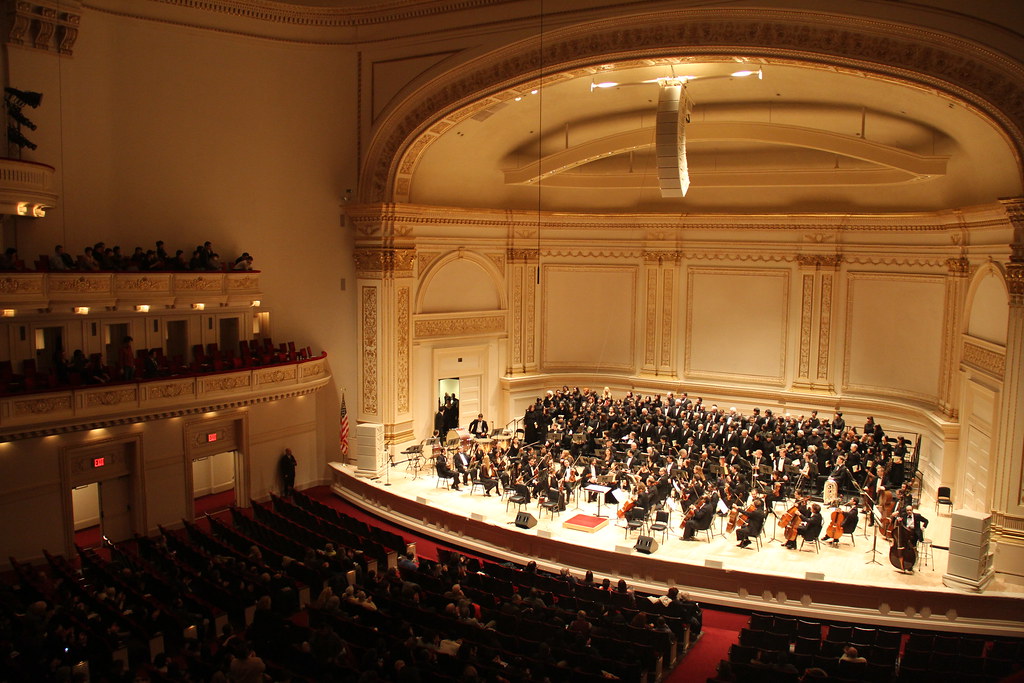
[8] The MET Orchestra and Isabel Leonard perform Debussy, Dutilleux, and Ravel | #1Summer50Concerts


Image result for carnegie hall


WHAT: DEBUSSY La mer; DUTILLEUX Le temps l'horloge; RAVEL Shéhérazade; RAVEL Suite No. 2 from Daphnis and Chloé
WHERE: Carnegie Hall
WHEN: June 3, 2019, 7:30pm

This past March, I was lucky enough to go see Richard Wagner's Die Walküre at the Metropolitan Opera. For those of you who don't know, Wagner operas are often all-day affairs, especially at the Met where intermissions are 30 minutes long. The show started at noon; I eventually walked out of the opera house at 5:10pm. The first thing that ran through my head after five hours of watching ladies in breastplates and horns howl their hearts out (yes, really):

"Gee, I want to go see another opera tonight!"

The fact that I had to be awake and singing in New Haven (about a 2hr train ride) at 9am the next day notwithstanding, I bought my standing room ticket for the 8:30pm showing of Mozart's La clemenza di Tito, hiked to the top of the Metropolitan Opera House (what is it with me and concerts that require climbing?) and stood at the top for the full two hours. And I loved every second of it.

Yeah, you could say I'm obsessed. Or you could say that I'm a passionate young adult who is invigorated by the intellectual stimulation that opera lends its listeners.

You know, I just read over that again. Let's just go with obsessed.

The most reliable part of the Metropolitan Opera is the orchestra. No matter if it's Mozart or Bartók, the MET orchestra always has their act together, whether they're in hour six of a Wagner or are playing the second show in a double-header.

Unlike most other American opera houses, the MET ends their season early (their last production was in the first week of May or so) because the MET orchestra gives a three-concert series to finish Carnegie Hall's year. Usually, at least one of the concerts has something to do with opera -- usually, they'll invite a couple of MET regulars to sing with the orchestra.

For this concert, the soloist was soprano Isabel Leonard, coming hot off of her recent smash success in Poulenc's Dialogues of the Carmelites (think French Revolution, but also nuns, and then everyone dies). I had the opportunity to see her as Mélisande in Debussy's Pelléas et Mélisande (think love affair, and then everyone dies) earlier this year, and my opinion was pretty ambivalent -- her performance was perfectly fine, but was overshadowed by the sub-par performance of tenor Paul Appleby as Pelléas and the stellar performance of baritone Kyle Ketelsen as Golaud.

I'm sure some French pop star has ripped off the name of that last Dutilleux song...

I think she must have been having a bad night at that performance, because she knocked this one out of the park. Her voice floated easily above the orchestra -- not quite unmoored, but certainly well-lodged in the fantasy realm that French music craves. Gossamer, never heavy, and simply sublime, even in a highly technical passage like at the end of the Dutilleux. The start of her Ravel was also tremendous -- strong, but also supple and soft.

The orchestra's La mer was admittedly mediocre -- it felt like none of the players were taking the responsibility to make the music that Yannick was so expressively conducting. It almost seemed that the orchestra didn't know how to be in the limelight, a common ailment with opera orchestras, though not one that usually plagues the MET.

Luckily, that was just a fluke. Behind Leonard, they were able to spend the next two pieces recalibrating, and their Daphnis and Chloe was absolutely stunning. Special recognition to principal flautist Chelsea Knox, whose solos in both Ravel pieces were about as close to perfect as one can get. Also, she was like 23 when she won the principal spot with the MET orchestra. Feel inadequate yet?

If you haven't been to the MET, go. Standing room tickets are $20, and other tickets occasionally start at $35. And while you're there, I have a game that I like to play, developed with one of my best friends from school. The hoity-toity people at the MET like to spectate the in-house restaurant, which serves one course at each intermission. Stand one or two levels up on the terraces that overlook the restaurant, then try to come up with a backstory for each person. There are only so many business-people you can go through before you decide which of the necktie-wearing old people in the restaurant is the next Walter White.