Showing posts with label Mozart. Show all posts

Thursday, May 28, 2020

Anniversaries

Thanks for the memories, I guess
(jeez Snapchat way to put me in a bad mood)

Believe it or not, today marks exactly one year since I embarked on #1Summer50Concerts. In a way, it's Classical Music Geek's first anniversary, too -- I had a couple posts before that, but May 28, 2019 was the real, no-turning-back launch.

I'm still trying to wrap my head around the fact that the much-awaited sequel to #1Summer50Concerts is a summer where in-person live music doesn't exist at all. I miss concert halls. SO much. I've been watching livestreams, of course, and pre-recorded concerts. They're not the same. I don't expect them to be the same. And frankly, I can't find it in me to review them because, as I said in my last post, the fact that they exist supersedes quality. Performers are trying to make us happier, trying to help us cope, and evaluating their performances feels short-sighted and wholly irrelevant in such a crazy time.

I don't really have much to say -- nothing's happened except that I've turned into a grandma who sleeps till noon, cooks a lot, goes on the same daily walk, and still doesn't practice. It was a nice life for the first couple weeks. I'm bored now. Maybe it's time to start practicing.

I'm going to try to keep posting through the summer, but there's only so many times I can write the same "5 Things You Should Listen To This Week" article. For now, a Mozart aria that's been stuck in my head for days, taken from a concert that my best friend and I watched together over Zoom two nights ago (if you're wondering how that works: "3...2....1....go!" *press play together*). Sabine and Raphaël are among the more powerful musical power couples of today.


Anyway, happy anniversary to me. Here's to many more years of blogging, most of them hopefully better than 2020. 

Sunday, August 25, 2019

[50] Mostly Mozart presents Takács Quartet at Alice Tully Hall | #1Summer50Concerts

Me, finishing something I started for the first time, like, ever

WHO: Takács Quartet; Jeremy Denk, piano
WHAT: MOZART String Quartet No. 21 in D major, K. 575 "Prussian"; BEETHOVEN String Quartet No. 16 in F major, Op. 135; DOHNÁNYI Piano Quintet No. 1 in C minor, Op. 1
WHERE: Alice Tully Hall
WHEN: August 5, 2019 at 7:30pm

I'm going to spare you the gritty details, but let me just say this -- I was a little bit emotional at this final concert. And it wasn't just because of the heart-rending slow movements from the Beethoven and the Dohnányi.

As the lights dimmed, and the robo-voice over the loudspeaker told the audience to silence their cell phones, I couldn't help but notice that the sad cavern in my stomach trumped the endorphin rush of triumph.

So much for sparing you the gritty details.

I posted about concert #50 on my Snapchat and got plenty of congratulations, but as I pointed out to all of my loyal followers, it's not over until it's over. Review #50 hasn't hit the web yet. Well, here it is.

I started this project with the most niche concert I could find. Well, it appears I've sold out -- here's a review of, like, one of the most famous quartets in the world.

I went into this concert with a more or less neutral idea of Takács. I listened to one of their Beethoven quartet recordings a while ago. I may have listened to a couple movements of the Bartók cycle at some point. But that's about it.

Takács is not a quartet where you have to call into question whether they play musically, or how well they play well as a quartet. They're obviously very good. The only thing I can do is to ask myself whether they approach the program the way I would. And the answer to that is...kind of?

Takács's approach to Mozart is distinctly different from mine. I love to relish in Mozart's simplicity, striking a balance between imparting my own musical ideas and letting the bright levity of the score speak for itself. Takács erred definitively on the side of the former, and to my ear it seemed a little bit overworked. It didn't help, of course, that their interpretation seemed overly romantic -- their wide, fast vibrato was always audible, which is *probably* not how Mozart would have wanted it. Oh, and it felt like cellist András Fejér was celebrating the upcoming Bartók anniversary a few months early with his short, hatchet-y accompanying strokes. Again, these are all personal objections. Objectively, they played very very well.

Their Beethoven was a little more to my liking -- their approach wasn't so different from that for the Mozart, but it felt a bit more appropriate for the parodistic aspects of Op. 135. Plus, as I said before, that slow movement was to die for (or, in my case, to cry for). And their romantic approach to the Dohnányi was perfectly idiomatic, strengthened by Jeremy Denk's insistently emotional, yet transparent playing.

My mind wasn't blown, but I still left pleased. Takács is eminently reliable. And besides which, I wasn't *really* thinking about the music. I was crying on the inside as the lovely critic sitting next to me (whose name I didn't catch -- he had to run for a train) was waxing poetic about Pekka Kuusisto's abomination of a Four Seasons mashup with Scandinavian folk music.

And now I'm crying on the outside. Stay tuned for the summer wrap-up posts, hopefully coming before my classes start on Wednesday!

Wednesday, August 21, 2019

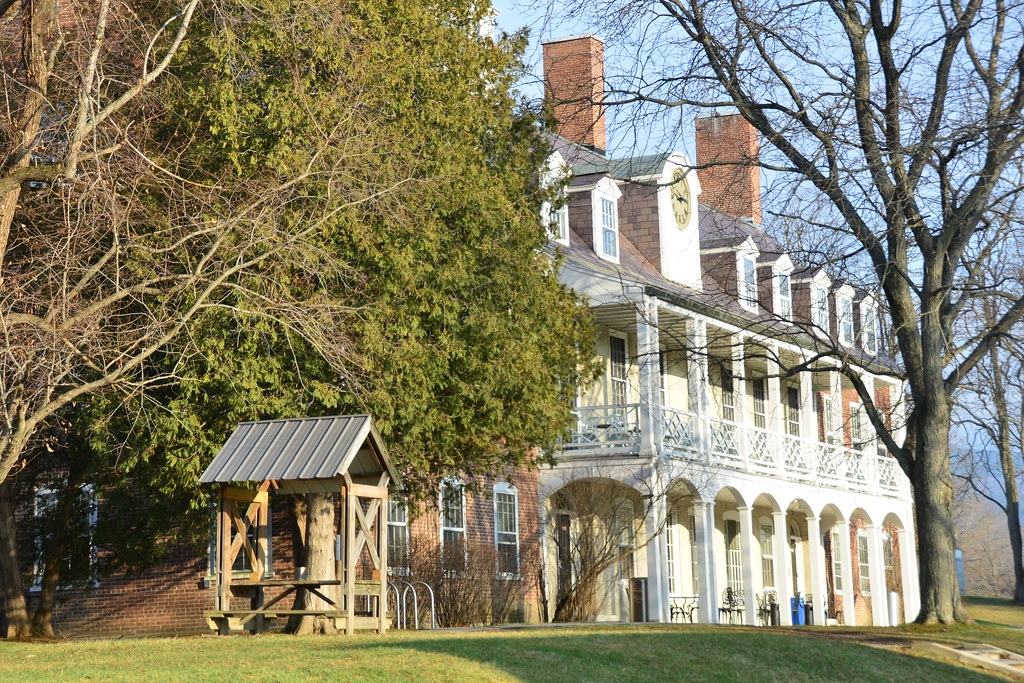
[48] Faculty Concert at Chamber Music Conference of the East, Bennington, VT | #1Summer50Concerts #ConcertGetaway

Image result for bennington college


WHO: Faculty of Chamber Music Conference of the East
WHAT: MENDELSSOHN String Quartet No. 6, Op. 80; MOZART String Quintet No. 3, K. 515
WHERE: Greenwall Auditorium, Bennington College, Bennington, VT
WHEN: July 31, 2019 at 8:00pm

Ultimately, I decided not to write a college essay on Kinhaven, my most formative music camp experience, for much the same reason I didn't wax poetic in my last post -- I didn't/don't think I can put words to paper that express how much that location means to me.

I also love Bennington, a weeklong summer chamber music camp for grownups in southern Vermont. But it's less emotional for me, mostly because I can keep going back summer after summer until I keel over. So I wrote a college essay about it -- nothing long, just one of the 300-word essays.

And as I was thinking about what to write for this post, I thought to myself: who better to tell you what Bennington means to me than 17-year-old me trying to pander to admissions officers? If I convinced them, then certainly I can convince you(?).

Here it is: my Bennington essay, unedited from the time I hit the "submit" button.

"It’s my first day at Bennington Chamber Music Conference in Vermont, where I’m the only teenager among several hundred amateur musicians. I take my cello out of my case and sit down. I start to leaf through the piece in front of me, the famously difficult Mendelssohn Octet. My stomach churns. I chat nervously with the other players for a while as we wait on our first violinist. We hear a knock on the door: it’s Shem Guibbory, a violinist from New York’s Metropolitan Opera Orchestra.

"Oh, brother.

"My week at Bennington was a baptism by fire. I expected a relatively low-key experience; I had just come from six weeks at another intense music camp, and I assumed I’d have some time to relax.

"I was wrong. A friend explained the schedule: in addition to two professional coachings per day on pre-practiced pieces, there were four free periods per day to sight-read. The typical day started at 9am and didn’t end until midnight. And playing with seasoned professionals was the norm, not the exception.

"That first day, I sight-read 6 full pieces, in addition to the ones on which I was being coached. By bedtime I was catatonic. But I was learning. Reading Allen Shawn’s Dreamscape cemented my love for modern music. Shostakovich’s piano quintet reminded me that as the cellist, I was responsible for driving the music forward.

"Most of all, Bennington showed me how I want to live. The enthusiastic amateur musicians around me had demanding jobs (doctors, professors, and environmental scientists, just to name a few) but all had carved a week out of their busy schedules to play chamber music in the mountains. It was here that I realized that I want music to be a part of my life forever, but I don’t want to play for a living. I want my career to challenge me intellectually and support me and my family, and I want to spend my vacations making music with friends in the mountains."

FIN

I don't know why, but when I read that in my head, it's in a pre-pubescent 12-year-old Emery voice. Does that mean that in 20 years, when I look back on these posts, I'll read it like that, too?

I should take a moment to mention that the Mendelssohn on this concert was truly astounding. Bennington's faculty have just as much fun as the participants -- because Bennington is all adults, the coaches can be more relaxed and open with the students than they could be at a high school festival. But don't be fooled -- each faculty member is alarmingly accomplished.

The Mendelssohn quartet was headed by Diana Cohen, concertmaster of the Calgary Philharmonic. Personally, I think she should quit that job and become a full-time chamber musician, she played that well -- the amount of fiery soul she managed to impart in those 25 minutes is completely beyond words. Second violinist Alex Fortes (who, it turns out, was sitting not ten feet from me at ChamberQUEER earlier this summer) mirrored her affect perfectly, providing a support network for her to soar. Violist Korinne Fujiwara (of the Carpe Diem quartet -- also a fantastic coach) and cellist Maxine Neuman (a longtime festival mainstay and Bennington College faculty member) rounded out the jaw-dropping ensemble.

That's about all I have to say for now. More on Bennington in the next post!

Tuesday, August 13, 2019

[43] Mostly Mozart Festival presents "The Magic Flute" at David H. Koch Theater | #1Summer50Concerts

Aaron Blake running from the dragon who, if you think about it, catalyzes the entire plot line
(© Stephanie Berger, courtesy of Lincoln Center)

WHO: Aaron Blake (Tamino); Vera-Lotte Böcker (Pamina); Evan Hughes (Papageno); Wenwei Zhang (Sarastro/Speaker); Aleksandra Olczyk (Queen of the Night); Mostly Mozart Festival Orchestra and Chorus; Louis Langrée, conductor; Susan Andrade and Barry Kosky, co-directors
WHAT: MOZART The Magic Flute
WHERE: David H. Koch Theater
WHEN: July 20, 2019 at 7:00pm

(Note: other than the headline photo, photos are of the alternate cast, not the one I'm reviewing)

I had my suspicions before seeing this production, but now I'm fully convinced: Barrie Kosky is a maniac.

Not the dangerous kind of maniac. But I have never heard tell of a Barrie Kosky production that was not weird, scary, or downright crazy in one way or another. And quite frankly, that's not a bad thing. I mean, who else would have the idea to do a silent film-themed, mostly-animated Magic Flute?

Yes, you read that right. White powdered faces. Bowler hats. A Nosferatu-clad Monostatos. And possibly the best (only?) animation design I've ever seen in an opera.

The Andrade/Kosky Magic Flute is the proprietary production of the Komische Oper Berlin, the Berlin opera company which at one point specialized in operetta. Their 2019-20 season is somewhat more varied (read: ungapatchka), including new interpretations of tragedies like La traviata, Händel's Jephtha, and Stravinsky's The Rake's Progress, alongside German translations of Fiddler on the Roof, The Wizard of Oz, and a new "football operetta" based on the 1938 film Roxy and the Wonderteam. So, the folks over at the Komische Oper are no strangers to wackadoodle ideas.

After achieving success in its original run in the 2016-17 season, the production has been making rounds worldwide. In the upcoming season, you can catch it in LA, Houston, Warsaw, and for yet another stint at home in Berlin. And it's not going to fade from the limelight anytime soon.

I don't know guys, the red high heels really don't go with the masks...
(© Stephanie Berger, courtesy of Lincoln Center)

The Lincoln Center cast was hand-picked from the many European productions, along with some American stars (both established and up-and-coming). Before I start in on the individual reviews, I just have to mention that the singers had a job that was infinitely harder than usual -- they had to sync themselves not just with the orchestra, but with the minute details of the animation. That meant military-precision blocking and timing. So I'm willing to give the performers something of a break (although Evan Hughes's torso *did* twirl the other direction from his animated legs at one point -- that was pretty funny, and entirely consistent with the goofy character of Papageno).

Vera-Lotte Böcker's Pamina was perfectly balanced for the production. Her acting was self-contained, but still leaned heavily on the animation for additional zing, just as it should when the animation is providing so much of the plot's drive. Her singing was beautifully emotional, especially in the famous "Bei männern" duet with Evan Hughes's Papageno. Despite his moderately constipated facial expression, Evan Hughes sang the part well, with a good dose of both buffo zeal and compassion-inducing eyelid-batting.

Dumbo sequel or indie rock album cover? Vote now on your phones.
(© Stephanie Berger, courtesy of Lincoln Center)

Aaron Blake, whose pointed face and pronounced makeup gave him the look of a ventriloquist dummy, played Tamino with overpronounced, wide-eyed facial expressions, as if to remind the audience that Mozart can be fun, too. He executed his arias with utmost bravura, his tenor soaring above Louis Langrée's finely-tuned orchestra. Wenwei Zhang wowed both as a tweed-clad Sarastro and an offstage speaker, possessing the perfect profundity to counteract Hughes and Blake. Only Aleksandra Olczyk fell short as the Queen of the Night -- her first aria was interesting enough, but a lagging tempo in the famous "Der Hölle Rache" kept her from imparting the necessary fire into the difficult bits.

Papageno and Papagena wishing that lovemaking wasn't so fun
(alternatively: Mozart's adaptation of 101 Dalmatians)
Stephanie Berger, courtesy of Lincoln Center)

Oh, and the first thing I thought when the trio of young muse-boys sang for the first time was, "Huh, why do these tiny children speak better German than any of the leads?" And then I read the program and realized that they were soloists from the famous Tölzer Knabenchor, the same choir that did the original period-performance recordings of the Bach Passions with Nikolaus Harnoncourt. God, I wish I could tell you their names. They sounded amazing. But they weren't listed. Sigh.

I have to give the production credit for being the most accessible I've ever seen. The production could entertain anyone, even people who say they hate opera. The animations were fast-paced, with added jokes and nods to popular culture -- Papageno has a brief kung-fu moment about ten minutes into the opera. Andrade and Kosky replaced the dialogues with silent-movie style panel-discussions, accompanied by a slightly out-of-tune fortepiano playing mostly Mozart works (an intentional nod to the festival?). The whole concept was ingenious, and Paul Barritt deserves a medal for those animations.
The speaker-head
(© Stephanie Berger, courtesy of Lincoln Center)

I only had a couple bones to pick with the production. The biggest one was that it sort of played a little too far into the stereotypical-woman trope that Schikaneder outlines in his libretto. The offstage speaker that Wenwei Zhang sang was represented as a talking, steampunk-ish male head. Inside the head was inscribed German "words of virtue" including Weisheit (wisdom), Kunst (art), and Wahrheit (truth). At the end of the scene, along came a female counterpart to the male head, inscribed with such "feminine" words as Klatschen (gossiping), Einkaufen (shopping), and Tratschen (another word for gossiping). I can totally understand how a German audience might find that funny. But come on guys, it's 2019. And the fact that they kept that part in German against the rest of the translated projections made it feel like the jab was intended to fly over the audience's head. Not cool.

On a slightly less serious note: there was this one pair of stockinged, red-high-heeled legs that were reused time and time again throughout the entire opera. It was a gag for a little while. But after the third or fourth time, it was just....too much leg.

Did Papageno's bells really need legs? Come on.

Qualms aside, I think this kind of thing is what the opera world needs to maintain popularity into another generation. There's more to opera than white tie and tails and stuffy, stodgy plot lines of yesteryear. Even those shows with less-than-desirable themes can be updated so that everyone can enjoy them.

So yes, I think Barrie Kosky is a maniac. But I also think he's a genius.

Thursday, August 1, 2019

[38] Chamber Music Society of Lincoln Center plays Mozart, Brahms, and Arensky at Alice Tully Hall | #1Summer50Concerts


WHO: Anthony McGill, clarinet; Bella Hristova, violin; Nicholas Canellakis, cello; Juho Pohjonen, piano
WHAT: MOZART Violin Sonata No. 32 in B-flat major, K. 454; BRAHMS Clarinet Trio in A minor, Op. 114; ARENSKY Piano Trio No. 1 in D minor, Op. 32
WHERE: Alice Tully Hall
WHEN: July 14, 2019 at 5:00pm

I have exceptional luck when it comes to getting into sold-out concerts. From Chunky in Heat at the very beginning of the summer, to Pierre Hantaï in mid-June, and a couple others pre-summer, I usually can negotiate myself into at least standing room.

I've only been turned away from one concert this summer, and that was the first of the Chamber Music Society of Lincoln Center's first summer evening concert on July 10. The Wednesday evening concert, which featured works of Schubert and Dvořák alongside Mendelssohn's rarely heard piano sextet, was sold out except for one seat which was offered to me at a premium of $85 -- to be expected considering the lineup, which included famed pianist John Kimura Parker, NY Phil principal violist Cynthia Phelps, and Tokyo Quartet cellist Clive Greensmith.

So I decided to come back with some friends and try for the next concert. Three $10 tickets later and we were sitting in the third row waiting eagerly for the downbeat.

Our anticipation was met with a heaping bowl of meh.

I mean, it wasn't unpleasant. The notes were correct, at least. But the musicians were, for the most part, dialing it in. Bella Hristova's Mozart wasn't particularly musically interesting, not that you could hear her above Juho Pohjonen's hammer-hands. I think the Mozart might have suffered from Hristova's nerves, though -- her Arensky was much looser and more refined.

Nick Canellakis's vibrato covered up anyone who he played with, most notably clarinetist Anthony McGill. From what I could hear of him, McGill played the most genuine performance of the evening, granted I could hear precious little over the opaque stylings of Canellakis and Pohjonen. And Pohjonen had possibly the most awkward stage presence I've ever seen, his face motionless and his body just kind of jerking around.

I don't want to belabor negativity, but I'll finish by saying this: I could see Canellakis being a great soloist in a thousand-seat concert hall. Pohjonen as well. I know for a fact Hristova can play the shit out of her instrument -- see the video at the top of this post. But this was simply not their day.

At least there was free wine after the performance :)

P.S. I'm no style guru, but CMS seriously needs to learn that white jacket + black tie is not an indoor look. Period.

Saturday, June 1, 2019

[3] New York Philharmonic plays Brahms, Mozart, and Corigliano at David Geffen Hall | #1Summer50Concerts

WHO: New York Philharmonic; Jaap van Zweden, conductor; David Fray, piano
WHAT: BRAHMS Tragic Overture; MOZART Piano Concerto No. 24; CORIGLIANO Symphony No. 1
WHERE: David Geffen Hall
WHEN: May 30, 2019, 7:30pm

I've been known in the past to give tepid, if not negative reviews of the NY Philharmonic in the past. I saw them a couple times in their last season with Alan Gilbert, and their affect often seemed listless at best. It seemed like a group of accomplished soloists each playing without much regard for what the rest of the orchestra was doing.

I'm glad to say that era is on its way out. Jaap van Zweden, the notoriously fierce Dutch conductor who took over as the Phil's music director this year, is fixing them. The orchestra will almost certainly be back to its Bernstein-era glory in a few years.

Still, though, the Phil is in an intermediate period. There are moments where everything clicks and they sound like the most expressive, polished orchestra on this side of the Atlantic. One of those moments was at the beginning of the Brahms's Tragic Overture, which started this concert. Quite frankly, I find the piece to be very take-it-or-leave-it. Is it better than I could have written? Absolutely. Is it Brahms's magnum opus? Nowhere near. But the Phil brought certain moments to life -- the opening (and the recap) sounded almost like a period ensemble, with hard-sticked timpani and vibrato-less strings, a timbre that van Zweden clearly thought out well. The rest? It was fine.

I suppose I should mention the caveat that I had a TERRIBLE seat for the first half of the concert. The box office refused to sell me a student-priced ticket (even though there were empty seats everywhere?????), so I was stuck with the only other seat that was in my budget: top floor, side boxes, partial view. And it was still twice as expensive. UGH. I moved to a top-floor front-facing seat for the Corigliano (and thank god I did -- that partial view would have blocked out the mandolinists!).

To give you an idea of where I was sitting...Fray, van Zweden, and the orchestra

Both of Mozart soloist David Fray's last two albums have been Bach interpretations -- his concerti for multiple keyboards in 2018 followed by his sonatas with star French violinist Renaud Capuçon. I've like his Bach (much as I usually prefer my Bach on harpsichord), so I was interested to hear his Mozart. His Mozart (the 24th piano concerto) struck me as a little far removed from his Bach; his use of pedal was a little more liberal than I would have liked, though not totally outlandish. That being said, his slow movement was incredible: heartfelt, musical, and not too soupy. Special mention to the wind section Phil for that same slow movement.

I was proven wrong. But I still don't think the mandolins were *totally* necessary.
I really didn't want to like the Corigliano. At first glance, the orchestra seemed too big, almost big for the sake of being big. But John Corigliano himself came onstage and gave some verbal program notes, on the verge of tears as he remembered the people this piece eulogizes, friends of his who died in the AIDS epidemic. Once the piece started, I understood why that orchestra was so huge. Corigliano accurately encompasses so many emotions in this piece -- terror, sadness, wistfulness, nostalgia -- that even the most emotionless of listeners is moved.

The highlight of the piece was the opening of the third movement, in which principal cellist Carter Brey delivered a solo (in commemoration of a cellist friend) that was not only polished, but also so deeply felt that a cavern opened up in my stomach and I was fighting back tears. Overall, a tremendous performance.

If you get a chance to see the NY Phil, certainly do it. While they are not necessarily the best orchestra in NYC (that honor goes to the MET Orchestra), they are definitely worth a visit, even in their acoustically dead hall. But, more importantly, if you get a chance to see John Corigliano's Symphony No. 1, jump at it. I hear the Chelsea Symphony is doing it at the end of this month (June 29-30), who's going with me?