Showing posts with label Beethoven. Show all posts

Sunday, August 25, 2019

[50] Mostly Mozart presents Takács Quartet at Alice Tully Hall | #1Summer50Concerts

Me, finishing something I started for the first time, like, ever

WHO: Takács Quartet; Jeremy Denk, piano
WHAT: MOZART String Quartet No. 21 in D major, K. 575 "Prussian"; BEETHOVEN String Quartet No. 16 in F major, Op. 135; DOHNÁNYI Piano Quintet No. 1 in C minor, Op. 1
WHERE: Alice Tully Hall
WHEN: August 5, 2019 at 7:30pm

I'm going to spare you the gritty details, but let me just say this -- I was a little bit emotional at this final concert. And it wasn't just because of the heart-rending slow movements from the Beethoven and the Dohnányi.

As the lights dimmed, and the robo-voice over the loudspeaker told the audience to silence their cell phones, I couldn't help but notice that the sad cavern in my stomach trumped the endorphin rush of triumph.

So much for sparing you the gritty details.

I posted about concert #50 on my Snapchat and got plenty of congratulations, but as I pointed out to all of my loyal followers, it's not over until it's over. Review #50 hasn't hit the web yet. Well, here it is.

I started this project with the most niche concert I could find. Well, it appears I've sold out -- here's a review of, like, one of the most famous quartets in the world.

I went into this concert with a more or less neutral idea of Takács. I listened to one of their Beethoven quartet recordings a while ago. I may have listened to a couple movements of the Bartók cycle at some point. But that's about it.

Takács is not a quartet where you have to call into question whether they play musically, or how well they play well as a quartet. They're obviously very good. The only thing I can do is to ask myself whether they approach the program the way I would. And the answer to that is...kind of?

Takács's approach to Mozart is distinctly different from mine. I love to relish in Mozart's simplicity, striking a balance between imparting my own musical ideas and letting the bright levity of the score speak for itself. Takács erred definitively on the side of the former, and to my ear it seemed a little bit overworked. It didn't help, of course, that their interpretation seemed overly romantic -- their wide, fast vibrato was always audible, which is *probably* not how Mozart would have wanted it. Oh, and it felt like cellist András Fejér was celebrating the upcoming Bartók anniversary a few months early with his short, hatchet-y accompanying strokes. Again, these are all personal objections. Objectively, they played very very well.

Their Beethoven was a little more to my liking -- their approach wasn't so different from that for the Mozart, but it felt a bit more appropriate for the parodistic aspects of Op. 135. Plus, as I said before, that slow movement was to die for (or, in my case, to cry for). And their romantic approach to the Dohnányi was perfectly idiomatic, strengthened by Jeremy Denk's insistently emotional, yet transparent playing.

My mind wasn't blown, but I still left pleased. Takács is eminently reliable. And besides which, I wasn't *really* thinking about the music. I was crying on the inside as the lovely critic sitting next to me (whose name I didn't catch -- he had to run for a train) was waxing poetic about Pekka Kuusisto's abomination of a Four Seasons mashup with Scandinavian folk music.

And now I'm crying on the outside. Stay tuned for the summer wrap-up posts, hopefully coming before my classes start on Wednesday!

Wednesday, August 14, 2019

[44] Mostly Mozart Festival Orchestra plays Beethoven at David Geffen Hall | #1Summer50Concerts


WHO: Mostly Mozart Festival Orchestra; Andrew Manze, conductor; Vilde Frang, violin
WHAT: BEETHOVEN Violin Concerto; Symphony No. 3, "Eroica"
WHERE: David Geffen Hall
WHEN: July 23, 2019 at 7:30pm

Not gonna lie, I've been a scaredy cat this summer. I chickened out of talking to Caroline Shaw. I haven't gone up to talk to any artists after concerts unless I know them.

Well, I decided that was going to change a couple weeks ago. After this concert, I spotted someone with a violin a couple feet ahead of me. The strange thing was that she wasn't in concert black, even though the concert had ended not five minutes before.

And then I looked at her hair and had a light-bulb moment. I turned to my friend and said, "I recognize those beautiful blonde highlights."

It was Vilde Frang, walking back to the subway. As one does when in New York.

Yeah, I accosted Vilde Frang on the street to tell her what a great performance she gave. We talked for all of 30 seconds. I found out that the cello is her favorite instrument (not that I asked that specifically -- what am I, a middle schooler at an open rehearsal Q&A session?). It was moderately awkward. She seemed flattered. I would have been intimidated, butt then again, a chubby 20-year-old outwardly gay concertgoer with two days' worth of five o'clock shadow isn't exactly something to be scared of.

But of course, I didn't tell her I was reviewing the performance. Maybe should would have been a little more intimidated by me then.

Me at, like, every single concert so far this summer

Everything I said to her was well-deserved. Her performance was one that satisfied my inner musician. She didn't show off; it felt like her mission was to deliver the most honest, enjoyable interpretation she could muster. Vilde Frang served the music, which is something that so few of the big popular soloists do effectively. During the orchestral interludes, she seemed to get lost in the texture, staring off into the distance, making way for her colleagues -- she treated the orchestra as equals, not inferiors -- to work their magic. Her playing was aggressively precise, but didn't sacrifice any of that introspective simplicity that I crave from middle Beethoven.

I walked out of the first half of the concert convinced that the Beethoven violin concerto was the best piece ever written. I kind of get that way every time I hear the Beethoven concerto. I'm not sure if that opinion is defensible, or even if I believe it. But you know, even if I don't truly believe it, I'd be happy to defend that opinion any day.

In my first post of the summer, when I went to see the S.E.M. ensemble, I mentioned that I turned down an opportunity to see the NY Phil playing Beethoven's Third™ because I knew I'd get to see it again in the near future. The fact that, not even two months later, a different orchestra is playing the same piece in the same hall should validate my decision.

That said, I'm pretty sure the MMFO did a better job than the NY Phil would have. I mean, the orchestra gets together every year to play *mostly* Mozart (oh, that's why they call it that!), so it felt like they were in a more appropriate mindset for that late-classical style. The word that Andrew Manze's interpretation drew to mind was light -- even in the loudest climaxes, there was still a wind blowing the orchestra from underneath, keeping them bobbing along to the sometimes-rollicking, sometimes-sagging beat. Special mention should go to the first oboist of the orchestra, Katherine Needleman, whose solos contributed to the levity from atop the orchestral texture. All of her solos, whether twenty measures or two, made me feel that amazing shiver up my spine.

God, I'm so glad I went. And now I've proven to myself that I have the balls to approach performers after concerts. Now, I try to rationalize it by assuming that people like to hear how great they are. But is that actually true? Do performers actually like being approached by strangers?

I don't know, maybe my *good friend* Vilde Frang will be able to answer that!

Friday, August 2, 2019

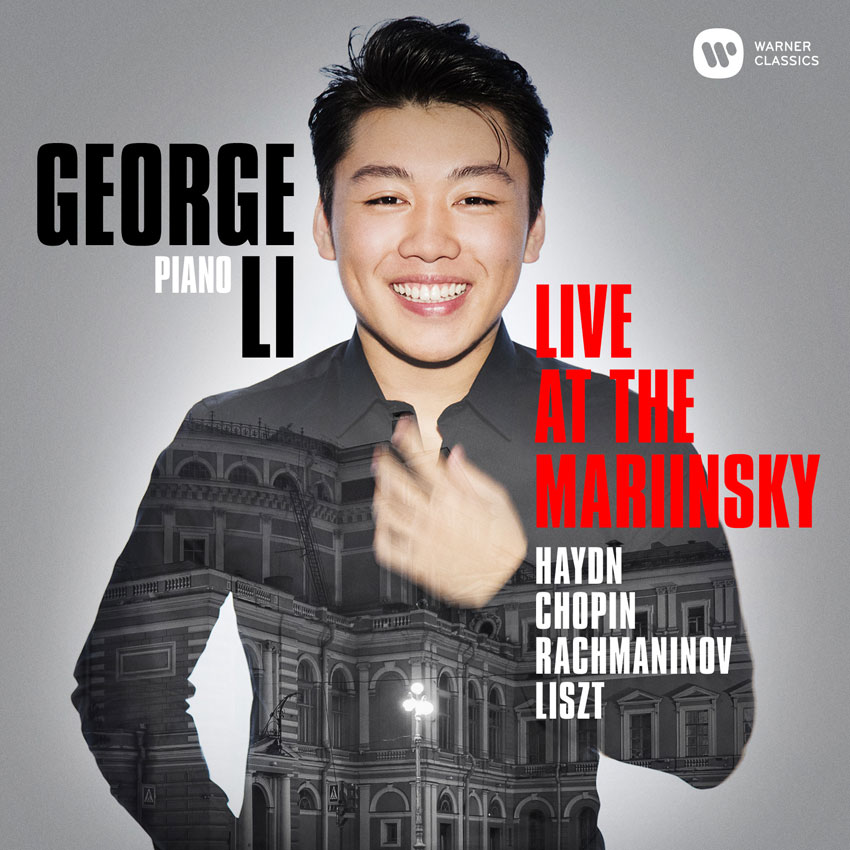
[39] George Li plays Beethoven and Schumann at Merkin Hall | #1Summer50Concerts

Image result for george li


WHO: George Li, piano
WHAT: BEETHOVEN 32 Variations in C minor, WoO 80; Andante Favori in F major, WoO 57; Sonata in C major, Op. 53 "Waldstein"; SCHUMANN "Vogel als Prophet" from Waldszenen, Op. 82; Carnaval, Op. 9
WHERE: Merkin Hall at the Kaufman Center
WHEN: July 16, 2019 at 8:00pm

This International Keyboard Institute and Festival (IKIF) is stuck between a rock and a hard place, programming-wise. On the one hand, it seems like they want to program interesting things -- some pianists come in with interesting pastiche recital ideas. But in their two weeks of twice-daily concerts, there was an overwhelming amount of music by pianists, for pianists (yeah, Liszt, I'm looking at you). Just like, an overwhelming amount of pretty good soloists playing Beethoven after Schumann after Brahms -- all composers I like very much, but like...what else is new guys?

So I decided I'd only go to one of the concerts, and this is the one I chose. I chose it because I like Beethoven and I like Schumann and I've heard George Li is good. Sound logic, if you ask me. And I think I chose the right concert, music-wise.

George Li is one of these people who went out and won all the big competitions when he was a teenager so by the time he finished his undergrad (at the Harvard-New England Conservatory exchange program) his career was already made. Sigh. If only...

He played well, for the most part. His Beethoven, while nice, was not necessarily to my taste. The interpretations seemed overly cerebral -- he thought very hard about the placement of each note in time and space. The result was playing that felt wordy, for lack of a better descriptor. Each note felt like it was meant to evoke a very specific descriptor: this note was joyful, that one was anguished. I think that particular aspect cost him a sense of big-picture scope that would have helped tremendously.

Li's Schumann, though, was something to write home about. Once he had a concrete picture as a goal for his interpretation, his musicality snapped right into place. His Carnaval was stunning, his "Eusebius" movement especially tender. But the only thing better than Carnaval were the five minutes of Waldszenen that preceded it. Mystic and exotic, the seemingly aimless movement ambled with futility-laden intent.

The best pianists know how to handle adversity (aka upright pianos)

I closed my eyes to listen to that movement of the Waldszenen. And just when I did, a phone went off. And then another. And then a third one. All told, five phones went off during those four minutes.

Yeah, let's talk for a second about the audience. The read I got was that it was mostly teenage IKIF attendees and their tiger parents. The woman sitting next to my date was on her phone the entire concert. Someone made a whisper before one of the pieces and no fewer than three people loudly shushed them (if you shush loudly, you're part of the problem). And worst of all -- George Li, the poor kid, obviously tired from a full recital and his first encore (Liszt's transcription of Schumann's Widmung), was forced to pull out the Liszt Campanella. The audience oohed and aahed. Behind Li's saccharine façade, you could see the same eyeroll that my date and I gave each other at Campanella's opening octave D#'s. For Christ's sake, let George Li do a Philip Glass concert or something. He's obviously bored.

TL;DR George Li gets a solid A. The audience gets a quadruple F-.

Monday, June 10, 2019

[11] NY Philharmonic premieres David Lang's "prisoner of the state" at David Geffen Hall | #1Summer50Concerts


WHO: New York Philharmonic; Jaap van Zweden, conductor; vocal soloists; tenors and basses of the Concert Chorale of New York (Donald Nally, choirmaster)
WHAT: prisoner of the state, by David Lang (world premiere)
WHERE: David Geffen Hall
WHEN: June 6, 2019, 7:30pm

I'm not going to lie, prisoner of the state was gritty, gritty, gritty. Like, I just sat here for half an hour trying to think of an opening joke for this post. And I couldn't think of one. Because there was not a single uplifting moment in this 70-minute opera.

The stage of David Geffen was surrounded by a chain-link fence laced with barbed wire. The orchestra players wore all-black with optional black skull caps (the horn section looked particularly good in their matching hats). In the front was a faux-stone stage (with two trap doors, only clearly visible from directly above, which of course I was because I got seats on the side of the stage in the third tier because I am CHEAP), and in back, behind the fence from most vantage points, was a cell-block-looking stage that was unequivocally too small for the forty-some men of the choir.

The chorus processed out in yellow jumpsuits, wrist chains, and possibly the most convincing dirt-makeup I've ever seen. Granted, a couple of them still had perfectly coiffed hair that didn't exactly shout "prison," but the aesthetic was there.

David Lang's music exists in a strange quantum state (to the extent I understand what that means -- physicists, comment below and let me know if I'm an idiot). The way his music sounds and feels, one thinks it's simultaneously racing forward and dawdling. Many of the orchestral figures were frantic and exceedingly precise; yet, there was so much repetition that forward motion was quasi-nonexistent.

prisoner of the state was Lang's take on Beethoven's Fidelio, a convoluted plot that, without any subplots, essentially concerns itself with a political prisoner (Fidelio), who is to be killed by gradual starvation, and his devoted wife, who dresses as a guard to sneak her way into the prison and reveal the twisted reasons for her husbands unfair detainment. It's a happy ending: Fidelio is freed, his opponent is detained, joy, triumph, yay!

Lang essentially strips the two-hour-plus Fidelio of all its subplots, casting a modern light on the main story line. The characters are all deranged in one way or another, and each gets an aria to explain his or her affliction. The dehumanized "assistant" (the character of the wife) sings of how she once was a woman, but is no longer; the power-hungry "governor" sings of his obsession with fear over love; the sadistic guard sings of his willingness to do anything for wealth; the prisoner (congruent to Beethoven's Fidelio) sings of the solitary confinement that has driven him to the brink of extinction.

Thing I did not mention: my job got me into a press rehearsal a couple days before the
actual performance. It was us and a bunch of classical music "influencers" -- I didn't know those existed

French soprano Julie Mathevet, who played the assistant, was perfect in her character. Mathevet portrayed not an ounce of emotion until the (seemingly uplifting) end, very clearly on purpose. The governor, played by British tenor Alan Oke (who really really channeled the Patrick-Stewart-circa-Macbeth look for this role), almost struck like a Herod-type character: obsessive, whiny, and opinionated. MET regular Eric Owens (the guard) struck a perfect balance between capitulating and strong-willed. But the prize for most convincing goes to Jarrett Ott, the prisoner of the state himself (oh, THAT'S why they called it that!), whose bloody makeup and languid appearance did not compromise his operatic presence one bit.

The Concert Chorale sounded tremendous -- they beefed up their ranks significantly for this one. On the roster were are few names I recognized from spectating around the NYC and New Haven concert scenes. And holy crap, did they have tenors. High Bb's for days. Even with the choreography, which mostly included stomping and walking, the music was forceful, stark, and effective.

Lang has a knack for social commentary. I was fortunate enough to sing a piece of his earlier this year which sets the pre-sentencing speech of Eugene Debs, who was convicted under the Sedition Act for his anti-WWI speeches. To quote Lang himself: "I was mad, so I wrote this." And that seemed to be more or less the case for prisoner as well -- except in this case he had control over his own libretto. At what would be an otherwise happy ending, Lang throws in the caveat that technically we *are* still prisoners in the world, and that the only difference in a real prison is that you can see the chains. Nice.

All else aside, this was a tremendous performance. And even if you didn't get to see it, I'm certain it's going to come back. This is the kind of thing that was far too much work to truly only last for one weekend. My guess is that this production will make its way around the major symphony orchestras and opera houses and eventually get recorded. Good thing, too; it's catchy as hell and it's going to be stuck in my head until I can get my hands on a recording.

I hummed this at a concert two days later, and a lady who was sitting in front of me
turned around and said, "Is that prisoner of the state?" I think I've found my people <3