Showing posts with label Lincoln Center. Show all posts

Saturday, October 19, 2019

Review: The Juilliard Orchestra plays Thorvaldsdottir, Prokofiev, and Bartók


WHO: The Juilliard Orchestra; Jeffrey Milarsky, conductor; Jaewon Wee, violin
WHAT: ANNA THORVALDSDOTTIR Metacosmos; PROKOFIEV Violin Concerto No. 2; BARTÓK Concerto for Orchestra
WHERE: Alice Tully Hall
WHEN: October 17, 2019 at 7:30pm

God, why is the music world so small?

I think I jinxed it by mentioning that I didn't see anyone I knew at the Dover Quartet the other day. But every concert since then, I've randomly run into at least one person I know.

As soon as I'm through Alice Tully security check, I run into a music camp friend. Then another. Then I sit down, and I find out that no fewer than five close music camp friends are in the Juilliard Orchestra for this concert.
Image result for it's a small world gif
Anyway, my last two reviews have been really, really long, so I'm going to try to keep this one relatively short. I saw the Juilliard Orchestra last year with phenom conductor Barbara Hannigan (who was giving a recital across town at the Park Avenue Armory -- sold out to the rafters, naturally), and they sounded tremendous. The centerpiece of that program was also Bartók (his suite from The Miraculous Mandarin), so I figured, why not?

From my sample size of two (2) concerts, I've come to a conclusion about the Juilliard Orchestra: they'll never be bad. It's an orchestra comprised of the best young musicians around. The intention, the musicality, that will always be there.

But sometimes, Juilliard students have busy weeks. That's what this concert sounded like: an orchestra of phenomenal musicians, each of whom had fifteen million other things on their minds this week.

Consequently, the Thorvaldsdottir was probably the best-played thing on the program, and my favorite. Metacosmos sort of smears time in a way, blurring the lines between beats such that precision is not so important as transparent, visceral emotion. That's kind of a given for most of the musicians at Juilliard -- another day at the office.

But the orchestra began to fall apart behind Jaewon Wee's Prokofiev. Some of the orchestra knew the parts, but there was a critical mass of musicians who failed to look at the conductor's beat, resulting in a slow, but steady phasing effect between strings, winds, and brass. Luckily, Wee put up a well-polished performance that all but covered the missteps of the orchestra. I didn't necessarily feel like I was in the palm of her hand, but hey, we can probably blame that on the orchestra.

The Bartók was vigorous, if a little sloppy. The couples in the giuoco delle coppie ("game of the couples" were coordinated and well-rehearsed; the trumpets and trombones deserve a special mention for the chorale at the midpoint of that movement. The principals were all so very well-prepared, every solo sending my jaw straight to the floor. But once again, that phasing effect was persistent and ever-present. Maybe that burden falls on the conductor -- Milarsky's conducting seemed serviceable, though not particularly clear.

So, in conclusion, the Juilliard Orchestra is always worth seeing, even when they're not at their finest. When they bring in big name conductors, the quality is usually better (a friend was telling me about a few weeks ago, when Karina Canellakis conducted Ein Heldenleben -- best concert he'd ever been to). But when it's a staff conductor, just be warned: a bunch of great musicians do not an orchestra make.

For the love of god, Juilliard Orchestra, treat yourselves to a glass of wine, some Real Housewives, and a nap before your next concert. You all deserve it.

Friday, August 16, 2019

[45] Mostly Mozart presents "The Black Clown" starring Davóne Tines at Gerald W. Lynch Theater @ John Jay College | #1Summer50Concerts


PC: Richard Termine

WHO: Davóne Tines, bass-baritone; Zack Winokur, director; vocal/dance/ instrumental ensembles
WHAT: MICHAEL SCHACHTER The Black Clown
WHERE: Gerald W. Lynch Theater @ John Jay College
WHEN: July 24, 2019 at 7:30pm

As I'm sure you've gathered, I've been in NYC all summer, but I haven't really made time for many "New York" things. No Governor's Island. No museums. You know.

Most lamentably, I haven't really made much time at all for Broadway shows. I do love musical theater, even if my métier is primarily classical. But they're expensive. And they're always at the same time as classical concerts. And they require going down to the ninth circle of hell: Times Square.

The Black Clown wasn't *exactly* a Broadway show. But it was the closest I was going to get within my price range (MMF gives out student tickets for $20). And I have to say, I enjoyed it tremendously.

The concept basically chopped up Langston Hughes's poem The Black Clown into bite-sized chunks -- two to three lines at most -- and used each to base a movement (scene?) of the staging. The music showed MMF's initiative in breaking out of the strictly classical world: the pit orchestra was more of a big band, the ensemble singers evoking a gospel feel.

And at the center of it all was Davóne Tines, one of the most versatile opera singers I've ever seen. Sure, Renée Fleming has her Broadway album. Joyce DiDonato did her jazz-baroque mashup. But Davóne Tines is making his name with these cutting-edge crossover projects, not riding on his pre-established reputation so he can do something "weird."

PC: Richard Termine

Tines, clad in a black and white pleated zoot suit (this time with a shirt), was the perfect choice as a centerpiece for this project, but his phenomenal performance still rested in the second-place slot. The ensemble of singers, dancers, and actors took what was already a musically and socially meaningful production and made it dazzling. The ensemble was at once a gospel choir equal to some of the best on earth; a West Side Story-level dance troupe; and the catalysts for every emotion Tines displayed from the stage (and there were many). Tenor Brandon Michael Nase deserves special mention for striking a balance between minute, detail-oriented musicality and a soaring, piercing tone.

Each movement was fabulous in isolation; the scenes took all forms, from upbeat-swing big band charts to wrenching ballads and even a couple instances of authentic 1920s banjo jazz. The music Michael Schachter composed was stylistically appropriate, if not so adventurous; the highlights were his arrangements of various spiritual tunes, including a tear-jerking rendition of "Motherless Child." The piece as a whole read more as a song cycle rather than a through-composed work; there was very little functionally connecting each movement to the next. I did not find that particularly bothersome, but I think that a super-sudden transition from jubilant celebration to dour, prayer-like solemnity is a little bit hard on the audience as a whole.

PC: Richard Termine

I couldn't say this in my previous review of him, but I'm just going to sum up with one final thought: Davóne Tines is worth seeking out. He's a voice of the future. He's only going to get more popular. I'm not sure where The Black Clown is headed next, or if there are even plans to do it again soon. But no matter what, you can never go wrong with Davóne Tines.

Wednesday, August 14, 2019

[44] Mostly Mozart Festival Orchestra plays Beethoven at David Geffen Hall | #1Summer50Concerts


WHO: Mostly Mozart Festival Orchestra; Andrew Manze, conductor; Vilde Frang, violin
WHAT: BEETHOVEN Violin Concerto; Symphony No. 3, "Eroica"
WHERE: David Geffen Hall
WHEN: July 23, 2019 at 7:30pm

Not gonna lie, I've been a scaredy cat this summer. I chickened out of talking to Caroline Shaw. I haven't gone up to talk to any artists after concerts unless I know them.

Well, I decided that was going to change a couple weeks ago. After this concert, I spotted someone with a violin a couple feet ahead of me. The strange thing was that she wasn't in concert black, even though the concert had ended not five minutes before.

And then I looked at her hair and had a light-bulb moment. I turned to my friend and said, "I recognize those beautiful blonde highlights."

It was Vilde Frang, walking back to the subway. As one does when in New York.

Yeah, I accosted Vilde Frang on the street to tell her what a great performance she gave. We talked for all of 30 seconds. I found out that the cello is her favorite instrument (not that I asked that specifically -- what am I, a middle schooler at an open rehearsal Q&A session?). It was moderately awkward. She seemed flattered. I would have been intimidated, butt then again, a chubby 20-year-old outwardly gay concertgoer with two days' worth of five o'clock shadow isn't exactly something to be scared of.

But of course, I didn't tell her I was reviewing the performance. Maybe should would have been a little more intimidated by me then.

Me at, like, every single concert so far this summer

Everything I said to her was well-deserved. Her performance was one that satisfied my inner musician. She didn't show off; it felt like her mission was to deliver the most honest, enjoyable interpretation she could muster. Vilde Frang served the music, which is something that so few of the big popular soloists do effectively. During the orchestral interludes, she seemed to get lost in the texture, staring off into the distance, making way for her colleagues -- she treated the orchestra as equals, not inferiors -- to work their magic. Her playing was aggressively precise, but didn't sacrifice any of that introspective simplicity that I crave from middle Beethoven.

I walked out of the first half of the concert convinced that the Beethoven violin concerto was the best piece ever written. I kind of get that way every time I hear the Beethoven concerto. I'm not sure if that opinion is defensible, or even if I believe it. But you know, even if I don't truly believe it, I'd be happy to defend that opinion any day.

In my first post of the summer, when I went to see the S.E.M. ensemble, I mentioned that I turned down an opportunity to see the NY Phil playing Beethoven's Third™ because I knew I'd get to see it again in the near future. The fact that, not even two months later, a different orchestra is playing the same piece in the same hall should validate my decision.

That said, I'm pretty sure the MMFO did a better job than the NY Phil would have. I mean, the orchestra gets together every year to play *mostly* Mozart (oh, that's why they call it that!), so it felt like they were in a more appropriate mindset for that late-classical style. The word that Andrew Manze's interpretation drew to mind was light -- even in the loudest climaxes, there was still a wind blowing the orchestra from underneath, keeping them bobbing along to the sometimes-rollicking, sometimes-sagging beat. Special mention should go to the first oboist of the orchestra, Katherine Needleman, whose solos contributed to the levity from atop the orchestral texture. All of her solos, whether twenty measures or two, made me feel that amazing shiver up my spine.

God, I'm so glad I went. And now I've proven to myself that I have the balls to approach performers after concerts. Now, I try to rationalize it by assuming that people like to hear how great they are. But is that actually true? Do performers actually like being approached by strangers?

I don't know, maybe my *good friend* Vilde Frang will be able to answer that!

Monday, August 5, 2019

[40] Teatro Nuovo presents Bellini's "La straniera" at Rose Theater @ Jazz at Lincoln Center | #1Summer50Concerts

PC: Steven Pisano

WHO: Soloists, Chorus, and Orchestra of Teatro Nuovo; Will Crutchfield, maestro al cembalo; Jakob Lehmann, primo violino e capo d'orchestra
WHAT: BELLINI La straniera
WHERE: Rose Theater @ Jazz at Lincoln Center
WHEN: July 17, 2019 at 7:30pm

I open my computer. My stomach is in knots. The clock is counting down. Sweat pours down my face. I begin to hyperventilate. The stress is killing me. My hand, shaking violently, reaches for the mouse.

Yeah, that's what happened last time I had to choose between two concerts I really wanted to go see. Sometimes I think I'm too invested, y'know?

Anyway, I know I said at the beginning of the summer that I was choosing concerts based on what thought I would like most. Unfortunately, I like a lot of things, and sometimes I can't choose. So I've had to rely on another metric for deciding on concerts: the reproducibility factor. I always take into account the likelihood of getting to see a given concert (or one similar) at some point in the future. That's why I decided to go see the SEM Ensemble instead of Beethoven's Eroica at the NY Phil for the first concert in this series; why I went to go see ChamberQUEER instead of Boston Early Music Festival at Caramoor; why (in part) I decided to go see Vivica Genaux instead of going to NYC Pride.

So, when Teatro Nuovo's staged operas rolled around, I cleared my schedule, put on a tie, and walked up the five flights of stairs to the Jazz at Lincoln Center lobby.

Okay no, not really. I took the elevator. But the necktie part is real.

The formal-clad choir (PC: Steven Pisano)

Bellini's La straniera ("The Stranger") barely ever gets performed, falling at the feet of his more famous Norma, Puritani, and Sonnambula. The plot, as with many bel canto operas, is predicated upon a misunderstood love triangle -- Arturo loves Alaïde (the straniera in question), but thinks she is having an affair with Valdeburgo. Arturo tries to kill Valdeburgo until the "oh shit!" moment when he realizes that Valdeburgo is Alaïde's brother. Valdeburgo survives the attempt, Alaïde is dragged off for the murder, Arturo is urged to marry the woman he was originally planning to marry before any of this started (her name is Isoletta, she's only mildly relevant).

Except then it turns out that Alaïde is actually queen of France. So when Arturo botches his own wedding to beg Alaïde to run off with him, she is summoned back to the throne. Arturo is understandably sad. He kills himself. Alaïde is also sad. She threatens to kill herself. Curtain.

Ah yes, the Italian tragedy: only distinguishable from the Italian comedy in that, at the end, everyone dies instead of marrying each other.

So, I'm going to go out on a limb here and say something. I think comparing the Teatro Nuovo orchestra and choir is unfair. The singers are part of a young artists' program, still gaining valuable experience in the operatic field. The orchestra is the usual circuit of period-performance freelancers, many of whom I've already seen elsewhere this summer. So here are their separate reviews:

THE SINGERS: Great voices up on that stage. Tenor Derrek Stark was a poignant and relatable Arturo; soprano Christine Lyons's arias brought Alaïde's alienation to the forefront; baritone Steven LaBrie's Valdeburgo was rich and sweet, but not overly covered; mezzo Alina Tamborini rocked a confused Isoletta. But, for the great singing tone, the acting was somewhat anemic. Perhaps if there had been more staging to work off of, it would have been better, but the body movements were muted and awkward, the facial expressions barely expressive at all. Only LaBrie seemed to occupy the full character of his role. The chorus, made up of the rest of the young artists in the program, sounded as good as any professional opera chorus, their Italian perfect even in those infamous tongue-twister passages.

LaBrie as Valdeburgo (PC: Steven Pisano)

THE ORCHESTRA: Teatro Nuovo has a 60-piece orchestra that functions as a chamber ensemble. The concertmaster, sitting on the podium at the front, shares conducting responsibility with the maestro, sitting at a keyboard instrument (a late-model fortepiano, in this case) in the middle of the orchestra. The configuration of the orchestra is strange, to say the least -- the violins face each other (firsts facing the stage, seconds with their backs to the singers), the winds sit in an octet in the middle, the basses are split on either side of the ensemble. It made for an interesting sound, from the audience's perspective. The first violins and wind soloists are the center of attention in a bel canto orchestra, and they came through loud and clear. I'm not going to pretend that the modern configuration, with a real conductor serving solely as a musical interpreter and everyone facing the same way, isn't an innovation -- there's a reason the MET orchestra doesn't sit like Teatro Nuovo. But the orchestra's seating didn't seem to affect their accuracy and poise; they were fantastic in every sense of the word. I buy the configuration both as a musical and intellectual exercise. Special nod to harpist Parker Ramsay, who sat onstage to accompany two arias with very, VERY prominent parts.

Overall, an enjoyable evening. The entire concept had a novel sparkle to it, enough to offset any blandness in the acting. I was entirely satisfied -- the reproducibility factor seldom steers me wrong.

Friday, August 2, 2019

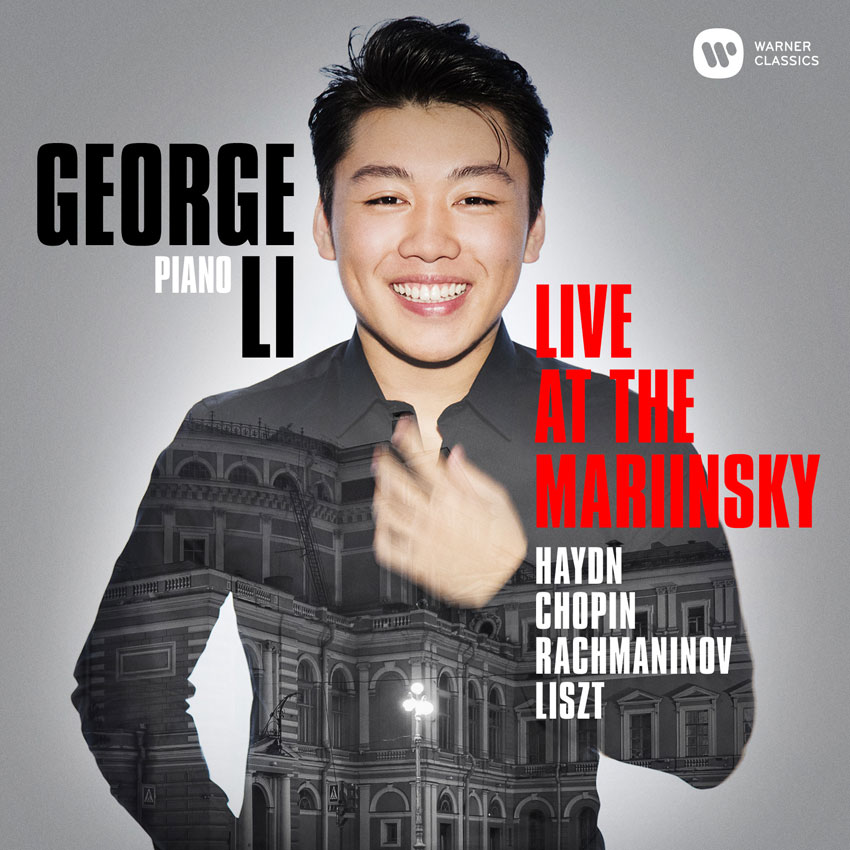
[39] George Li plays Beethoven and Schumann at Merkin Hall | #1Summer50Concerts

Image result for george li


WHO: George Li, piano
WHAT: BEETHOVEN 32 Variations in C minor, WoO 80; Andante Favori in F major, WoO 57; Sonata in C major, Op. 53 "Waldstein"; SCHUMANN "Vogel als Prophet" from Waldszenen, Op. 82; Carnaval, Op. 9
WHERE: Merkin Hall at the Kaufman Center
WHEN: July 16, 2019 at 8:00pm

This International Keyboard Institute and Festival (IKIF) is stuck between a rock and a hard place, programming-wise. On the one hand, it seems like they want to program interesting things -- some pianists come in with interesting pastiche recital ideas. But in their two weeks of twice-daily concerts, there was an overwhelming amount of music by pianists, for pianists (yeah, Liszt, I'm looking at you). Just like, an overwhelming amount of pretty good soloists playing Beethoven after Schumann after Brahms -- all composers I like very much, but like...what else is new guys?

So I decided I'd only go to one of the concerts, and this is the one I chose. I chose it because I like Beethoven and I like Schumann and I've heard George Li is good. Sound logic, if you ask me. And I think I chose the right concert, music-wise.

George Li is one of these people who went out and won all the big competitions when he was a teenager so by the time he finished his undergrad (at the Harvard-New England Conservatory exchange program) his career was already made. Sigh. If only...

He played well, for the most part. His Beethoven, while nice, was not necessarily to my taste. The interpretations seemed overly cerebral -- he thought very hard about the placement of each note in time and space. The result was playing that felt wordy, for lack of a better descriptor. Each note felt like it was meant to evoke a very specific descriptor: this note was joyful, that one was anguished. I think that particular aspect cost him a sense of big-picture scope that would have helped tremendously.

Li's Schumann, though, was something to write home about. Once he had a concrete picture as a goal for his interpretation, his musicality snapped right into place. His Carnaval was stunning, his "Eusebius" movement especially tender. But the only thing better than Carnaval were the five minutes of Waldszenen that preceded it. Mystic and exotic, the seemingly aimless movement ambled with futility-laden intent.

The best pianists know how to handle adversity (aka upright pianos)

I closed my eyes to listen to that movement of the Waldszenen. And just when I did, a phone went off. And then another. And then a third one. All told, five phones went off during those four minutes.

Yeah, let's talk for a second about the audience. The read I got was that it was mostly teenage IKIF attendees and their tiger parents. The woman sitting next to my date was on her phone the entire concert. Someone made a whisper before one of the pieces and no fewer than three people loudly shushed them (if you shush loudly, you're part of the problem). And worst of all -- George Li, the poor kid, obviously tired from a full recital and his first encore (Liszt's transcription of Schumann's Widmung), was forced to pull out the Liszt Campanella. The audience oohed and aahed. Behind Li's saccharine façade, you could see the same eyeroll that my date and I gave each other at Campanella's opening octave D#'s. For Christ's sake, let George Li do a Philip Glass concert or something. He's obviously bored.

TL;DR George Li gets a solid A. The audience gets a quadruple F-.

Thursday, August 1, 2019

[38] Chamber Music Society of Lincoln Center plays Mozart, Brahms, and Arensky at Alice Tully Hall | #1Summer50Concerts


WHO: Anthony McGill, clarinet; Bella Hristova, violin; Nicholas Canellakis, cello; Juho Pohjonen, piano
WHAT: MOZART Violin Sonata No. 32 in B-flat major, K. 454; BRAHMS Clarinet Trio in A minor, Op. 114; ARENSKY Piano Trio No. 1 in D minor, Op. 32
WHERE: Alice Tully Hall
WHEN: July 14, 2019 at 5:00pm

I have exceptional luck when it comes to getting into sold-out concerts. From Chunky in Heat at the very beginning of the summer, to Pierre Hantaï in mid-June, and a couple others pre-summer, I usually can negotiate myself into at least standing room.

I've only been turned away from one concert this summer, and that was the first of the Chamber Music Society of Lincoln Center's first summer evening concert on July 10. The Wednesday evening concert, which featured works of Schubert and Dvořák alongside Mendelssohn's rarely heard piano sextet, was sold out except for one seat which was offered to me at a premium of $85 -- to be expected considering the lineup, which included famed pianist John Kimura Parker, NY Phil principal violist Cynthia Phelps, and Tokyo Quartet cellist Clive Greensmith.

So I decided to come back with some friends and try for the next concert. Three $10 tickets later and we were sitting in the third row waiting eagerly for the downbeat.

Our anticipation was met with a heaping bowl of meh.

I mean, it wasn't unpleasant. The notes were correct, at least. But the musicians were, for the most part, dialing it in. Bella Hristova's Mozart wasn't particularly musically interesting, not that you could hear her above Juho Pohjonen's hammer-hands. I think the Mozart might have suffered from Hristova's nerves, though -- her Arensky was much looser and more refined.

Nick Canellakis's vibrato covered up anyone who he played with, most notably clarinetist Anthony McGill. From what I could hear of him, McGill played the most genuine performance of the evening, granted I could hear precious little over the opaque stylings of Canellakis and Pohjonen. And Pohjonen had possibly the most awkward stage presence I've ever seen, his face motionless and his body just kind of jerking around.

I don't want to belabor negativity, but I'll finish by saying this: I could see Canellakis being a great soloist in a thousand-seat concert hall. Pohjonen as well. I know for a fact Hristova can play the shit out of her instrument -- see the video at the top of this post. But this was simply not their day.

At least there was free wine after the performance :)

P.S. I'm no style guru, but CMS seriously needs to learn that white jacket + black tie is not an indoor look. Period.

Saturday, July 6, 2019

[24] NY City Opera premieres Iain Bell and Mark Campbell's "Stonewall" at the Rose Theater @ Jazz at Lincoln Center| #1Summer50Concerts #MyBigGayClassicalWeekend


WHO: New York City Opera
WHAT: Stonewall, music by Iain Bell, libretto by Mark Campbell
WHERE: Rose Theater @ Jazz at Lincoln Center
WHEN: June 22, 2019 at 2:00pm

I am so glad that the NY City Opera decided that this project needed to be a part of their season. It's almost like they picked up the slack for all of the organizations whose seasons had already ended. And, from what I gather, this wasn't a Stonewall50 one-off -- I think the City Opera has a pride concert every year (at least there was one last year and there will be one next year).

I went into Stonewall with high hopes, and in some ways, those hopes were wholly fulfilled. The cast was, for the most part, absolutely stellar in both acting and singing. Marc Heller's police chief in particular stood out from the rest, his shrill, yet full Puccini tenor piercing above the percussive mumblings of the police force. As recently-fired teacher Carlos, Brian James Meyer's Spanish rolled off the tongue just as easily as his English, all encased in a sweet, yet fiery baritone. Lisa Chavez was perfectly cast as butch-in-charge Maggie; her agile mezzo seemed incongruous at times, but it was eminently clear that was on purpose.

On the whole, the production, while minimalistic, was stunning. Colored LED lights were hung on the perimeter of the set wall seemingly willy-nilly, both setting the mood and casting an ominous glow on the characters themselves. A few upstage benches created a leveling system that made the chaos that ensued a bit more organized. Choreographer Leonard Foglia executed a complicated vision with military accuracy, both in the dance breaks and the chaos that ensued. The orchestra, conducted by Hartford Symphony music director Carolyn Kuan, also played beautifully, especially considering that the score was in a more "musical theater" style that classical musicians often fail to take seriously.

An early preview

But while the performances and production were praiseworthy, parts of the opera were rife with glaring missteps.

One thing that always strikes me about a Mozart, or Verdi, or even a Strauss libretto is that there's a clear line between what a character says and what a character thinks. Something is left to the imagination -- not everything is said straight out, some plot points are implied, and it's up to the audience how to interpret that. Every person gets something different out of the opera.

Mark Campbell’s libretto tramples that line with reckless abandon. The characters themselves have no character because the libretto forces them to say every word that comes through their head — no filter at all. The result is an ineffective, crowded libretto that tells rather than shows, and characters who end up as personality-less, word-spewing automatons. This was especially glaring in the opening section of the opera, where each role got a five-minute arietta to explain their situation; some were more effectively written than others (Carlos’s firing was well-staged), but any monologue was wordy and altogether too long. It feels as if Campbell wanted to produce identical experiences for every member of the audience, which is not a tenable modus operandi for an opera

And that’s not even touching the issue of stereotypy — it was as if the composer and librettist painted caricatures of every type of LGBTQ+ person that would have existed at the time. And that’s exactly what the LGBTQ+ community has been trying to avoid in the recent past.

So overall, A+ for the nod to Stonewall's 50th anniversary and the pride month. A+ for the performances. A+ for the idea. A+ for the set, and costumes, and lighting.

But the opera itself? Meh, C+.

Monday, June 10, 2019

[11] NY Philharmonic premieres David Lang's "prisoner of the state" at David Geffen Hall | #1Summer50Concerts


WHO: New York Philharmonic; Jaap van Zweden, conductor; vocal soloists; tenors and basses of the Concert Chorale of New York (Donald Nally, choirmaster)
WHAT: prisoner of the state, by David Lang (world premiere)
WHERE: David Geffen Hall
WHEN: June 6, 2019, 7:30pm

I'm not going to lie, prisoner of the state was gritty, gritty, gritty. Like, I just sat here for half an hour trying to think of an opening joke for this post. And I couldn't think of one. Because there was not a single uplifting moment in this 70-minute opera.

The stage of David Geffen was surrounded by a chain-link fence laced with barbed wire. The orchestra players wore all-black with optional black skull caps (the horn section looked particularly good in their matching hats). In the front was a faux-stone stage (with two trap doors, only clearly visible from directly above, which of course I was because I got seats on the side of the stage in the third tier because I am CHEAP), and in back, behind the fence from most vantage points, was a cell-block-looking stage that was unequivocally too small for the forty-some men of the choir.

The chorus processed out in yellow jumpsuits, wrist chains, and possibly the most convincing dirt-makeup I've ever seen. Granted, a couple of them still had perfectly coiffed hair that didn't exactly shout "prison," but the aesthetic was there.

David Lang's music exists in a strange quantum state (to the extent I understand what that means -- physicists, comment below and let me know if I'm an idiot). The way his music sounds and feels, one thinks it's simultaneously racing forward and dawdling. Many of the orchestral figures were frantic and exceedingly precise; yet, there was so much repetition that forward motion was quasi-nonexistent.

prisoner of the state was Lang's take on Beethoven's Fidelio, a convoluted plot that, without any subplots, essentially concerns itself with a political prisoner (Fidelio), who is to be killed by gradual starvation, and his devoted wife, who dresses as a guard to sneak her way into the prison and reveal the twisted reasons for her husbands unfair detainment. It's a happy ending: Fidelio is freed, his opponent is detained, joy, triumph, yay!

Lang essentially strips the two-hour-plus Fidelio of all its subplots, casting a modern light on the main story line. The characters are all deranged in one way or another, and each gets an aria to explain his or her affliction. The dehumanized "assistant" (the character of the wife) sings of how she once was a woman, but is no longer; the power-hungry "governor" sings of his obsession with fear over love; the sadistic guard sings of his willingness to do anything for wealth; the prisoner (congruent to Beethoven's Fidelio) sings of the solitary confinement that has driven him to the brink of extinction.

Thing I did not mention: my job got me into a press rehearsal a couple days before the
actual performance. It was us and a bunch of classical music "influencers" -- I didn't know those existed

French soprano Julie Mathevet, who played the assistant, was perfect in her character. Mathevet portrayed not an ounce of emotion until the (seemingly uplifting) end, very clearly on purpose. The governor, played by British tenor Alan Oke (who really really channeled the Patrick-Stewart-circa-Macbeth look for this role), almost struck like a Herod-type character: obsessive, whiny, and opinionated. MET regular Eric Owens (the guard) struck a perfect balance between capitulating and strong-willed. But the prize for most convincing goes to Jarrett Ott, the prisoner of the state himself (oh, THAT'S why they called it that!), whose bloody makeup and languid appearance did not compromise his operatic presence one bit.

The Concert Chorale sounded tremendous -- they beefed up their ranks significantly for this one. On the roster were are few names I recognized from spectating around the NYC and New Haven concert scenes. And holy crap, did they have tenors. High Bb's for days. Even with the choreography, which mostly included stomping and walking, the music was forceful, stark, and effective.

Lang has a knack for social commentary. I was fortunate enough to sing a piece of his earlier this year which sets the pre-sentencing speech of Eugene Debs, who was convicted under the Sedition Act for his anti-WWI speeches. To quote Lang himself: "I was mad, so I wrote this." And that seemed to be more or less the case for prisoner as well -- except in this case he had control over his own libretto. At what would be an otherwise happy ending, Lang throws in the caveat that technically we *are* still prisoners in the world, and that the only difference in a real prison is that you can see the chains. Nice.

All else aside, this was a tremendous performance. And even if you didn't get to see it, I'm certain it's going to come back. This is the kind of thing that was far too much work to truly only last for one weekend. My guess is that this production will make its way around the major symphony orchestras and opera houses and eventually get recorded. Good thing, too; it's catchy as hell and it's going to be stuck in my head until I can get my hands on a recording.

I hummed this at a concert two days later, and a lady who was sitting in front of me
turned around and said, "Is that prisoner of the state?" I think I've found my people <3

Saturday, June 8, 2019

[9] Laura Kaminsky's "As One" at Merkin Hall @ Kaufman Center | #1Summer50Concerts

The full credits list
WHO: Briana Elyse Hunter, mezzo-soprano (Hannah After); Jorell Williams, baritone (Hannah Before)
WHAT: As One, by Laura Kaminsky
WHERE: Merkin Hall at the Kaufman Music Center
WHEN: June 4, 2019, 8:00pm

This is going to be a hard one to write. And I think I just need to get something off my chest real quick: I am not here to provide an evaluation of the subject matter expressed in this opera. I will be doing my best to evaluate the work objectively as an art form. This opera concerns itself with struggles that I am not qualified to comment on, and the last thing I want or intend to do is invalidate those struggles and the people who have endured them. I am not commenting on the message this opera conveys (I happen to agree with that message wholeheartedly); I am commenting on how the message is conveyed.

I was super excited when I heard about As One. The concept was fabulous, in my opinion: using two singers to chronicle a trans woman's struggle and eventual transition. I really truly think that music and text together are more powerful than either one in isolation.

The performances, by baritone Jorell Williams and mezzo Brianna Elyse Hunter, were fabulous. Williams's sheepish, yet confident acting (backed up by one hell of a voice) conveyed the internal struggle that the opera meant to convey. Hunter's intrepid final scene showed a newfound, in-plain-sight joie de vivre.

I really quite enjoyed the music of this opera as well. It was sort of a mishmash of American classical music: the pointed repetition of Reich and Glass, the ninth chords of Whitacre, the plaintive solo lines of Barber. The quartet that played the score was accurate, expressive, and always sensitive to the vocalists on stage. The set design, while minimal, was exactly as much as was needed.

The place where I feel like this opera fell flat was in the libretto. The opera was structured as a series of vignettes, and it seemed like at times the libretto did not connect one scene to the next. For instance, when Hannah decides she needs to get away from the society she knows, she decides to go to Norway; rather than showing a thought process, she just kind of sings, "Norway!" and then...she's there? A little bit discontinuous, in my opinion. Also, the libretto seemed to be very cookie-cutter -- I think about half of the sentences started with "I feel," especially towards the end of the opera. I think that the characters would have had more dimension if the libretto explained not only what they feel, but how they feel it.

Overall, not my favorite experience. There's a recording coming out soon, I might recommend listening to that; however, I wasn't so keen on this performance. It wasn't *bad* per se, but I think it could have used some fine-tuning.

Saturday, June 1, 2019

[3] New York Philharmonic plays Brahms, Mozart, and Corigliano at David Geffen Hall | #1Summer50Concerts

WHO: New York Philharmonic; Jaap van Zweden, conductor; David Fray, piano
WHAT: BRAHMS Tragic Overture; MOZART Piano Concerto No. 24; CORIGLIANO Symphony No. 1
WHERE: David Geffen Hall
WHEN: May 30, 2019, 7:30pm

I've been known in the past to give tepid, if not negative reviews of the NY Philharmonic in the past. I saw them a couple times in their last season with Alan Gilbert, and their affect often seemed listless at best. It seemed like a group of accomplished soloists each playing without much regard for what the rest of the orchestra was doing.

I'm glad to say that era is on its way out. Jaap van Zweden, the notoriously fierce Dutch conductor who took over as the Phil's music director this year, is fixing them. The orchestra will almost certainly be back to its Bernstein-era glory in a few years.

Still, though, the Phil is in an intermediate period. There are moments where everything clicks and they sound like the most expressive, polished orchestra on this side of the Atlantic. One of those moments was at the beginning of the Brahms's Tragic Overture, which started this concert. Quite frankly, I find the piece to be very take-it-or-leave-it. Is it better than I could have written? Absolutely. Is it Brahms's magnum opus? Nowhere near. But the Phil brought certain moments to life -- the opening (and the recap) sounded almost like a period ensemble, with hard-sticked timpani and vibrato-less strings, a timbre that van Zweden clearly thought out well. The rest? It was fine.

I suppose I should mention the caveat that I had a TERRIBLE seat for the first half of the concert. The box office refused to sell me a student-priced ticket (even though there were empty seats everywhere?????), so I was stuck with the only other seat that was in my budget: top floor, side boxes, partial view. And it was still twice as expensive. UGH. I moved to a top-floor front-facing seat for the Corigliano (and thank god I did -- that partial view would have blocked out the mandolinists!).

To give you an idea of where I was sitting...Fray, van Zweden, and the orchestra

Both of Mozart soloist David Fray's last two albums have been Bach interpretations -- his concerti for multiple keyboards in 2018 followed by his sonatas with star French violinist Renaud Capuçon. I've like his Bach (much as I usually prefer my Bach on harpsichord), so I was interested to hear his Mozart. His Mozart (the 24th piano concerto) struck me as a little far removed from his Bach; his use of pedal was a little more liberal than I would have liked, though not totally outlandish. That being said, his slow movement was incredible: heartfelt, musical, and not too soupy. Special mention to the wind section Phil for that same slow movement.

I was proven wrong. But I still don't think the mandolins were *totally* necessary.
I really didn't want to like the Corigliano. At first glance, the orchestra seemed too big, almost big for the sake of being big. But John Corigliano himself came onstage and gave some verbal program notes, on the verge of tears as he remembered the people this piece eulogizes, friends of his who died in the AIDS epidemic. Once the piece started, I understood why that orchestra was so huge. Corigliano accurately encompasses so many emotions in this piece -- terror, sadness, wistfulness, nostalgia -- that even the most emotionless of listeners is moved.

The highlight of the piece was the opening of the third movement, in which principal cellist Carter Brey delivered a solo (in commemoration of a cellist friend) that was not only polished, but also so deeply felt that a cavern opened up in my stomach and I was fighting back tears. Overall, a tremendous performance.

If you get a chance to see the NY Phil, certainly do it. While they are not necessarily the best orchestra in NYC (that honor goes to the MET Orchestra), they are definitely worth a visit, even in their acoustically dead hall. But, more importantly, if you get a chance to see John Corigliano's Symphony No. 1, jump at it. I hear the Chelsea Symphony is doing it at the end of this month (June 29-30), who's going with me?