Saturday, January 4, 2020

New Year's Resolutions


Happy new year everyone!

I rang in 2020 the same way I always do -- that is, by playing the Mendelssohn octet straight through midnight. Sure, I got invited to a few more conventional New Year's Eve parties. But there are a few things on which I don't compromise when I come home to LA. One of them is that I play chamber music on New Year's Eve. Full stop. End of story.

I set the same new year's resolution for myself every year: practice more. Totally attainable, and yet I usually just flat out ignore it. Might be time to change that, although blogging is kind of like practicing my writing, right?

That's exactly the type of rationalization that comes with rusty vocal chords and dusty cello strings. At least I admit to it.

Speaking of blogging, it's been a little over seven months since I started this site, and I'm now realizing that there are things that I wish I had done differently, and things I'd like to start doing. So here are my Classical Music Geek new year's resolutions, in no particular order.

1. Post more regularly. I think my average number of posts was about right, even when classes were in session -- I probably netted three to four posts per month. But three posts in one week followed by a month of radio silence...that's not sustainable. Even if I post less frequently, I want to try to hold myself to a schedule.

2. More short posts. I love writing thousand-word posts as much as the next guy, but I don't always have the luxury of time. Maybe I'll hop on the #WordlessWednesday bandwagon -- anything is better than nothing.

3. More recommendations for you. I love telling you about the concerts I go to, but that only does you so much good. I think it's high time I started making real recommendations. Lists of the albums that keep me coming back for more. Concerts that are on my radar in various locales. Up-and-coming artists to keep your eye on.

4. Better social media presence. If I had really made a social media push this summer, I could have gotten out to a larger audience that just my mom's friends. I'm finally on Twitter (@emerykerekes follow me please), but it's about time I learned how to use Instagram.

5. More artist engagement. Yeah, I'm shy. But it's time for me to grow a pair and actually ask artists for f***ing interviews. How else am I going to move up in the world?

6. More memes. See this post's header photo.

7. More food. My life is full of dinner-and-a-show, why isn't my blog's feed? Besides which, then I can fall back on food criticism if music criticism doesn't work out.

8. Keep doing this. It sometimes feels like this blog isn't a priority in my life. School has to come first, of course. But rest assured, I'm not going anywhere. I love this too much -- whatever "this" is.

Thanks again to everyone that has made this possible, and here's to another year of great music!

Wednesday, December 25, 2019

Virgil Thomson's Roast Lamb: An Experiment in Gastro-Musicology


One thing I have not made clear enough in my reviews: I am a foodie. The only thing that rivals my love for a good, cheap concert is a good, cheap meal. Not shockingly, it's much easier to find the former around NYC -- I'm pretty sure if I waltzed into Katz's Deli and asked for the "student discount" I'd get a laugh and a proverbial kick in the shins (then again, it's hard to do anything at Katz's without getting made fun of, that's kind of their brand).

Now that I live in an apartment, I've finally been able to get back into cooking regularly. I've had some interesting experiments in my tiny one-person kitchenette. A moderately successful crispy pork belly. Beef rendang with a paste I bought at a hole-in-the-wall Indonesian market in Forest Hills -- the paste had so much chili that it kinda gassed out my apartment even with all the windows open. A five-ingredient butter-soy-garlic braised enoki mushroom dish that I now swear by.

My friend Amanda is my cooking buddy. We grocery shop together, we exchange recipes, sometimes we even eat together. A couple months ago, Amanda texted me a picture from a ratty spiral-bound cookbook and said, "Project?"

The recipe was from Amanda's old copy of the Chicago Symphony Orchestra Cookbook (out of print, but available on Amazon) from the time when her father played trumpet with the CSO. A compilation of exceedingly 1970s-esque recipes, the book includes favorites from musicians, conductors, spouses, and composers.

I'm not sure which I love more: the fact that he wishes us luck at the end,
or the fact that he signs with "Warmly everbest"

Our project: American composer Virgil Thomson's (1896-1989) recipe for roast leg of lamb. Thomson's musical oeuvre has largely been forgotten; he's remembered most fondly as a father figure for composers of the next generation, most notably Leonard Bernstein and Ned Rorem. According to academics, the trio was "united as much by their shared homosexuality as by their similar compositional sensibilities." His most famous works include three operas (two with libretti by Gertrude Stein, one of which the NY Phil is doing later this year) and a handful of Ken Burns-style PBS film scores.

His lamb recipe looked edible. Huge leg of lamb. Cut all the fat off. Rub with crushed garlic and rosemary (no salt, he's very clear about that). 550°F oven. 8.5 minutes per pound. Easy enough, I suppose.

So Amanda and I checked our GCals and penciled in a date around finals -- what better way to celebrate the holidays (and procrastinate on my final papers) than with a huge hunk of Roast Beast™? (please don't sue me Dr. Seuss Trust please please please)

I showed up to Amanda's house around 6:45 on a Monday night. We poured ourselves glasses of wine (I had written most of a 12-page paper that day, I damn well deserved it) and set to work trimming the six-pound leg of lamb of all of its fat. Yes, all of it, or else, Virgil assured us, we'd set our oven on fire. Nice.

I suppose I should say now that we committed ourselves to following Thomson's recipe exactly, so help us god. This is important, because we made some steps that we knew would produce wonky results. But we did it for science!

We crushed some rosemary and garlic and rubbed it on. Just like we were supposed to. And then we stuck it in the oven. And, predictably, the garlic and rosemary torched almost immediately and set off the smoke alarm for the first time that night. We dismantled the smoke detector after that, but that was definitely not the last time the smoke alarm should have gone off.

smoke alarm: BEEP
me: *goes to fan smoke alarm*
Amanda: "Do you want me to take a video of this for your blog?"
Me: "I mean....I guess so?"
Virgil Thomson's Four Saints in Three Acts: *playing in the background, if you listen closely*

The original plan was to make an entire Chicago Symphony dinner, but we looked through the book and decided that everything looked too....well, too 1970s. Lay off the gelatin, guys.

After smoking out the apartment three times (though admittedly those last two were thanks to our complete and utter incompetence at making Yorkshire pudding), we pulled the lamb out of the oven. It looked nice enough. We carved it according to Virgil's instructions (ALWAYS perpendicular to the bone -- he was very particular) and sat down to eat. We ended up with:
  • Virgil's lamb, which was juicy but had a prominent essence of burnt garlic and that distinct 1970s gray color. Oh, and why didn't they ever salt anything in the 1970s? Literally, rub the outside with salt instead of garlic and rosemary and we wouldn't have had a problem with flavor or garlic charcoal.
  • Sautéed Brussels sprouts with bacon. Mmmm, bacon.
  • Arugula "salad" with olive oil and kosher salt, that's it (Virgil's instructions were actually watercress, but arugula is so much better).
  • Amanda's mother's delicious almond torte recipe
Overall not too bad. But Amanda and I looked at each other after enduring three smoke-outs and more than our fair share of other hilarity and said, "We are obviously better cooks than Virgil Thomson. Let's just use our own recipe next time."

An evening of musicology at its most amusing, if you ask me.

Monday, December 9, 2019

Some Thoughts on the 2020 Grammys

Grammy Award 2002.jpg

The nominees for the 62nd Grammy Awards came out a few weeks ago. I was excited. Like, really excited. But of course, as you guys have probably gathered by now, I'm easily excitable.

I sent the link to all of my top contacts. Responses included:

"Oh sick, I'll take a look tomorrow when I'm not stoned out of my mind!"

"Go away, I have a [math words that I don't understand] problem set due in two hours."

"It's 3am, go to sleep dammit!"

Can you guess which one was my mother?

Naturally, I had thoughts -- it's almost a reflex at this point. So, I figured that as long as I have this repository for my unsolicited opinions, I may as well throw these on the pile. So here are a few of my thoughts on the 2020 classical Grammy nominees.

Image result for andrew norman sustain

A Big Year for New Music

The Grammys have a category for the best new classical composition of the year -- they've awarded it yearly since 1985 -- so there's always been some representation for new music. But overwhelmingly, contemporary classical music is starting to take over the other categories:
  • The LA Phil (woot!) is up for an award for their performance of Andrew Norman's new composition Sustain (also up for best new composition) alongside recordings of Bruckner, Copland, and Stravinsky.
  • One of the Best Opera Recording nominees is the world premiere recording of George Benjamin's Lessons in Love & Violence with the original Royal Opera House cast, and they have a good chance of winning, too.
  • Four of the five nominees for Best Choral Performance are albums containing world premiere recordings -- and, in my eyes, the fifth album (Duruflé's complete choral works with the Houston Chamber Choir) simply is not going to win.
  • Best Chamber Music/Small Ensemble Performance is also peppered with world premieres -- a little more on that down below.
  • Best Classical Instrumental Solo -- you guessed it -- has three premiere recordings.
The times, they are a-changing. Good thing the Recording Academy recognizes this, too -- fair to say the more conservative members are slowly phasing out and being replaced with credible young voices.

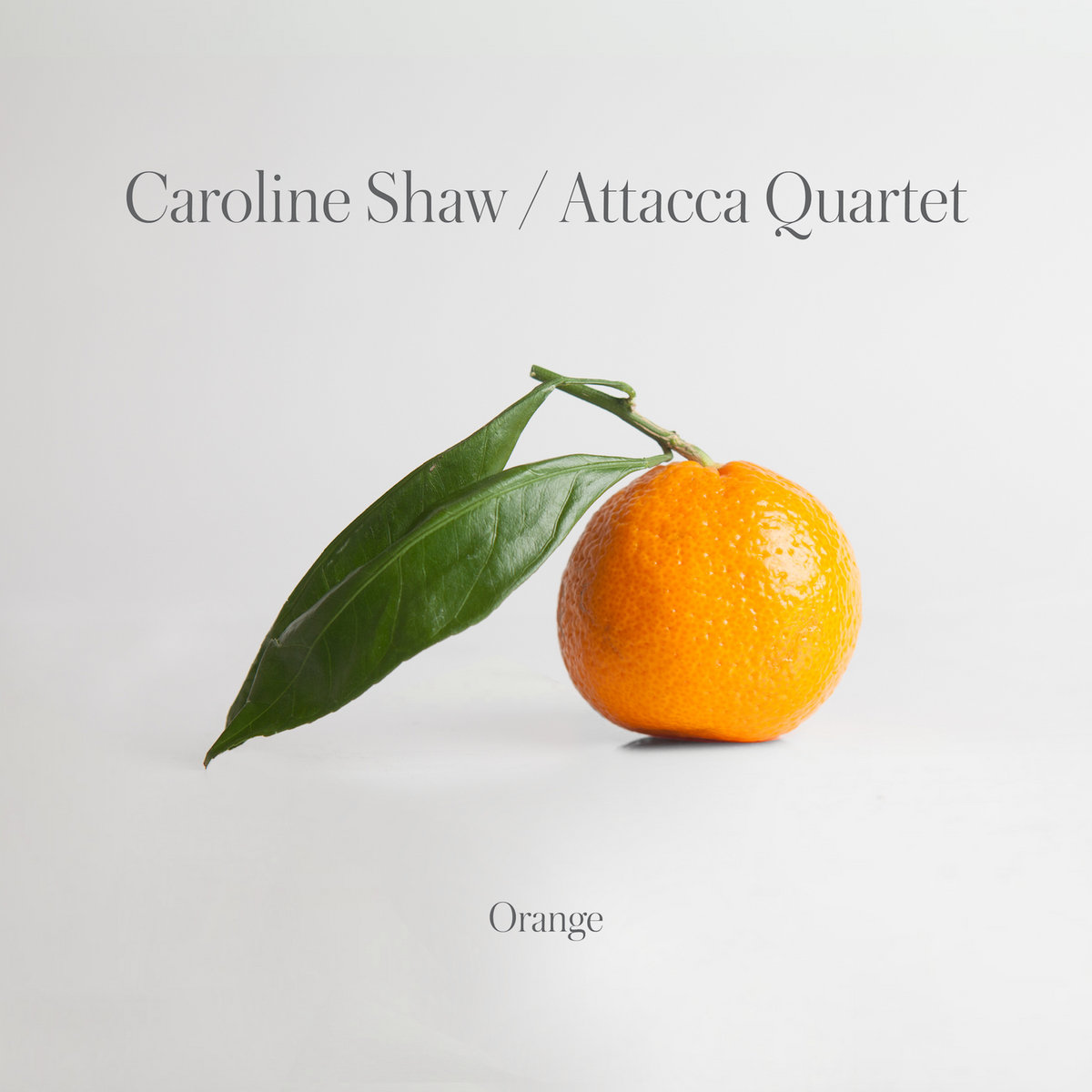
Image result for shaw orange

Caroline Shaw. Yes, Again.

The Grammys have proven erratic in the past, but there is one decision upon which I will happily bet money. I think that the Attacca Quartet's May 2019 Caroline Shaw album, entitled Orange, is going to win Best Chamber Music/Small Ensemble performance. Never have I seen a classical album that has gone so mainstream as soon as it hit the shelves. I have yet to see a bad review of the album -- it's definitely on my top 10 list for albums of the year, and probably up there on my albums of the decade too.

This is not to detract from the other four nominees, three of which are also world premiere recordings. But I think the buzz that surrounded Orange's release is a good indicator that it's headed straight for Grammy territory -- the Academy loves buzz.

Image result for joyce didonato songplay
For all the things I don't love about this album, I have to admit
that top-hat-and-ruffles is DEFINITELY Joyce's look

Songplay

I know I'm usually loath to give a negative review. I mean, I'm young. I can't afford to make lifelong enemies. But sometimes, something comes my way that just annoys me so much that I have to say something.

Hey, I'm an anti-establishment 20 year old, so if I'm going to rail on someone it better be someone good. So I'm going to tell you what I really thought of Joyce DiDonato's most recent album, Songplay.

On the off-chance Joyce is reading this (although I'm not going to @ her on Twitter for obvious reasons) I just want to say that I absolutely adore her. Her 2018 live-from-Wigmore recital with the Brentano Quartet was one of the many soundtracks of my past summer of blogging. I will stand by her work forever.

Except for this album.

The thing is, there are so many people right now who are experimenting at the intersection of jazz and early music, and they are succeeding very well. Baroque ensemble L'Arpeggiata has released jazz fusion takes on Monteverdi, Purcell, and Handel, all to great acclaim. Harpsichordist Jean Rondeau will often play the Bach Goldberg Variations at 8pm followed by an improvised jazz piano set at 10:30.

Putting a swing beat behind the 24 Italian Art Songs and Arias doesn't cut it. At least not today.

I'm a quite surprised and a little bit taken aback that this was nominated. It feels like it was perhaps put on the list out of obligation. But think of all the other phenomenal vocal albums from the past year that didn't make the cut. Christian Gerhaher's latest Schumann albums. Iestyn Davies's album of new works for voice and viol consort. For fuck's sake, Lise Davidsen's debut album, which propelled her to the international stage and got her not one, but two features in the New York Times leading up to her Met Premiere.

Yeah, Songplay is kind of a waste of Grammy spot, if you ask me.

My Predictions

If I'm going to talk the talk, I figure I should make some predictions for winners in each category.

First, I'm going to say that I rarely agree with the Grammy committee's decisions. They are often reluctant to choose albums from smaller labels -- it all feels a little bit biased from the get-go. That being said, I'll be choosing based on my perception of both the performances at hand and the Grammy committee's selection process. So here goes nothing:

Best Orchestral Performance: Manfred Honeck and Pittsburgh have a great Grammy track record, so it wouldn't surprise me if their Bruckner 9 won. That being said, the Cincinnati Symphony Orchestra's nominated album got fabulous press, so that could happen too. Of course, I'm rooting for Mirga Gražinytė-Tyla's Weinberg symphonies album, both because it's fabulous album and because the award has never gone to a female-conducted ensemble and it's about f*cking time. Oh, and LA Phil <3.

Best Opera Performance: God, I swear if Lohengrin wins I'm going to kill someone. Especially considering that Christian Thielemann is an expert in Wagner's music partially because he practices his values...ugh. I think the aforementioned George Benjamin recording has a good chance -- Barbara Hannigan is tremendous and beat Joyce against all odds for Best Solo Vocal a couple years ago, so the Grammy committee obviously likes her. But the Academy are suckers for a good Wozzeck...

Best Choral Performance: I would be astonished if the award didn't go to The Crossing for the third year in a row. The Philadelphia-based new music-focused choir is pushing the boundaries of what is and is not singable, and they deserve every ounce of every award they get. Oh, and they're nominated in the category not once, but twice.

Best Chamber Music/Small Ensemble: see above.

Best Classical Instrumental Solo: Yuja Wang's The Berlin Recital, I think. She's simply beastly. Nothing more to say except that Nicola Benedetti has a chance for her premiere of Wynton Marsalis's new violin concerto (as much as I'm mad at Wynton Marsalis for his views on jazz fusion and free jazz, but that's another story for another day). Would love to see a win for Tessa Lark (I saw her this summer after my big project was over, she was amazing), but I don't think the Academy is going to spring for such a small record label.

Best Classical Solo Vocal Album: I think Matthias Goerne's Schumann album has it in the bag -- it's a ridiculously strong album among many others that are not as remarkable (@Songplay). Would love to see a win for L'Arpeggiata, but I honestly didn't think that their album from last year was as remarkable as some of the others they've done in the past.

Best Classical Compendium: I seriously have no idea. I'm rooting for Harold Meltzer because he's a family friend of sorts (we were reading chamber music together at Bennington and then we discovered that my mother was his first date...small world), but I also don't love Paul Appleby, who was the featured singer on the Meltzer compendium. The Saariaho album has a good chance, I think.

Best Contemporary Classical Composition: I know I said I'd bet money on Caroline Shaw for best chamber album, but I'm not as sure for the composition category, mainly due to Julia Wolfe's Fire In My Mouth, which made a huge splash when it premiered at the NY Phil last winter. I was lucky enough to see it, and it was indeed tremendous. That's where I'm placing my bets.

God, I have a mouth on me. But hey, I'm a 20-something aspiring critic, it's basically my job to have strong and immovable opinions, no?

Wednesday, December 4, 2019

Review: Les Arts Florissants at The Met Cloisters


WHO: Les Arts Florissants; Paul Agnew, director
WHAT: GESUALDO Tribulationem et dolorem; Responses for Maundy Thursday; Miserere mei Deus (Psalm 50)
WHERE: Fuentidueña Chapel at The Met Cloisters
WHEN: October 20, 2019 at 1:00pm (yes, I know I'm late)

I think I'm starting to get the hang of these concerts at The Cloisters. I usually don't get lost on my way from the subway station anymore. I know where all of the good views across the Hudson are (#doitforthegram -- except I'm not on Instagram because I'm a #grandma). And when I walked into the Fuentidueña Chapel for the second time in 24 hours, the 12th-century statue of Jesus hanging from the cross started chatting me up as if we were old friends.

Divine intervention? Sleep deprivation? The world may never know.

I missed Les Arts Florissants when they did a huge French baroque opera spectacle at the Brooklyn Academy of Music last year. Unfortunately, I have to prioritize school first (much as I wish I didn't) -- I occasionally drop down into NYC for a concert here or there, but I often pay the price of a sleepless week to follow.

I saw the listing for this concert. I checked my calendar. October break. It was destiny. Or maybe just luck. But either way, I had to go. I grabbed a ticket.

So, for those of you who don't know Les Arts Florissants, let me tell you a bit about the ensemble. They have an orchestra and a choir, both of which are fantastic. They got their start in France in the late '70s; American expat harpsichordist William Christie was the director, and still is today (although British tenor Paul Agnew is starting to take over more and more responsibility -- Christie is getting up there in years). And their recordings are all immaculate. Unlike many similar ensembles, whose recordings have shown a steep quality incline in the last couple decades, Les Arts's 1980's recordings are just as clean as those of the last few years.

Considering that fact, I left the concert with a somewhat cynical opinion: "They were amazing -- who knew?"

Bottom line: Gesualdo is difficult. Very difficult. His harmonic language borders on non-functional, almost to contemporary levels. As my father so wisely told 13-year-old me: "You like Bartók? You should try Gesualdo." But I know Les Arts well enough to know that they wouldn't put up a mediocre performance.

Of particular note were the singers at the lower ends of the ensemble. Bass Edward Grint had this plaintive musk to his voice, one that provided a stable resting place for the other five vocalists. Paul Agnew was great as usual (ah, what I would give to be a tenor...), though most of his focus went to shaping the music with tiny, unobtrusive hand gestures. Mélodie Ruvio gave a particularly thrilling performance, a phrase that I don't think I've ever used to describe a choral alto part before. And, when the whole group came together for the chants between verses of scripture...chills.

I don't think there's anything more to say. Les Arts Florissants can do no wrong. If they come around to your neighborhood, DO NOT miss them at any cost. And that's an order.

Monday, November 25, 2019

Review: Miller Theatre presents Vox Luminis at Church of St. Mary the Virgin

Image result for vox luminis
My hot take: all concert dress that is not
concert-black-with-pop-of-color should be outlawed.

WHO: Vox Luminis; Lionel Meunier, artistic director
WHAT: ANONYMOUS (XII CENTURY) Lamentation de la Vierge au Croix; LOTTI Crucifixus
a 8; MONTEVERDI Lamento della ninfa; Adoramus te Christe; DELLA CIAIA Lamentatio Virginis in despositione Filii de cruce; D. SCARLATTI Stabat Mater for ten voices and basso continuo
WHERE: Church of St. Mary the Virgin
WHEN: October 19, 2019 at 8pm

When I saw this concert, I had been waiting to see Vox Luminis live for a good long while. I was all slated to go see them last year in southern Connecticut, but a friend called me in at the last second to sub in his run of 25th Annual Putnam County Spelling Bee. I wasn't angry at the time -- I love that show, and I figured I'd get to see Vox Luminis again relatively soon. They tour the US every year, and always end up in NYC at least once.

Well I ran into that friend on the street a couple weeks ago. And told him very matter-of-factly that I'm now angry that he tore me away from that concert. Retroactively. Because, I've decided, any moment that I don't spend listening to Vox Luminis is necessarily inferior to any moment that I do spend listening to Vox Luminis. And any moment I spend listening to Vox Luminis live is better than any moment I spend doing anything else.

Yeah. This concert made me feel feelings. This concert made me cry tears. This concert might be the best I've reviewed on this site thus far.

Vox Luminis changes size based on the performance. They numbered fifteen in this concert -- eleven rotating singers (SSSSAATTTBB) plus a four-person continuo team. They brought along their own organist and viola da gamba player, they hired a lutenist (one of my professors, as it happens -- hi Grant!) and a harpist from the NYC freelance pool.

The concert started with a 12th century French lamentation, sung facing the altar by Vox Luminis's wondrous first soprano, Zsuzsi Tóth. She's kind of my idol -- the soprano I'd want to be in another life. Her voice is too light to float; it just transcends. She has this perfect straight tone that makes her both an ensemble singer and a soloist. Everything that passes through her vocal chords turns to pure syrupy goodness. I even tolerate the low-def YouTube video of her singing the final lament from Carissimi's Jephthe. Because she's that good. I keep hoping she'll release a solo album of her own, though she hasn't yet; I'd give my left arm to hear her team up with a lutenist to record some Josquin or Dowland.

I've been told we resemble each other -- what do we think, peanut gallery?

Their Lotti Crucifixus was great as always, preceded and followed by profound improvisations by organist Anthony Romaniuk, but the thing that brought tears to my eyes was Lamento della ninfa, Claudio Monteverdi's classic tale of lost love. The narrators, a consort of two tenors and bass, stood behind the continuo team; they set the scene with a short introduction. The continuo then started the Lamento's hallmark tetrachord -- A, G, F, E, repeated ad nauseum. Usually, the soprano (la ninfa) gets at most four bars before she makes her entrance. But this time, seven, eight, nine repetitions, and no sign of the soprano.

But...why were the hairs on my neck standing on end? Why did I have chills up my spine? What was that clicking noise coming from next to me?

Clack. Clack. Clack. The slow steps of Estonian soprano Marta Paklar echoed throughout the sanctuary. The continuo must have done close to twenty cycles before she finally got up to the stage -- just further proof that four chords can get you very, very far in the music world. Anyway, Paklar turned around, her face as if she had just finished crying and was about to start again. And then she started singing. And I welled up with tears because her singing was like the most beautiful sobs you've ever heard.

To cap the concert off, Vox Luminis pulled out their signature piece: Domenico Scarlatti's Stabat Mater for ten voices and basso continuo. This was the piece that inspired Lionel Meunier to bring the ensemble together for the first time fifteen years ago. I first heard it on their premiere album from 2007, and their live version did not disappoint. They're have such a forceful composite sound, and yet each vocalists remains a soloist -- how?

I'm hooked. Vox Luminis is my crack. As soon as I left the concert, I put on one of their albums for the walk home. The next day, another. I'm just counting down the days until their next USA tour -- ten months to go I think?

Oh, and by the way, Lionel Meunier says Yale has been holding out against bring Vox Luminis to campus -- I'm about to @ every Yale music handle on Twitter and see if I can change that. Plus, Lionel said he'd buy me a drink if I convinced Yale to have them for a concert -- help a guy out.

Fun fact: Lionel Meunier also plays recorder. Really well.
On the first eight tracks of this album.

Tuesday, November 12, 2019

Review: Heinavanker at The Cloisters

Image result for heinavanker
I bet their shoulders are really warm.

WHO: Heinavanker; Margo Kõlar, artistic director
WHAT: "From runic songs to Pärt"
WHERE: Fuentidueña Chapel at The Met Cloisters
WHEN: October 20, 2019, 8:00pm

"From runic songs to Pärt," could mean just about anything. I mean, I sort of assumed that the nucleus of their program would be....runic songs....and Pärt. But safe to say that this was the only concert from my October break where I didn't really know what I was getting myself into.

Well, the first thing I noticed, and the first thing I should say: god, I wish my choir robes were that cool.

Heinavanker's program did, indeed, include runic songs and Pärt, along with some 14th-century polyphony. A couple of anonymous French mass movements went off well, as did a Te Deum by artistic director Margo Kõlar, who sang while conducting minimally. The Pärt was also quite good.

But for now, I'm going to dismiss those pieces, because I remember almost nothing of them. Even right after I left, my mind was full of one thing and one thing only: Estonian runic song.

And here's the crazy thing -- Estonian runic song is so, so, so repetitive. Much of it is the same couple lines of music that just keep coming back to different text; occasionally the music changes a bit, but the changes are really very little, barely discernible. But thirty seconds in and you're entranced.

Heinavanker incorporated some simple choreography into their set, mostly stepping behind one another in some sort of hypnotized, down-beat conga line. As soon as they brought out their first runic song, the Kõlar arrangement that leads their 2013 album (which I've listened to at least four times since the performance [and may or may not be listening to now]), it as if this wash of calm descended over the audience. Something about the cyclic repetition combined with the kind of music that is just so....comfortable. No one's voice was stretched, no one's ear was challenged. It was just nice, good music.

I seriously cannot recommend this enough. Seriously.

And they were so in the zone. The verses and verses of text were second-nature to the ensemble, who performed mostly from memory. The voices blended effortlessly in the boomy-but-not-overly-so chapel; the plain chords were perfectly in tune.

I want to make one thing clear -- Heinavanker's program contained some of the simplest music I've ever reviewed. But they showed that simple does not necessarily equal unimpressive. They performed these simple runic pieces with the same focus and accuracy that they might have used for something fifteen times its difficulty.

This was another of those times that I came out of a concert and said: "I would sit through that again in a heartbeat." I was speechless. It's one thing to go into a concert knowing full well it's going to be fantastic; but the feeling of euphoria that follows uncertainty is even better.

Please, Heinavanker. Come back to the US. Pretty please, with Estonian runes on top.

P.S. This is one of their basses. Turns out he's an Estonian pop star. Who woulda thunk it?

Sunday, November 10, 2019

Review: International Contemporary Ensemble performs George Lewis's "Soundlines"

Peep: Shick and Lewis trying to explain the meaning of music
in half an hour, in terms that a middle schooler could understand

WHO: International Contemporary Ensemble; Vimbayi Kaziboni, conductor; Steven Schick, percussion and orator
WHAT: GEORGE LEWIS Soundlines; P. Multitudinis
WHERE: Skirball Center for the Performing Arts @ NYU
WHEN: October 18, 2019 at 7:30pm

One of my friends told me I should drop everything to see this concert. By the time he finished telling me why, my tickets were already bought. I'm easily swayed.

The first amazing thing about this concert was the sheer density of objects and individuals onstage. In addition to the large Skirball stage, a large vertical platform stood front and center -- the kind of platform off of which I flung (and broke) a bow in my freshman year of high school while playing in the orchestra for Pippin. (That was my second broken bow that year. I broke the first by literally sitting on it during an orchestra rehearsal. I was a clumsy child.)

Spilling out of the pitch-black underbelly of said raised platform was a smattering of unusual percussion instruments -- drums, various shakers and rainsticks and whatnot. The conductor sat in the partially-lowered orchestra pit, visible to both those on the platform and on the stage. Basically, I'm trying to say that the setup was weird.

Within the first few measures of Soundlines, two LED panels lit up the dark underside of the platform, revealing the rest of the percussion setup surrounding a blank-faced Steven Schick.

Schick proceeded to tell the tale of an artistic mission upon which he embarked a few years ago: a daring seven-hundred-mile walk from San Diego to San Francisco. George Lewis designates his musical setting of Schick's memoir as a melodrama, but Schick's performance was anything but hyperdramatic. His face remained largely neutral through the piece, one of the more impressive feats of solo performance I've seen in the last year.

Lewis used the vast percussion set to emphasize Schick's oration syllable-for-syllable -- that was where the melodrama of this piece came from. The instrumental accents did not always match the syllable stress of the speech. That was part of the fun. Schick took it all in stride. His body was one, and the hands that operated the mallets were one with the mouth that narrated.

The rest of the ensemble snuck onstage at the end of the piece, and they seamlessly transitioned into P. Multitudinis, more a soundscape than a piece with distinct melody and harmony. The musicians were divided into distinct instrumental groups -- a wind quintet atop the platform, a string quartet stage right, a pianist stage left, a couple of hodgepodge ensembles in the side balconies. Each group had some discrete number of musical modules to play; it wasn't clear exactly how they decided when to switch, but from what I could tell motion was predicated on finger-numbers and Macarena-like hand signals. Conductor Vimbayi Kaziboni kept things moving by slinking around between groups, checking in as a waiter does on a table of guests. Amusing, and who am I to argue with results?

And the best thing about it all was the speech that George Lewis gave afterwards. He was very, very happy. And for me, that enhances the experience so very much. Satisfied composer + satisfied audience = satisfied critic.