Showing posts with label chamber. Show all posts

Saturday, January 18, 2020

Five Albums to Get You Through the First Week of Classes

"Who had this crazy idea to invent school all of a sudden? Charlemagne!"

I forgot how rough it is to go from doing absolutely nothing to absolutely everything. One day, I'm sitting on the recliner in my room at home watching Netflix, the next day I'm sprawled on my apartment couch after having carried twenty pounds of groceries back from my four classes and three rehearsals. But hey, such is the story of academic vacations.

Anyway, considering that many of you will be dealing with the same thing in the coming weeks, here are five albums that will help you through your first week back on the job (or any rough week, for that matter), whether you're a student or not.


If you ever wanted your classical music with a side of indie (or vice versa):
Love I Obey (Rosemary Standley & Helstroffer's Band)

To give you some context, this is the album I listened for comfort when I was stuck on the D train for almost two hours this summer. Rosemary Standley makes her career with indie band Moriarty. Bruno Helstroffer is a blues guitarist who plays early music as a day job. Together, they dreamed up this album of bluesy takes on British Renaissance airs. Standley's voice is (truly, in a non-cliché way) unlike any other singer I've ever heard, throaty and warm with a distinctive twang to the diction. And Helstroffer is just an incredible musician in all respects -- his solo debut is also among my favorite albums ever.

Image result for herreweghe bach motets

For a really, really good version of a piece you might know:
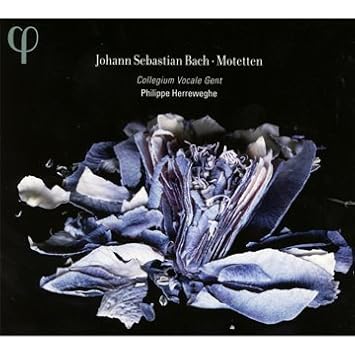
Bach: Motets (Collegium Vocale Gent, cond. Philippe Herreweghe)

This recording is just squeaky clean. Most of the motets are only one singer to a part on this album; the intimate accuracy gives me chills every time. The cast includes Vox Luminis soprano Zsuzsi Tóth; superstar French countertenor Damien Guillon; Bach specialist bass Peter Kooij; and a smattering of other big names in the European early music scene. When I want Bach, this album is my first stop (this version of Jesu, meine Freude is also my go-to tipsy soundtrack, something I can safely say now that I'm 21 😉).

Image result for jazz pa svenska

For an album that will replace your dinner party jazz playlist:
Jazz på svenska (Jan Johansson, piano; Georg Riedel, bass)

I usually spring for new jazz over old jazz, but this album is a classic (just ask the quarter of a million people who have bought copies). Sparse and smooth, Jan Johansson takes Swedish folk tunes and adapts them for a low-key duo of piano and bass. He treats the original folk tunes with such respect -- from his adaptations, I know exactly how the original was meant to sound. There's a good reason why it's the best-selling Swedish jazz album of all time, and still maintains a degree of relevance more than 55 years after its release.

*swoon*

If you want to hear the best music written for the best instrument you've never heard of:
Marais: Pièces favorites (François Joubert-Caillet, viol; L'Achéron)

Marin Marais wrote hours and hours of music for the viol (an earlier predecessor of the modern double bass that looks kind of like a cello -- if you're curious, watch Tous les Matins du Monde starring Gérard Dépardieu). It's all great, but some movements are simply transcendent. François Joubert-Caillet is the single viol player who has most consistently impressed me; here, he's selected a representative sample of Marais's most outstanding works and compiled them onto one phenomenal album. His continuo team is outstanding (continuo is a group of instruments that together comprise accompaniment for baroque music -- usually a melodic instrument and an instrument that plays chords e.g. a second viol and a harpsichord) and help to cement this album among the most satisfying Marais albums on the market today. And if you really like it, you can listen to his most recent album, a six-hour recording of one of Marais's complete books for viol.

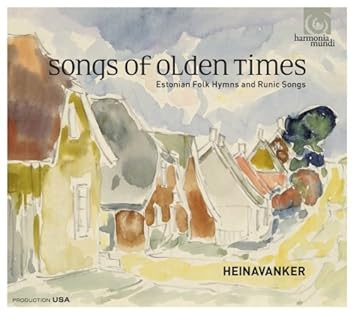
Image result for heinavanker songs of olden times

If you really just want to get lost in the sauce:
Songs of Olden Times: Estonian Folk Hymns and Runic Songs (Heinavanker, dir. Margo Kõlar)

I've sung Heinavanker's praises before, but I'm truly hooked on their album. It's the perfect album for a low-key, relaxing evening -- tonight, I put it on while waiting for my focaccia dough to rise. I'd say I listen at least twice a month, if not more. Cannot recommend highly enough. Cook to it. Meditate to it. Sleep to it. Work to it. Seriously.

Monday, December 9, 2019

Some Thoughts on the 2020 Grammys

Grammy Award 2002.jpg

The nominees for the 62nd Grammy Awards came out a few weeks ago. I was excited. Like, really excited. But of course, as you guys have probably gathered by now, I'm easily excitable.

I sent the link to all of my top contacts. Responses included:

"Oh sick, I'll take a look tomorrow when I'm not stoned out of my mind!"

"Go away, I have a [math words that I don't understand] problem set due in two hours."

"It's 3am, go to sleep dammit!"

Can you guess which one was my mother?

Naturally, I had thoughts -- it's almost a reflex at this point. So, I figured that as long as I have this repository for my unsolicited opinions, I may as well throw these on the pile. So here are a few of my thoughts on the 2020 classical Grammy nominees.

Image result for andrew norman sustain

A Big Year for New Music

The Grammys have a category for the best new classical composition of the year -- they've awarded it yearly since 1985 -- so there's always been some representation for new music. But overwhelmingly, contemporary classical music is starting to take over the other categories:
  • The LA Phil (woot!) is up for an award for their performance of Andrew Norman's new composition Sustain (also up for best new composition) alongside recordings of Bruckner, Copland, and Stravinsky.
  • One of the Best Opera Recording nominees is the world premiere recording of George Benjamin's Lessons in Love & Violence with the original Royal Opera House cast, and they have a good chance of winning, too.
  • Four of the five nominees for Best Choral Performance are albums containing world premiere recordings -- and, in my eyes, the fifth album (Duruflé's complete choral works with the Houston Chamber Choir) simply is not going to win.
  • Best Chamber Music/Small Ensemble Performance is also peppered with world premieres -- a little more on that down below.
  • Best Classical Instrumental Solo -- you guessed it -- has three premiere recordings.
The times, they are a-changing. Good thing the Recording Academy recognizes this, too -- fair to say the more conservative members are slowly phasing out and being replaced with credible young voices.

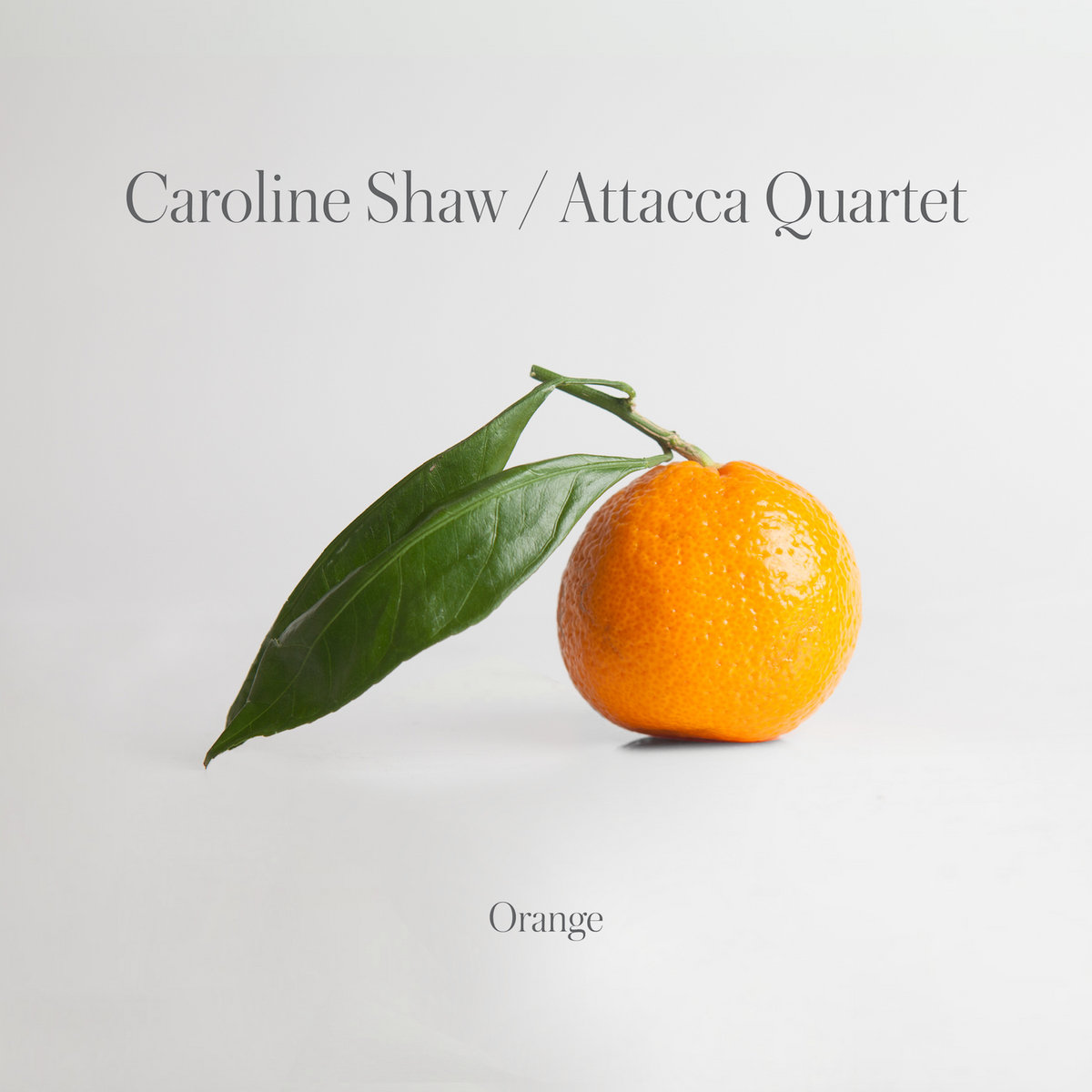
Image result for shaw orange

Caroline Shaw. Yes, Again.

The Grammys have proven erratic in the past, but there is one decision upon which I will happily bet money. I think that the Attacca Quartet's May 2019 Caroline Shaw album, entitled Orange, is going to win Best Chamber Music/Small Ensemble performance. Never have I seen a classical album that has gone so mainstream as soon as it hit the shelves. I have yet to see a bad review of the album -- it's definitely on my top 10 list for albums of the year, and probably up there on my albums of the decade too.

This is not to detract from the other four nominees, three of which are also world premiere recordings. But I think the buzz that surrounded Orange's release is a good indicator that it's headed straight for Grammy territory -- the Academy loves buzz.

Image result for joyce didonato songplay
For all the things I don't love about this album, I have to admit
that top-hat-and-ruffles is DEFINITELY Joyce's look

Songplay

I know I'm usually loath to give a negative review. I mean, I'm young. I can't afford to make lifelong enemies. But sometimes, something comes my way that just annoys me so much that I have to say something.

Hey, I'm an anti-establishment 20 year old, so if I'm going to rail on someone it better be someone good. So I'm going to tell you what I really thought of Joyce DiDonato's most recent album, Songplay.

On the off-chance Joyce is reading this (although I'm not going to @ her on Twitter for obvious reasons) I just want to say that I absolutely adore her. Her 2018 live-from-Wigmore recital with the Brentano Quartet was one of the many soundtracks of my past summer of blogging. I will stand by her work forever.

Except for this album.

The thing is, there are so many people right now who are experimenting at the intersection of jazz and early music, and they are succeeding very well. Baroque ensemble L'Arpeggiata has released jazz fusion takes on Monteverdi, Purcell, and Handel, all to great acclaim. Harpsichordist Jean Rondeau will often play the Bach Goldberg Variations at 8pm followed by an improvised jazz piano set at 10:30.

Putting a swing beat behind the 24 Italian Art Songs and Arias doesn't cut it. At least not today.

I'm a quite surprised and a little bit taken aback that this was nominated. It feels like it was perhaps put on the list out of obligation. But think of all the other phenomenal vocal albums from the past year that didn't make the cut. Christian Gerhaher's latest Schumann albums. Iestyn Davies's album of new works for voice and viol consort. For fuck's sake, Lise Davidsen's debut album, which propelled her to the international stage and got her not one, but two features in the New York Times leading up to her Met Premiere.

Yeah, Songplay is kind of a waste of Grammy spot, if you ask me.

My Predictions

If I'm going to talk the talk, I figure I should make some predictions for winners in each category.

First, I'm going to say that I rarely agree with the Grammy committee's decisions. They are often reluctant to choose albums from smaller labels -- it all feels a little bit biased from the get-go. That being said, I'll be choosing based on my perception of both the performances at hand and the Grammy committee's selection process. So here goes nothing:

Best Orchestral Performance: Manfred Honeck and Pittsburgh have a great Grammy track record, so it wouldn't surprise me if their Bruckner 9 won. That being said, the Cincinnati Symphony Orchestra's nominated album got fabulous press, so that could happen too. Of course, I'm rooting for Mirga Gražinytė-Tyla's Weinberg symphonies album, both because it's fabulous album and because the award has never gone to a female-conducted ensemble and it's about f*cking time. Oh, and LA Phil <3.

Best Opera Performance: God, I swear if Lohengrin wins I'm going to kill someone. Especially considering that Christian Thielemann is an expert in Wagner's music partially because he practices his values...ugh. I think the aforementioned George Benjamin recording has a good chance -- Barbara Hannigan is tremendous and beat Joyce against all odds for Best Solo Vocal a couple years ago, so the Grammy committee obviously likes her. But the Academy are suckers for a good Wozzeck...

Best Choral Performance: I would be astonished if the award didn't go to The Crossing for the third year in a row. The Philadelphia-based new music-focused choir is pushing the boundaries of what is and is not singable, and they deserve every ounce of every award they get. Oh, and they're nominated in the category not once, but twice.

Best Chamber Music/Small Ensemble: see above.

Best Classical Instrumental Solo: Yuja Wang's The Berlin Recital, I think. She's simply beastly. Nothing more to say except that Nicola Benedetti has a chance for her premiere of Wynton Marsalis's new violin concerto (as much as I'm mad at Wynton Marsalis for his views on jazz fusion and free jazz, but that's another story for another day). Would love to see a win for Tessa Lark (I saw her this summer after my big project was over, she was amazing), but I don't think the Academy is going to spring for such a small record label.

Best Classical Solo Vocal Album: I think Matthias Goerne's Schumann album has it in the bag -- it's a ridiculously strong album among many others that are not as remarkable (@Songplay). Would love to see a win for L'Arpeggiata, but I honestly didn't think that their album from last year was as remarkable as some of the others they've done in the past.

Best Classical Compendium: I seriously have no idea. I'm rooting for Harold Meltzer because he's a family friend of sorts (we were reading chamber music together at Bennington and then we discovered that my mother was his first date...small world), but I also don't love Paul Appleby, who was the featured singer on the Meltzer compendium. The Saariaho album has a good chance, I think.

Best Contemporary Classical Composition: I know I said I'd bet money on Caroline Shaw for best chamber album, but I'm not as sure for the composition category, mainly due to Julia Wolfe's Fire In My Mouth, which made a huge splash when it premiered at the NY Phil last winter. I was lucky enough to see it, and it was indeed tremendous. That's where I'm placing my bets.

God, I have a mouth on me. But hey, I'm a 20-something aspiring critic, it's basically my job to have strong and immovable opinions, no?

Saturday, October 19, 2019

Review: Hannah Lash's "Desire" at Columbia

Woman and "Man" (PC: longtime Kinhaven photographer Rob Davidson)

WHO: Kirsten Sollek, contralto; Daniel Moody, countertenor; Christopher Dylan Herbert, baritone; JACK Quartet; Rachel Dickstein, director; Daniela Candillari, music director
WHAT: HANNAH LASH Desire (world premiere)
WHERE: Miller Theatre @ Columbia
WHEN: October 16, 2019 at 8:00pm

I've been on the board of Yale's undergrad opera company for a couple years now, and I really truly love it. But when programming season comes around, we often hit trouble. There are only so many operas that are a) small enough that they can fit into one of the tiny theaters set aside for student use and b) fit our personnel (see: The Great Tenor Drought of 2017).

So we often end up with operas in one of three categories:
  • court-commissioned Baroque operas that we can pull off with a combined cast and orchestra of 10 people
  • edgy 20th-century chamber operas, often psychological thrillers or horror operas
  • scaled-down productions of classic operas
And I love all that we do. But the thing is...sometimes, it feels like composers always assume that every opera company in existence has infinite money and resources. And increasingly, that is not the case. There's a space in the market for new operas which are compact, minimal, and relevant.

JACK x JACKson Pollock (PC: Rob Davidson)

Luckily, Columbia has identified that void in the repertoire, and is filling it steadily, year by year, with their Chamber Opera Commissioning Initiative. Established in 2017, Desire is their second project; their first show, Missy Mazzoli's Proving Up, met great critical success when it premiered last year. But Columbia has had a long history with chamber opera, premiering works of Britten and Virgil Thomson in the 1940's; more recently, they staged U.S. premieres of works by Olga Neuwirth and Iannis Xenakis.

Unlike much of the modern opera I've seen last year (sorry to @ you again, Chunky, but it was bound to happen sooner or later), Desire didn't feel like it had an overwhelming number of moving parts. The plot was straightforward, if cryptic; the movement onstage was slow and deliberate; it felt weirdly comfortable in the best of all possible ways. This opera seemed to strive towards profundity rather than outright experimentalism, a goal which it met with flying colors.

All of the motion that was taken out of the staging was siphoned into the complex string-quartet score. There was never a moment when Hannah Lash left the room unfilled, whether by scuttling exchanges, insane leaping figures (yes, I saw that time when the cellist had to leap a full foot and a half up his fingerboard), or lilting nods to the passion-waltzes of high romantic opera.

In isolation, the pacing of the libretto (written by the composer) remained largely the same throughout -- the sentence length, structure, and syntax barely varied throughout. But Lash's plain words were brought to life by the virtuosic vocal lines; the composer altered the rhythmic elements of the music to impart a broad emotional palette into the text. In a way, it was reverse text painting: the music seemed to determine the meaning of the text, rather than vice versa.

The three-person cast was headed by contralto Kirsten Sollek as a woman who existed in two worlds: a dark gray bedroom and a shimmering mystery-garden. Though contraltos are rarely main characters, here it seemed right, her rich, chesty mid-range nestling squarely between the shrill countertenor of the garden inhabitant (designated in the program as a man, but his costume suggesting, in the wise words of my date, "more of an origami Transformer") and the concerned baritone of the woman's husband.

The final showdown (PC: Rob Davidson)

Daniel Moody's voice was exactly what I wanted out of a new-music countertenor, bright and full of forward-propelling vibrato. Christopher Dylan Herbert (see my review of him from this summer) filled his sweet voice with a surging sense of bewilderment and discomfort. And the seemingly-superhuman JACK Quartet....I simply don't think there are words. The amount of collective brainpower, acuity, and passion they bring to these treacherous new scores never fails to amaze. And yet, through the complex ebbs and flows of the music, they always maintain the most incredible sense of calm, as if they are incapable of making a mistake.

This production was genius. I can only hope it comes back around during my lifetime. Any regional new music ensemble would (or at least should) jump at the chance to stage this show -- I know I'd make the trek to see it again.

Thursday, September 19, 2019

Quick Post: Kaleidoscope

Is this selfie terrible? Yes. Does it have (most) of Dashon Burton it it? Also yes.
Also, first person to comment "Nice glasses," gets a kick in the shins.
(left to right: baroque cellist Alice Robbins; Dashon Burton; soprano Michele Kennedy; a fraction of my face)

This is going to be really quick because I'm putting off a problem set that I haven't started (eek!) which is due tomorrow (double eek!).

Remember prisoner of the state (concert 11 of 50 from this summer)? Remember how I mentioned that my job got me into a rehearsal meant for "classical music influencers"? Well, I didn't mention that it was a rehearsal where the covers were singing instead of the main cast. And Eric Owens's cover was Yale grad and Roomful of Teeth member Dashon Burton.

Frankly, I thought he was as good as Owens, if not better. I got to tell him that tonight. And now he thinks I'm an influencer because I was at that rehearsal. So what the hell, let's keep up the façade.

Anyway, tonight the nascent Kaleidoscope vocal octet (nonet, actually, because one of their members was missing) had their second performance ever. I've mentioned a few of the singers here before, most notably Enrico Lagasca, the bass over whom I fawned in concert #13's Cavalieri. Plus Grammy-winning tenor Karim Sulayman, fantastic countertenor Reginald Mobley, early soprano (and my voice teacher because I'm the luckiest person EVER) Sherezade Panthaki, the list goes on, all-star after all-star. Their mission is to celebrate diversity in the classical music world.

Kaleidoscope did a workshop-concert, so they only sang for about 20 minutes. Bach, Caroline Shaw (*sigh*), and a premiere by absent member Jonathan Woody.

But from those 20 minutes, I can safely say they're going to be big. Like, really big. Music with a mission is more powerful, more important, more relatable. And Kaleidoscope isn't just people who can sing. It's people who can articulate a noble cause through music.

They don't have any recordings -- this is only their second concert, after all -- but keep an eye (and an ear) out. This won't be the last you hear of Kaleidoscope.

Monday, August 19, 2019

[47] Final Faculty Concert at Kinhaven Music School, Weston, VT | #1Summer50Concerts #ConcertGetaway


Top: My first day of Kinhaven, 2010
Bottom: Home at last, 2019 (the one to my left used to be the scrawny 11-year-old described below)

WHO: Faculty of Kinhaven Music School
WHAT: SHOSTAKOVICH String Quartet No. 3; TURINA Piano Quartet in A minor; MILHAUD La création du monde
WHERE: Concert Hall, Kinhaven Music School, Weston, VT
WHEN: July 27, 2019 at 7:30pm

Disclaimer: this is not a review.

After seven summers, I left Kinhaven Music School for the last time in August 2017. But Kinhaven certainly hasn’t left me. In fact, it seems that Kinhaven follows me wherever I go.

I could write a few paragraphs of cliché about what Kinhaven means to me, but I'd rather not. Feel free to buy me a drink sometime and I'll tell you how Kinhaven changed my life and why it's a unique, formative environment that I believe makes every teenage musician who's lucky enough to spend the summer there a better human.

But for the time being, let me just share a few warm-and-fuzzy Kinhaven anecdotes with you, in no particular order.

  • In 2016, I applied for the librarian position with the National Youth Orchestra of the United States. They were a day late releasing the results. After 24 hours of nerves, I finally got the email saying I hadn't gotten it. I cried tears of joy, because that meant I could go back to Kinhaven.
  • The madrigals and Bach chorales we learn at the beginning of each summer are etched into my brain forever. You thought the St. Matthew Passion's recurring chorale was heart-wrenching? You ain't felt nothing, honey.
  • If you pick a piece at random from the canon, chances are it reminds me of Kinhaven in one way or another. Not exaggerating -- seven years of marathon concerts will do that to you.
  • I want my final assignment from Kinhaven played at my funeral. For the record, if I die tomorrow: that's the third movement of the third Brahms piano quartet.
  • The hardest I've ever cried was after I finished playing that movement on my last night at Kinhaven. It was ugly. The snot stains never really came out of my concert-white shirt.
  • I'm still in touch with BOTH of my Kinhaven cello teachers.
  • At an amateur chamber music conference a few years ago, I was talking to a woman who was probably about 70. I mentioned Kinhaven and her eyes lit up: "I went to Kinhaven in 1970, before (late long-standing married directors of Kinhaven) were even dating!" Instant friendship.
  • For me, the highlight of Yale Glee Club's tour to the UK was getting to see one of my best Kinhaven friends, who now goes to University of St. Andrew's, for approximately five minutes.
  • My final year at Kinhaven, I organized a sunrise Rachmaninoff All-Night Vigil listening party on the large hill that serves as the center of Kinhaven's campus ("The Sitting Hill"). People actually showed up. The tradition lives on even though I've aged out.
  • In 2011, I walked into my cabin on the first day of Kinhaven and found a scrawny, awkward 11-year-old trumpet player sitting on the bunk across from mine. He's been one of my best friends ever since, through six summers together at Kinhaven.
  • Vermont air has a special smell. Trust me.
  • At the Yale Glee Club banquet, we go around in a circle toasting each other until we finish a *large* goblet of some unidentified fruity drink. One of my Kinhaven friends, who happened to end up in the Glee Club with me, made his first toast to me, "because you were there when it all started." He sang for the first time next to me at Kinhaven. Have I mentioned I'm really terrible at holding back tears?
  • I learned my first Kinhaven folk dance on my first day of the 2010 session. Nine years later and all the steps are still second-nature.
  • I still have Kinhaven dreams at least five times a month. My mother, who went to Kinhaven in the early '80s, does too.
  • Whether you know it or not, this summer project has been peppered with Kinhaven people, from Caroline Shaw, to the umpteen people I randomly ran into, to all of the unnamed "friends" with whom I went to concerts.
"There is no such beauty as where you belong."
-- Stephen Paulus, The Road Home

PC: My former counselor Marty Jacobs

Sunday, June 2, 2019

[4] Abendmusik plays Lawes and Jenkins at St. Luke in the Fields | #1Summer50Concerts

WHO: Abendmusik, sponsored by Gotham Early Music Scene
WHAT: Fantasias and Consort Sets by John Jenkins and William Lawes
WHERE: Church of St. Luke in the Fields
WHEN: May 31, 2019, 8:00pm

I didn't know this when I started the week, but my office closes at 2pm on Fridays, which is super nice. So, I did what any sensible person would do with a free Friday afternoon: I took a nap. And we're not talking a graceful little catnap. When I say I took a nap, I mean one-hour-plus, spider-sprawled on my bed, snoring, mouth wide open. You know the kind.

I set my alarm to go to this concert, and when I woke up, I could barely move. But, like a good person, I dragged myself out of bed and hopped the 1 train downtown -- I figure if I set a precedent where I don't go to concerts because I'm "too tired" (a concept that college students quickly learn is merely a construct), then I'm never going to get to 50 this summer.

I'm still rubbing sleep from my eyes when I get to St. Luke in the Fields, a gorgeous Episcopal church in the West Village. I step inside and go to the ticket desk; the person selling tickets seems remarkably chipper. I ask for a student ticket, and the look on the ticket-seller's face turns from chipper to chipper-er.

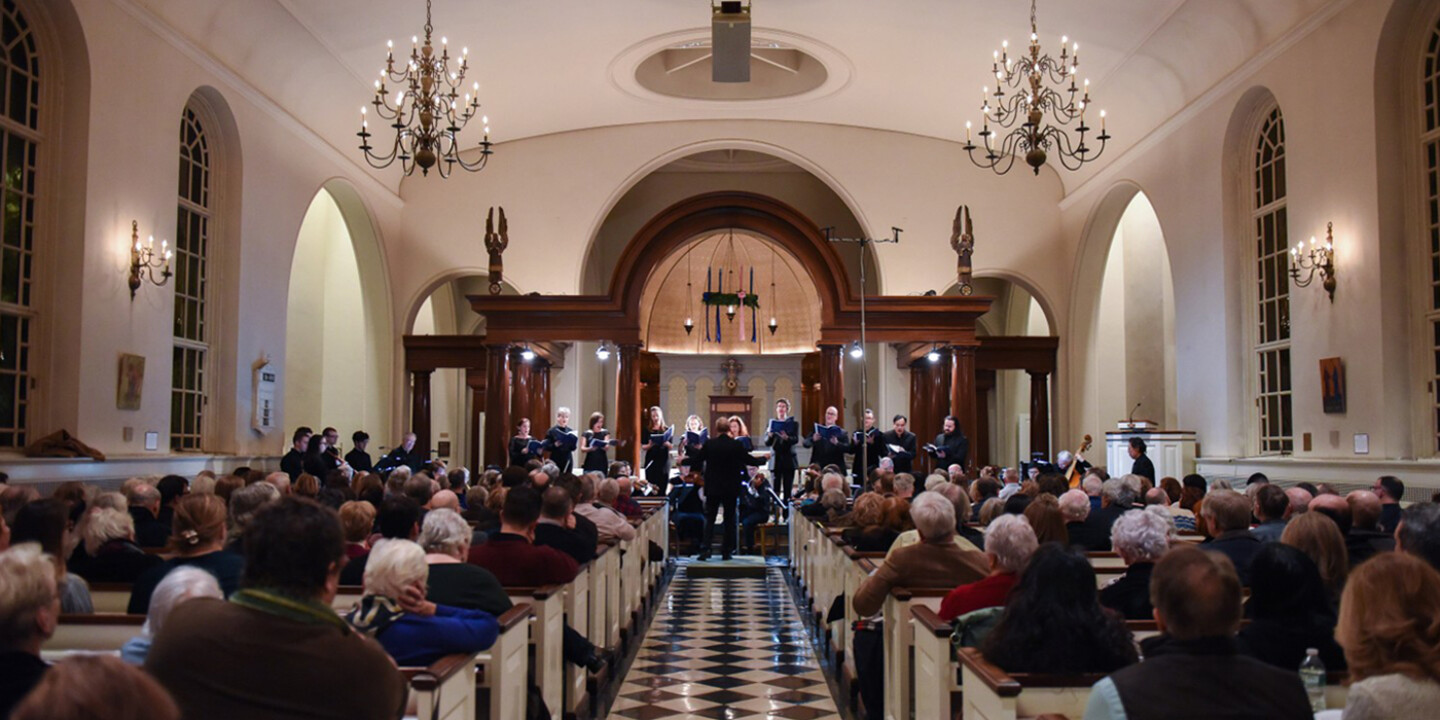
Image result for church of st luke in the fields
The beautiful interior of St. Luke in the Fields

It's at that point that I look around and realize that I'm the youngest person there by a margin of probably 30 years. The guy behind the desk is just thrilled that someone under the age of 40 is at this concert.

This happens all the time. I'm used to it at this point, but usually I'm the only one who notices. Anyway, we get to talking, and I learn about Gotham Early Music Scene (GEMS), which is an organization dedicated to scheduling and programming interesting early music in NYC. They give free weekly concerts (Thursdays 1:15-2:15, I'll definitely keep that in mind for when I retire) as well as weekend concerts. They do everything from Bach to Renaissance polyphony, and I was even told about a concert of English song from 650AD put on by a couple of retired musicologists. Overall, a good organization.

Abendmusik's de facto director, Patricia Ann Neely, is as much musicologist as she is performer. Her viola da gamba playing was nimble and musical, but even her best performance moments paled in comparison to the program notes she wrote. The turn of the 16th century is a supremely unrelatable time for modern audiences, so Neely framed the program (consort sets by William Lawes and John Jenkins) starting with the works' rediscovery circa the British industrial revolution. The notes wove a unique narrative, one that evidently required a good deal of research and general knowledge.

The performance itself was charming. It really makes me sad that barely anyone performs this early English string music, because the pieces are really gems. They have a perfect balance of simplicity and complexity, not so boring that your ear has nothing to latch onto, but also not so complex that...well...your ear has nothing to latch onto.

Abendmusik played with gusto and spirit -- it was clear that they had all played together a good deal. Occasionally, one of the members would get lost -- because of the imitative nature of this kind of music, if you get lost it's nearly impossible to correct yourself -- but that only contributed to the lovely and intimate nature of the concert. It was as if the ensemble was expressly stating that they cared more about conveying a message than conveying it perfectly, a message that I agree with and that I wish reverberated a bit more with the rest of the classical music community.

Abendmusik performs regularly at GEMS's free concert series, so if you get the chance to see them you definitely should. Even if they're not as perfect as some of the full-time viol consorts (*ahem* FRETWORK *ahem*), they still play underperformed works at a remarkably high level and with a great amount of audience camaraderie. A fabulous low-key way to spend an evening.

An accidental photo that I took of a friend's viola da gamba scroll -- it happened to turn out very *aesthetically*

Thursday, May 30, 2019

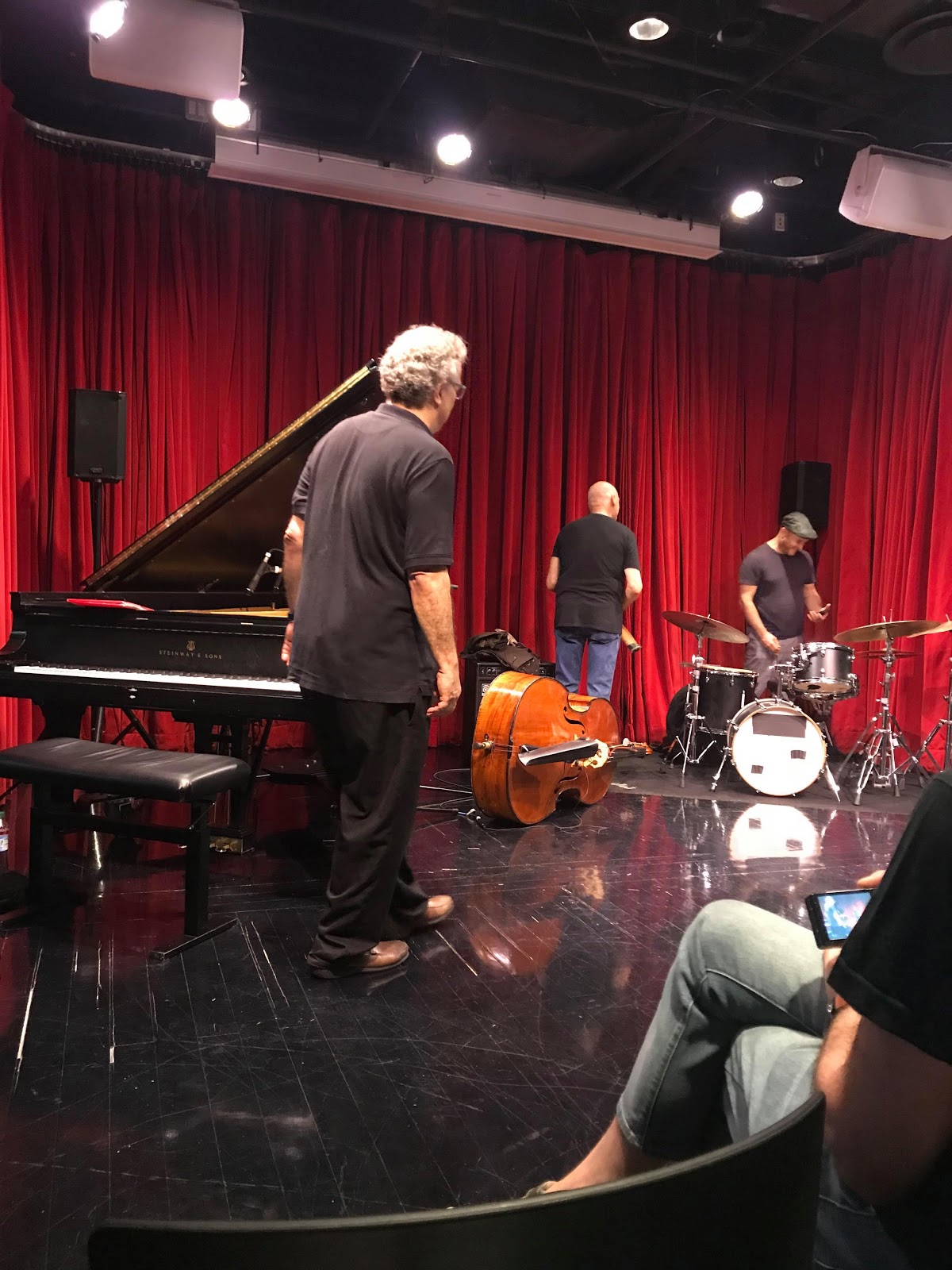
[2] Uri Caine Trio at The Stone @ Mannes | #1Summer50Concerts

WHO: Uri Caine Trio (Uri Caine, piano; Mark Helias, bass; Ben Perowsky, drums)
WHERE: The Stone at The New School
WHEN: May 29, 2019, 8:30pm

I only decided I was going to this concert about 2 hours before it actually started. And I was almost late because I spent too long looking for the nonexistent lunchbox section at TJ Maxx.

Ah, the joys of adulting.

Admittedly, I didn't know a ton about Uri Caine before showing up to his concert last night. I knew was a pianist, and that he had done a jazz Mahler album that I've been meaning to listen to for years, and that was about it. I don't know why his week-long residency at Mannes didn't get more press -- the audience was maybe half full, only about 30 people. But that didn't stop the trio from taking the audience on an adventure to remember.

After sitting down at their instruments, the players began to noodle around, as is common for the first minute or two of a jazz set. But they kept noodling longer than that until eventually Perowsky began to play in something resembling a steady four-beat, seemingly on the fly. The other two adjusted their fooling around slowly, almost imperceptibly, until eventually the entire trio was synced. It was the kind of thing that leaves the audience with jaws on the ground; I know I was in total awe.

*applause* "Quick, take a photo, my phone is dead!" *band starts to pack up* "What, now?" "Yes!" *fumbling with phone*  -- an actual conversation my date and I had yesterday

The word that pops to mind when describing the trio is deft. Their entire set was full of tact and panache, and each player performed to his fullest without detracting from the others. Even at times when the music entered a "free" state similar to the opening of the set, it seemed like the players were aware of each others' improvisations -- perhaps that explains how they always found a common beat after a few seconds, even though Caine's gaze was glued to his hands and Helias never once opened his eyes.

Caine's improvised riffs very much evoked his career as a classical composer; though I didn't know he was classically trained when I saw him, there were a few moments where I turned to my date and mouthed "Debussy? Stravinsky? Messiaen?" and she smiled and nodded in corroboration. A disciple of George Crumb, Caine's claims to fame are his reworkings of classical music: not just Mahler, but Wagner, Schumann, Mozart, and even Bach's Goldberg Variations. One riff in particular from last night's concert evoked a dreaded piano solo from Stravinsky's Petrushka.

Helias's bass lines were creatively realized, if a bit stodgy. He, unlike many jazz bassists, was equally apt with a bow as pizzicato -- his bowed walking bass was refreshing. Perowsky left no timbre unexplored on his kit, from the side of the crash cymbal to the stands of his drums. His wrists alone were something to write home about; when he wanted a crash, but not too loud, he would tense his wrist completely and essentially push the cymbal down with his stick, muffling the sound just enough.

They played for an hour without stopping. The lines between actual charts and improvised filler material were blurry; that being said, the charts ranged from up-tempo rock-with-jazz-chords-sounding romps to the usual swing patterns. The final minute consisted of a series of dominant-tonic progressions -- literally V-I-V-I etc. -- but each time he played it he added more notes until he ended up with cluster-cluster-cluster-cluster. Take that, Mozart.

If you get a chance to see Uri Caine and any cohort of his, you should jump on that opportunity. His music has charisma and charm; it's nouveau-jazz without being inaccessible. And now that I've bought a lunchbox as well, my life is complete -- except for the fact that I forgot to bring it (with my lunch inside) to work today. Sigh.

The trim matches my backpack!

Wednesday, May 29, 2019

[1] S.E.M. Ensemble at Bohemian National Hall | #1Summer50Concerts

WHO: S.E.M. Ensemble
WHAT: New York - Ostrava: Influences and Initiatives
WHERE: Bohemian National Hall
WHEN: May 28, 2019, 7:30pm

Yes, last night I chose a new music concert over the New York Phil playing Beethoven's Eroica. But I saw the Phil do Eroica last season. And at this rate, I'll probably get to see it next season. And the next season. Ad nauseum.

Besides which, this concert had the universal college-student trump card: it was free.

As New York's new music ensembles go, S.E.M. is ancient. Founded shortly after Czech composer Petr Kotík moved stateside in 1969, they were -- and are -- closely linked with the American experimentalists that make baby boomers wrinkle their noses. They now perform regularly, mostly in Brooklyn Heights's Willow Place Auditorium (best described as a cross between a parochial school auditorium and a YMCA basketball court -- one of my favorite quirky concert venues in NYC).


Not pictured: the gymnastics mats piled in the back left corner

The program was composed of new pieces written by students of S.E.M.'s biennial Ostrava Days festival along with older stalwarts of the ensemble's repertoire. Particularly of note was violist-and-composer-on-the-side Anna Heflin's Included/Excluded (2019), which found a string quartet sitting with their backs to one another, each playing a fiendishly difficult and independent line. Then, all of a sudden, one of the violinists shouted: "CHAIR!"
"CHAIR!"

I was sort of confused -- maybe she said "share" or something like that? No, she said it again, "CHAIR!" at which point the cellist began clapping at rhythmically constant, but seemingly arbitrary intervals. A couple minutes later, the cellist launched into a tirade about how people who drop dead on the street are still expected to make polite banter with passers-by. It was absurdism at its finest; I found myself scratching my head, but oddly and thoroughly satisfied.

Other highlights included Alvin Lucier's Navigations for Strings (1991), a piece which consists primarily of ever-so-slightly compressing and widening microtones; if you listen carefully, you can hear the sound oscillations getting faster and slower with the changing dissonances. Kotík and Wolff's pairings of pieces each displayed a very distinct narrative of their compositional evolutions.

But, perhaps most amusing of all was the final piece, Earle Brown's Available Forms I (1961). The sheet music of the piece takes the form of six unbound pages, each with five "events." The events can happen in any order, the pages can be played in any order, with any number of repetitions. Kotík had constructed a nifty music stand-mounted cardboard contraption with which he could show the orchestra how to move between pages; the events were shown with the fingers of his non-baton hand.

Overall, a great start to the project. If you're in the mood for something a little weirder, S.E.M. is your group. Oh, and be sure to take a visit to the Bohemian National Hall on E 73rd St -- it's the only consulate-plus-cultural-center-plus-restaurant you'll ever visit, I assure you.