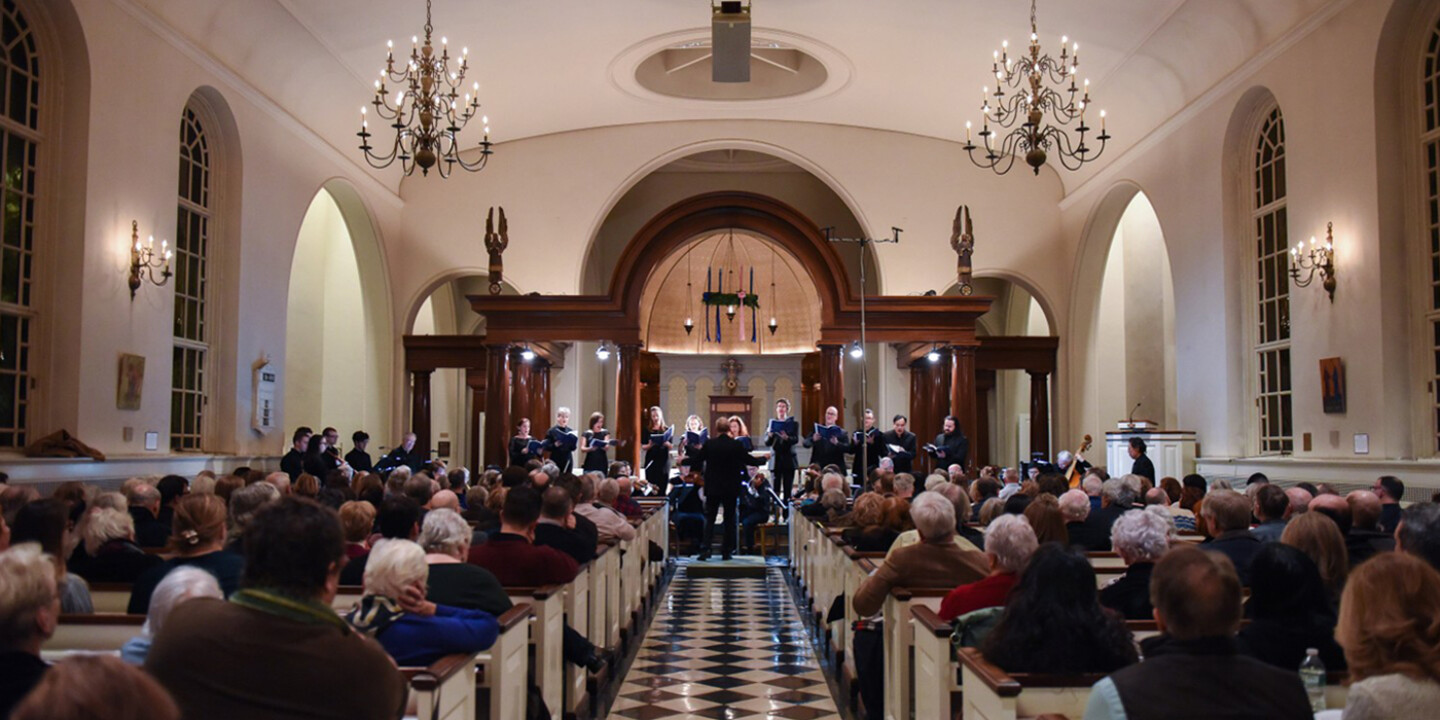
My aunt turned 55 a couple days ago, so today she threw a "soirée" (3pm for me, 9pm for some, noon for others) to celebrate. The fine print: "Everyone (kids and adults!) is encouraged (not required) to give a little performance of music, poetry, etc., max 4 minutes."
My brother and I cobbled together a movement of the Byrd Mass for Four Voices -- we were planning on doing it anyway (just for funsies), but we figured that would take some of the performance anxiety out of the equation. Turns out, Zoom thinks the video sounds much different than we wanted it to. Oh well.
Here are a few other things that happened:
A Nobel Prize-winning physicist presented a fascinating experiment in relativity as he attempted to orchestrate a Zoom performance of his favorite Hungarian round. Only about half of the 20-some people in the call knew Hungarian. Maybe a third knew how to operate Zoom. Needless to say, it was not together. But hey, it was fun.
A couple of my cousins played a movement (the first 57 seconds) of John Cage's 4'33'', at which point the chat blew up -- "What happened?" "I think we lost them!" "Oh no!" I tried to assure everyone that this was according to plan. No one believed me.
A few great performances of Suzuki book Bach minuets. Makes me hopeful for the next generation of musicians.
Lots of poetry, some uplifting, some dour. You can really tell who is taking this quarantine in stride and who has had enough already.
A performance by one of these people who "just started learning guitar" but is already quite good -- if you're reading this, I envy you.
So many people talking over each other. SO. Many.
It was fun. Hopefully the next one won't have to be on Zoom.
WHO: Ensemble Graindelavoix; Björn Schmelzer, director WHAT: JOSQUIN Stabat mater; BROWNE Salve regina; OBRECHT Salve regina à 6; ASHWELL "Sanctus" and "Agnus Dei" from Missa Ave Maria WHERE: Fuentidueña Chapel at The Met Cloisters WHEN: March 7, 2020 at 3pm
What a week it's been.
I try to be an optimist when I can. So, when the Yale Glee Club's tour got canceled two hours before we were supposed to leave, I decided I'd hop down into NYC and see a couple weeks of concerts instead. Foolproof, right?
Well, I only got to three concerts before all my other tickets started getting canceled. So now I'm back in my apartment in New Haven, leaving only to make apocalyptica runs to Trader Joe's or to take long, brooding walks with friends (maintaining a distance of six feet, of course). Sigh.
But hey, more time for writing, I guess? Optimism!
Whoever curates The Cloisters' live arts series deserves a medal. I've now seen four concerts this year in the Fuentidueña Chapel, and each one has left me significantly happier than when I sat down. This one was no different. Despite the surgical-mask-clad couple next to me and the stenches of hand sanitizer and hysteria in the air, Graindelavoix provided a perfect, hour-long vacation.
And it was after-hours on a Friday too. Meryl, if you're reading this, you're a saint.
I consume a lot of Renaissance polyphony -- it's my go-to stress relief music. Each ensemble has their signature sound. Tenebrae has wobbly basses. Voces8 has no vibrato at all (AT ALL). Vox Luminis has a distinctive ensemble crescendo (it's freaky how together they are).
Grandelavoix's hallmark seems to be a heftier take on polyphony. Tempos are majestically slow (not to be confused with boring), and the singers have this sinewy, almost buzzy tone that highlights harmonic clashes. Everything is prone to ebb and flow; the tempo stretches like taffy, then slowly regains its shape. The singers each add their own ornaments into the music, almost reminiscent of traditional folk polyphonies of Corsica or Sardinia.
Conductor Björn Schmelzer's degrees are not in conducting, but rather in musicology and anthropology. His interpretations stem from interdisciplinary approaches to music, clearly well-informed by early modern history as well as medieval vocal traditions. Merely a catalyst for an ensemble that clearly trusts each other, his large gesture pulls musicality from the ensemble like a stubborn cork from a wine bottle.
God, I'm in a metaphorical mood today. Gotta let the imagination run wild when you're inside all day, I suppose.
Anyway, I get the sense that Graindelavoix doesn't make it stateside so often, but if they're near you I'd recommend you go. In the meanwhile, they have many fabulous albums -- the one that I listened to on the way back downtown was Byzantine chant and 13th-century antiphons from the Codex Cyprus, one of few medieval manuscripts surviving the French court in Nicosia, Cyprus. And, according to one of their countertenors (s/o Andrew for chatting with me for like 20min), there's a new Josquin album dropping next year to celebrate 600 years since his death. Take that, #Beethoven250!
"Who had this crazy idea to invent school all of a sudden? Charlemagne!"
I forgot how rough it is to go from doing absolutely nothing to absolutely everything. One day, I'm sitting on the recliner in my room at home watching Netflix, the next day I'm sprawled on my apartment couch after having carried twenty pounds of groceries back from my four classes and three rehearsals. But hey, such is the story of academic vacations.
Anyway, considering that many of you will be dealing with the same thing in the coming weeks, here are five albums that will help you through your first week back on the job (or any rough week, for that matter), whether you're a student or not.
If you ever wanted your classical music with a side of indie (or vice versa): Love I Obey (Rosemary Standley & Helstroffer's Band)
To give you some context, this is the album I listened for comfort when I was stuck on the D train for almost two hours this summer. Rosemary Standley makes her career with indie band Moriarty. Bruno Helstroffer is a blues guitarist who plays early music as a day job. Together, they dreamed up this album of bluesy takes on British Renaissance airs. Standley's voice is (truly, in a non-cliché way) unlike any other singer I've ever heard, throaty and warm with a distinctive twang to the diction. And Helstroffer is just an incredible musician in all respects -- his solo debut is also among my favorite albums ever.
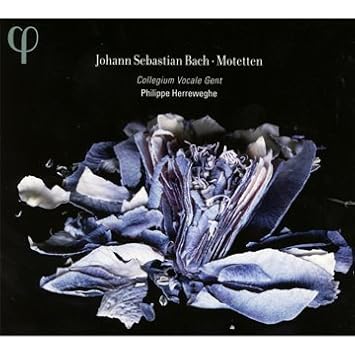
For a really, really good version of a piece you might know: Bach: Motets (Collegium Vocale Gent, cond. Philippe Herreweghe)
This recording is just squeaky clean. Most of the motets are only one singer to a part on this album; the intimate accuracy gives me chills every time. The cast includes Vox Luminis soprano Zsuzsi Tóth; superstar French countertenor Damien Guillon; Bach specialist bass Peter Kooij; and a smattering of other big names in the European early music scene. When I want Bach, this album is my first stop (this version of Jesu, meine Freude is also my go-to tipsy soundtrack, something I can safely say now that I'm 21 😉).
For an album that will replace your dinner party jazz playlist: Jazz på svenska(Jan Johansson, piano; Georg Riedel, bass)
I usually spring for new jazz over old jazz, but this album is a classic (just ask the quarter of a million people who have bought copies). Sparse and smooth, Jan Johansson takes Swedish folk tunes and adapts them for a low-key duo of piano and bass. He treats the original folk tunes with such respect -- from his adaptations, I know exactly how the original was meant to sound. There's a good reason why it's the best-selling Swedish jazz album of all time, and still maintains a degree of relevance more than 55 years after its release.
*swoon*
If you want to hear the best music written for the best instrument you've never heard of: Marais: Pièces favorites (François Joubert-Caillet, viol; L'Achéron)
Marin Marais wrote hours and hours of music for the viol (an earlier predecessor of the modern double bass that looks kind of like a cello -- if you're curious, watch Tous les Matins du Monde starring Gérard Dépardieu). It's all great, but some movements are simply transcendent. François Joubert-Caillet is the single viol player who has most consistently impressed me; here, he's selected a representative sample of Marais's most outstanding works and compiled them onto one phenomenal album. His continuo team is outstanding (continuo is a group of instruments that together comprise accompaniment for baroque music -- usually a melodic instrument and an instrument that plays chords e.g. a second viol and a harpsichord) and help to cement this album among the most satisfying Marais albums on the market today. And if you really like it, you can listen to his most recent album, a six-hour recording of one of Marais's complete books for viol.
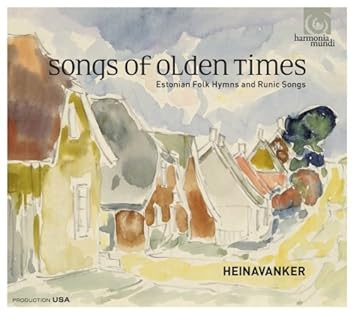
I've sung Heinavanker's praises before, but I'm truly hooked on their album. It's the perfect album for a low-key, relaxing evening -- tonight, I put it on while waiting for my focaccia dough to rise. I'd say I listen at least twice a month, if not more. Cannot recommend highly enough. Cook to it. Meditate to it. Sleep to it. Work to it. Seriously.
WHO: Les Arts Florissants; Paul Agnew, director WHAT: GESUALDO Tribulationem et dolorem; Responses for Maundy Thursday; Miserere mei Deus (Psalm 50) WHERE: Fuentidueña Chapel at The Met Cloisters WHEN: October 20, 2019 at 1:00pm (yes, I know I'm late)
I think I'm starting to get the hang of these concerts at The Cloisters. I usually don't get lost on my way from the subway station anymore. I know where all of the good views across the Hudson are (#doitforthegram -- except I'm not on Instagram because I'm a #grandma). And when I walked into the Fuentidueña Chapel for the second time in 24 hours, the 12th-century statue of Jesus hanging from the cross started chatting me up as if we were old friends.
Divine intervention? Sleep deprivation? The world may never know.
I missed Les Arts Florissants when they did a huge French baroque opera spectacle at the Brooklyn Academy of Music last year. Unfortunately, I have to prioritize school first (much as I wish I didn't) -- I occasionally drop down into NYC for a concert here or there, but I often pay the price of a sleepless week to follow.
I saw the listing for this concert. I checked my calendar. October break. It was destiny. Or maybe just luck. But either way, I had to go. I grabbed a ticket.
So, for those of you who don't know Les Arts Florissants, let me tell you a bit about the ensemble. They have an orchestra and a choir, both of which are fantastic. They got their start in France in the late '70s; American expat harpsichordist William Christie was the director, and still is today (although British tenor Paul Agnew is starting to take over more and more responsibility -- Christie is getting up there in years). And their recordings are all immaculate. Unlike many similar ensembles, whose recordings have shown a steep quality incline in the last couple decades, Les Arts's 1980's recordings are just as clean as those of the last few years.
Considering that fact, I left the concert with a somewhat cynical opinion: "They were amazing -- who knew?"
Bottom line: Gesualdo is difficult. Very difficult. His harmonic language borders on non-functional, almost to contemporary levels. As my father so wisely told 13-year-old me: "You like Bartók? You should try Gesualdo." But I know Les Arts well enough to know that they wouldn't put up a mediocre performance.
Of particular note were the singers at the lower ends of the ensemble. Bass Edward Grint had this plaintive musk to his voice, one that provided a stable resting place for the other five vocalists. Paul Agnew was great as usual (ah, what I would give to be a tenor...), though most of his focus went to shaping the music with tiny, unobtrusive hand gestures. Mélodie Ruvio gave a particularly thrilling performance, a phrase that I don't think I've ever used to describe a choral alto part before. And, when the whole group came together for the chants between verses of scripture...chills.
I don't think there's anything more to say. Les Arts Florissants can do no wrong. If they come around to your neighborhood, DO NOT miss them at any cost. And that's an order.
One moment before God decides that the Abraham-and-Isaac
telenovela doesn't need to end like Orange is the New Black did
(intentionally vague to avoid spoilers -- if you know, you know)
WHO: American Modern Opera Company (Anthony Roth-Costanzo, countertenor; Paul Appleby, tenor; Matthew Aucoin, piano; Wayne Koestenbaum, narrator) WHAT:Veils for Desire: Works by Britten, Monteverdi, Bach, and Aucoin WHERE: Spanish Courtyard at Caramoor WHEN: July 25, 2019 at 7:00pm
Poolside blogging. I think I've reached a new low.
Just a short one for today, because I reviewed this concert for Opera News (I think it'll be published in October along with my last one?) and I can't release any spoilers! So here are a few things that didn't make it into my review:
I think short-sleeved button downs are the concert dress of the future, especially when they're bright pink like Wayne Koestenbaum's was. Too bad I can't pull one off to save my life.
ARC and Paul Appleby had an interesting father-son chemistry in Britten's Canticle II: Abraham and Isaac -- it worked, to say the least.
Wayne Koestenbaum is a badass. He didn't sing, so I couldn't say much about him in my review. But he had such a cadence to his speech...love at first word.
Caramoor is still absolutely LOVELY. Nature for the win.
I wish trains ran from Katonah more than hourly because I waited on that platform for, like, half an hour and I had about 973 bug bites to show for it.
The review should drop soon! I'll link to it when it does, and you can read it (if you're a subscriber).
WHO: Pauline Kim Harris, violin; Spencer Topel, electronics WHAT: HARRIS/TOPEL Ambient Chaconne; Deo WHERE: The Stone @ The New School WHEN: July 11, 2019 at 8:30pm
In theory, going to concerts shouldn't be tiring. You get to sit. In air-conditioning, usually. Other people do the work of filling your ears with beautiful music. It's all included in the ticket price -- you just sit back and relax.
But going back to what I said a couple posts ago about not being able to turn my critic brain off -- concerts are tiring for me. In my mind, listening to music is synonymous with forming judgments. I don't see that as either a good thing or a bad thing. It just kind of is how I work.
Occasionally, though, I wish that I could lose myself in a concert. Turn off my brain for a few minutes.
I'm not going to tell you that I succeeded. But I came damn close at this concert.
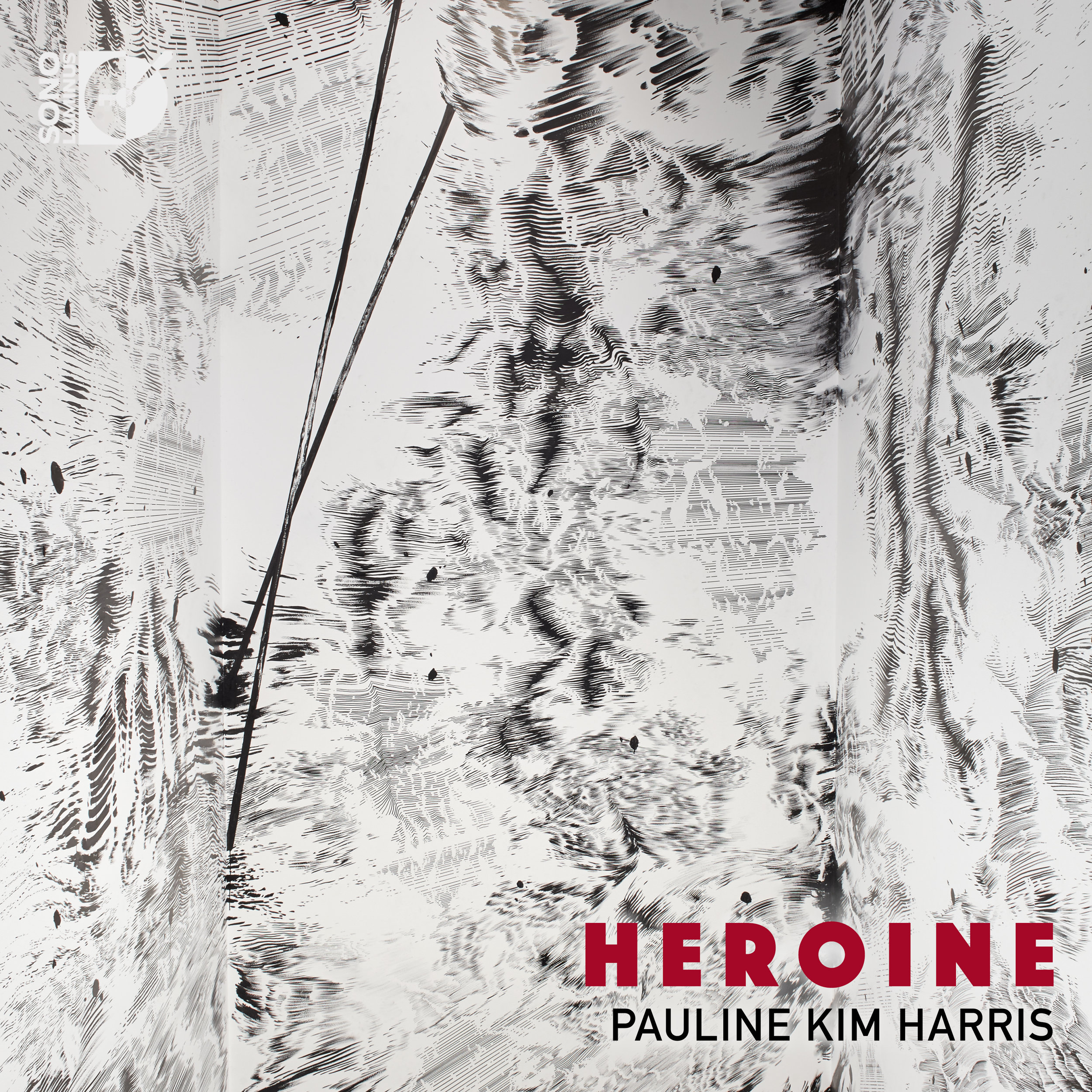
I'm usually not a huge consumer of ambient music, but there are some great classical-ambient crossovers. I think that the Harris/Topel duet is going to join the greats of the genre when their new album comes out in September. Armed with only a violin, a microphone, and a soundboard, the two presented a refreshing take on Bach (and also another composer -- I'll explain in a second).
I can't tell you a whole lot about the music itself. It moved slowly, sometimes changing so slightly over such a long period of time that I couldn't detect the transformation until after it had already happened. There were no jagged new-music-characteristic jump scares; just the sweet tone of Harris's violin, looped and amplified and augmented.
The first piece, Ambient Chaconne, was a transformation of the famous chaconne from Bach's D minor violin partita; bits and pieces were recognizable throughout, but the already-long piece was lengthened from 15 minutes to almost half an hour with a range of clever electronic fillers. (Side note: I turned to my trumpet-playing friend after the performance and asked if he'd heard the original chaconne. Blank stare.)
The second piece was based on a Deo gratias -- I heard the composer as Lachenmann, my friends heard Bach. Neither of those people wrote Deo gratias settings. Phooey. But it was great.
Update: I just looked at the album's liner notes. It was Ockeghem's Deo gratias. I think I was closer.
You can pre-order the album, Heroine, here, or just wait until September 27, when it will hopefully be available on Spotify. Fingers crossed.
EDIT: It's September 27, and the album dropped and is just as good as the live version was!
WHO: Matthew Cramer, bass-baritone; Stephen Gamboa-Diaz, harpsichord; Michael Rigsby, viola da gamba WHAT: Works by Dowland, Lambert, d'Ambruys, Purcell, and Bach WHERE: Bethesda Lutheran Church, New Haven CT WHEN: July 7, 2019 at 4:00pm
Concert #34: In Which I Immediately Review Someone Else I Know, Even Though I Just Said That It's A Bad Idea
I discovered this 4th-of-July weekend that New Haven is a ghost town in the summer. Some students stay behind for research; a moderate horde of high schoolers come for summer sessions. But when you walk around, the thing that strikes you is the quiet -- other than the cars, there's no student chatter around campus. It's part eerie and part relaxing.
I was only there for three days (I took a day go to visit my brother in Boston), but by the time my trip was ending it had been five days since I had seen a concert. Far too long, in my humble opinion.
Luckily, a couple of friends decided to beat the summer boredom (not the heat, mind you -- there is no air conditioning at Bethesda) with a half-hour concert of renaissance and baroque music. It was an intimate affair -- maybe twenty people in the audience, half of them wearing shorts and/or crocs (myself included).
I think Matt Cramer sang it in a better key, to be honest, but this is the best recording out there.
So, again with the reviewing-people-I-know thing -- it feels weird to write formal reviews about friends and colleagues, but here goes nothing. The programming for the concert was fantastic, full of tunes that I heard for the first time that afternoon and am still humming right now. Matt Cramer, though a choral conductor by trade, lent inventive and clearly-sung ornamentations. Stephen Gamboa-Diaz showed his harpsichord prowess both as an accompanist and as a soloist; Michael Rigsby rounded out the crew.
But the charm of this concert came not in the music-making, but in the purpose. This wasn't part of a summer concert series or anything like that. When I asked Stephen what compelled him to put on a concert like this, he shrugged and said, "I don't know, Matt was in town for a little while and it was time to do something other than sightread in our living room." And if that's not inspirational, I don't know what is.
Throwback to the short phase where my brother was convinced he
wanted to learn hurdy-gurdy -- talk about college application padding
WHO: ChamberQUEER WHAT: Works by Hildegard, Tallis, Caroline Shaw, Mazz Swift, Cavalli, Saunder Choi, and Monteverdi WHERE: Brooklyn Arts Exchange WHEN: June 22, 2019 at 8:00pm
“this isn’t about god
well it could be about god
it just depends how wide your perception of god is”
We're at the halfway point guys!
I sometimes feel like I need one of those Hermione Granger time-turner gadgets, because choosing between two phenomenal concerts always gets me stressed. In this particular case, it was either the second performance of ChamberQUEER or the Boston Early Music Festival’s stagings of three short French baroque operas. And in the end, I decided to go ChamberQUEER — French baroque opera makes my brain happy, but ChamberQUEER makes my heart happy.
Besides which, after the first concert, I had this lingering feeling that I was going to miss something monumental if I didn’t go to ChamberQUEER. And boy, would I have.
So I arrived back in Park Slope for the second concert, greeted again by the same lovely crew, and sat down in the tiny, stuffy room for another night of great music. Word had gotten out to at least some extent, so the audience was full, and mostly not of the same people from the other night. The performers, too, were all different (with the exception of the founder core and the harpsichordist) — they comprised an octet of singers, a couple of new violinists, and an electric guitarist.
Again, the program was pretty varied — everything from renaissance classics to new pieces, all tremendous. So here goes the laundry list again:
The concert started with a sing-in of original-feminist Hildegard von Bingen’s O quam magnum miraculum, accompanied by a real live hurdy-gurdy (played by harpsichordist extraordinaire Kevin Devine), followed immediately by a lovely Tennyson setting by ChamberQUEER friend and violist Jessica Meyer (she performed extensively at the first concert). A couple in manus tuas followed — first Tallis’s from a quintet of vocalists, then Caroline Shaw’s, as performed by attacca quartet cellist Andrew Yee.
There was only one fully instrumental piece on the entire program: excerpts from Mazz Smith’s 16 Hits or Misses. The name in itself is a disclaimer to the audience, but Smith, a lauded inter-genre violinist, was sure to provide her own warning that this piece “might not be that good.” I don’t know why she bothered to do that — the piece was charming. Modeled after the Bartók violin duos, Smith’s Hits or Misses straddled that ever-growing gap between classical tradition and popular music. I never thought I wanted to hear techno-funk played by two violins. But now I want to hear it again.
The final act of the first half was a series of scenes from Francesco Cavalli’s La Calisto — the basic gist being that Calisto rejects Jove, so Jove dresses up like the goddess Diana in hopes of wooing Calisto. Calisto, then wooed, attempts to nuzzle up to the real Diana and is swiftly rebuffed — FIN. Kind of a crazy gender-bent story from the beginning, with a ton of big gay energy (I thought homosexuality was taboo in the renaissance?) — perfect for ChamberQUEER! Mezzo Liz Bouk’s (he/him) passionate Jove was only outdone by his disgusted Diana — he has the PERFECT what-the-fuck face for the role. Danielle Buonaiuto’s (they/she) Calisto was suave and sensual, aided by their complete and utter comfort on the stage. Oh, and the sass-flecked subtitles set on a plain PowerPoint were a riot.
I know I put this in the first review, but I'm going to put it here again
because it's important! Support ChamberQUEER!
A short intermission switched the concert's gears to a cappella choral music sung one-to-a-part. The opener, Saunder Choi's American Breakfast, was a powerful statement about...well, everything. Gun violence, LGBTQ+ issues, all set against a bleak and boring all-American backdrop. It's a piece easily capable of gutting anyone with half a conscience, as it did to me.
The finale to the weekend-long ChamberQUEER experience was a set of four Monteverdi madrigals, but with a “ChamberQUEER twist,” as the founders put it. Guitarist Grey McMurray improvised connective material between each of the pieces, a prospect which bewildered me until the music actually began. McMurray’s experimental interludes essentially filled in all the genres that the Monteverdi couldn’t fill, with looping and microtones and echoes beyond belief — the perfect character foil to the similarly emotional, though stark and strict Monteverdi. The one that particularly stuck with me was the interlude before the final lament, the famous Lamento della ninfa in which a nymph bemoans her unrequited love; McMurray pointed out the essential crux of the renaissance madrigal by repeating the quote above. Lamento della ninfa itself was tremendous, with the nymph represented by countertenor Jonathan May; the gender-bend was refreshing, and May himself only got better as the part extended more into the nymph’s soprano range. Plus, McMurray used some of his pre-recorded loops to fill in the continuo line, which was just another layer of innovation.
Well, let’s just say I got exactly what I expected. The concert was fabulous. My pre- and post-concert banter was tolerated gladly. I turned down drinks again because I had work the next day.
Long story short: ChamberQUEER makes beautiful music in a space that questions the canon that has been shoved forth into our hands since early childhood. They are the future. Keep ChamberQUEER in mind, because one day they will be big. Mark my words.
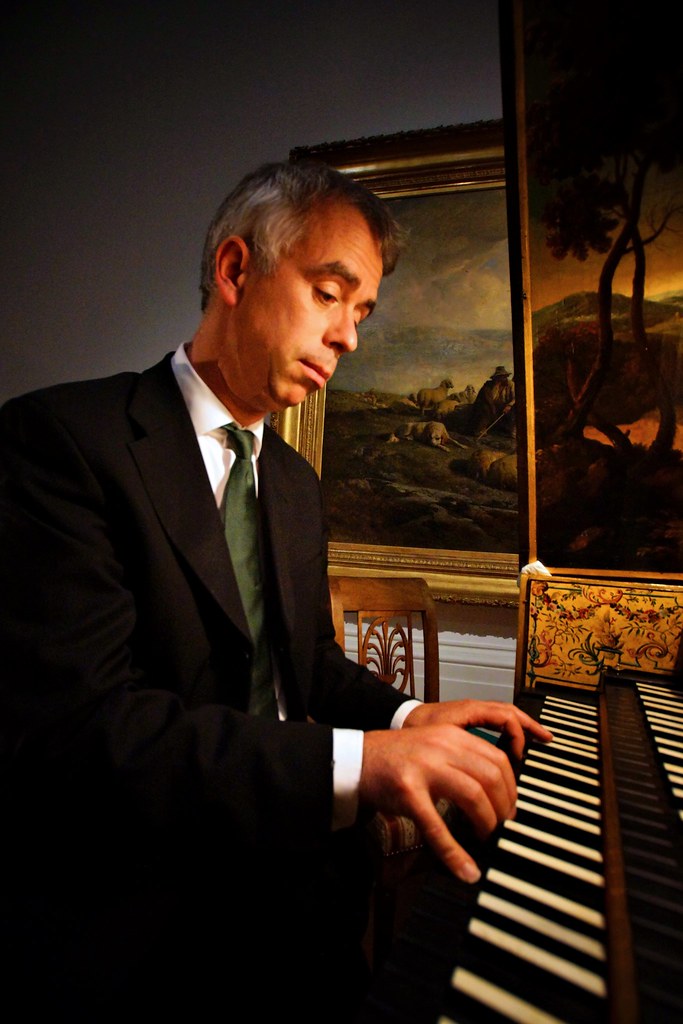
WHO: Pierre Hantaï, harpsichord WHAT: BYRD Will Yow Walke the Woods soe Wylde; BACH Prelude and Fugue in d minor; BACH English Suite in a minor; BACH Goldberg Variations WHERE: DiMenna Center for Classical Music WHEN: June 19, 2019, 7:30pm
I was SO excited when I heard that the Orchestra of St. Luke's was using June as a Bach celebration month. They had a couple of really interesting programs at Carnegie earlier this summer -- one of Bach orchestral music, one of cantatas -- and I was looking forward to seeing them, until one day I called their box office to get tickets:
ME: Hi, I'd like one student ticket to tonight's concert.
OSL REP: That'll be $65.
ME: *spit take, hang up*
In the end, I decided that my budget allowed me to go to only one of OSL's Bach presentations, and that decision was a no-brainer. Pierre Hantaï is one of the world's best harpsichordists. The Goldberg Variations is one of the world's best pieces. The concert was cheaper than any of the programs OSL was putting on at Carnegie. Win-win-win.
I was stupid. I didn't buy tickets ahead of time, and when we got to DiMenna the tickets were sold out. Even though my brother and I were second in the waitlist line, my heart was still pounding. Hantaï himself came upstairs for a smoke break before the concert started; it took every ounce of self-restraint I had not to approach him and beg on my hands and knees for a ticket. But I played it cool. And we got tickets, along with the 20-some Hunter College students whose professor had forgotten to make reservations even though seeing this performance was required to pass their class.
$40 for the Goldberg Variations seemed like a fair price, but apparently Hantaï didn't think so. He announced a completely separate program for the first half of his concert -- apparently, he likes to "meet ze harpsichord" before deciding on which pieces to pick out of his three-inch black high school binder. He started with the only non-Bach work on the program, citing William Byrd as a "direct predecessor of Bach's," which is a characterization I don't necessarily buy, but whatever. The Byrd theme and variations was fabulous, reserved yet supremely musical.
The prelude, fugue, and suite that followed let Hantaï put his distinctly French musical sensibilities on display. The flow was rhythmic, though not mathematical, and in those rare moments where strict rhythmic accuracy was not appropriate, Hantaï's flourishes were regal and well-organized.
As for Goldberg: of course it's a tremendous piece, but it's also LONG. Hantaï's fingers began to run out of steam in the middle -- an obvious wrong note every now and then. But his brain was in it the whole time. Even the occasional wrong note was masked by his cogent interpretation. I'm not going to mention any specific variations, because I counted about three before I lost track until the last variation, which is my favorite.
Hantaï feels like the kind of guy who can adapt to any environment. I mean, he doesn't get to bring his own instrument, and there's much more variation in the mechanics of a harpsichord than in, say, a piano. Harpsichords can have two separate keyboards stacked upon one another, and any number of levers and buttons to press to achieve the different timbres that it can't get from the player's touch. I don't know whether Hantaï spent 10 minutes or 10 hours learning the ins and outs of the DiMenna harpsichord (a beautifully decorated double-manual instrument), but he played it as if it were an old friend.
Hantaï's masterful performance was accompanied by lighting design by Burke Brown. I was expecting the lighting to be really loud -- a couple months ago, I saw pianist-composer-electronics artist Kelly Moran, whose set was accompanied by abstract animations in neon pinks and greens and blues, which was beautiful but also a lot to take in. Rather than a barrage to the eyes, the lighting read more as a mood intensifier, soft argyles of color on the wooden-slat back wall of the concert hall. Most importantly, the music came first.
I know a lot of people who say they unilaterally don't like the harpsichord because it "sounds like mosquitoes" or something like that. I urge those people to get out and listen to a real harpsichordist play a really good harpsichord. A good player knows how to take advantage of the harpsichord to its fullest, and Hantaï did just that. Not a single tone was left unexplored on that instrument. There may be a new Goldberg king in town -- move over, Glenn Gould.
The Cloisters are pretty inaccessible to anyone who does not have a car. It's super easy to get there if you can drive -- there's a road that dumps you straight outside the ominous stone doors. I, however, am confined to the subway.
The Met Museum website claims that 190th Street is the best subway stop for The Cloisters, but last time I tried to go that way I got very lost in the web of paths that calls itself Fort Tryon Park -- all roads supposedly lead to The Cloisters, except I managed to find all the ones that don't? So, I tried my luck with the next station, Dyckman Street.
Google Maps said 0.2 miles. Little did I know that it's 0.2 miles on a path that basically goes straight up the side of a sheer rock face. And I still managed to get lost. Sigh. There really is no winning.
But I did manage to get there eventually, dripping with sweat (humidity plus out-of-shapeness plus oh yeah literally rock-climbing to the museum), and I got to use the one phrase that I always have dreamed of using: "I'm with the musicians."
The path goes straight up the hill behind this building. No stairs. Just a 50-degree incline and a landing that reeks eternally of weed and sad glutes.
I *may or may not* have begged a professor of mine for a ticket to this concert, in which he was playing recorder, lute, guitar, cittern and percussion (a motley array of instruments, more on that later). I have a bone to pick with the Met museums: their concerts don't offer student ticket pricing, and are often prohibitively expensive, to the tune of $70+ per ticket for the most desirable concerts. I understand that they have to turn a profit, I really do. But they have ticket sales to profit from. The New York Phil offers student tickets, and they turn a profit. What gives?
Anyway, I was offered a comp ticket on the condition that I sell CD's before and after the concert. Troubles with the Square card reader notwithstanding, I had lots of fun trying to come up with one sentence to explain what was on each CD. Sonnambula's album was relatively easy to explain: consort music by Leonora Duarte (mid 1600s Flemish) and her contemporaries. The Piffaro album, which had everything from Obrecht to Lassus to Praetorius to Bach, that was a little bit harder; I ended up settling for "everything before Bach" (conveniently, the album is called "Before Bach").
I slinked into my chair approximately 30 seconds before the show was to start; I barely had time to look at the program before the ensembles paraded onstage, bowed, and proceeded to play their first selection: a bransle (if you see a word you don't know in this post, chances are it's a French dance) for recorders, guitars, and....bagpipes?
I never thought I'd say this, but the bagpipes were nice.
The general format of the concert was grouped into different dance forms: the winds (Piffaro) would play a dance, then the strings (Sonnambula) would play a similar dance, then they'd all do it together. The contrast was always stark, but never jarring; the groups were acutely aware of each others' musical decisions and played off of each other like they had been doing it forever.
Of particular note was the set of volte that finished the concert, starting with a William Byrd arrangement from the Fitzwilliam Virginal Book as expertly interpreted by harpsichordist James Kennerly, which Sonnambula spryly repeated with gusto and joie de vivre. I had to leave (to reset the CD table) before the encore, but rest assured there was an encore, and it's currently stuck in my head even though I haven't the foggiest idea what it is.
There is no question that Sonnambula is a fabulous ensemble comprised of some of the best historically-informed string players (and one harpsichordist) in the NYC area. You will, without fail, have a lovely concert experience with them. Piffaro, though, is the real pièce de résistance of the concert. Each member of Piffaro played no fewer than four instruments, ranging from recorders of all sizes to krummhorns and dulcians and percussions and guitars and...the list goes on. Piffaro's concerts not only exhibit the highest level of musicianship -- the sackbut players played their instruments better than most of the trombone playing I've heard in my life -- but each concert is also an educational event. Co-director Bob Wiemken gives a humorous, yet thorough description of the millions of instruments that the group plays, rendering the concert appropriate for all ages.
The view on the way out of the park -- I tried to take it where the car was out
of the frame but....just kidding, I didn't even try to get the car out because I am LAZY
As I left, I decided I would try my hand at getting back to the 190th Street A train stop. I was treated to the most gorgeous view -- I think Fort Tryon Park may be the most beautiful spot in Manhattan. And what's more, I didn't even get lost. Are you proud of me?
WHO: Abendmusik, sponsored by Gotham Early Music Scene WHAT: Fantasias and Consort Sets by John Jenkins and William Lawes WHERE:Church of St. Luke in the Fields WHEN: May 31, 2019, 8:00pm
I didn't know this when I started the week, but my office closes at 2pm on Fridays, which is super nice. So, I did what any sensible person would do with a free Friday afternoon: I took a nap. And we're not talking a graceful little catnap. When I say I took a nap, I mean one-hour-plus, spider-sprawled on my bed, snoring, mouth wide open. You know the kind.
I set my alarm to go to this concert, and when I woke up, I could barely move. But, like a good person, I dragged myself out of bed and hopped the 1 train downtown -- I figure if I set a precedent where I don't go to concerts because I'm "too tired" (a concept that college students quickly learn is merely a construct), then I'm never going to get to 50 this summer.
I'm still rubbing sleep from my eyes when I get to St. Luke in the Fields, a gorgeous Episcopal church in the West Village. I step inside and go to the ticket desk; the person selling tickets seems remarkably chipper. I ask for a student ticket, and the look on the ticket-seller's face turns from chipper to chipper-er.
The beautiful interior of St. Luke in the Fields
It's at that point that I look around and realize that I'm the youngest person there by a margin of probably 30 years. The guy behind the desk is just thrilled that someone under the age of 40 is at this concert.
This happens all the time. I'm used to it at this point, but usually I'm the only one who notices. Anyway, we get to talking, and I learn about Gotham Early Music Scene (GEMS), which is an organization dedicated to scheduling and programming interesting early music in NYC. They give free weekly concerts (Thursdays 1:15-2:15, I'll definitely keep that in mind for when I retire) as well as weekend concerts. They do everything from Bach to Renaissance polyphony, and I was even told about a concert of English song from 650AD put on by a couple of retired musicologists. Overall, a good organization.
Abendmusik's de facto director, Patricia Ann Neely, is as much musicologist as she is performer. Her viola da gamba playing was nimble and musical, but even her best performance moments paled in comparison to the program notes she wrote. The turn of the 16th century is a supremely unrelatable time for modern audiences, so Neely framed the program (consort sets by William Lawes and John Jenkins) starting with the works' rediscovery circa the British industrial revolution. The notes wove a unique narrative, one that evidently required a good deal of research and general knowledge.
The performance itself was charming. It really makes me sad that barely anyone performs this early English string music, because the pieces are really gems. They have a perfect balance of simplicity and complexity, not so boring that your ear has nothing to latch onto, but also not so complex that...well...your ear has nothing to latch onto.
Abendmusik played with gusto and spirit -- it was clear that they had all played together a good deal. Occasionally, one of the members would get lost -- because of the imitative nature of this kind of music, if you get lost it's nearly impossible to correct yourself -- but that only contributed to the lovely and intimate nature of the concert. It was as if the ensemble was expressly stating that they cared more about conveying a message than conveying it perfectly, a message that I agree with and that I wish reverberated a bit more with the rest of the classical music community.
Abendmusik performs regularly at GEMS's free concert series, so if you get the chance to see them you definitely should. Even if they're not as perfect as some of the full-time viol consorts (*ahem* FRETWORK *ahem*), they still play underperformed works at a remarkably high level and with a great amount of audience camaraderie. A fabulous low-key way to spend an evening.
An accidental photo that I took of a friend's viola da gamba scroll -- it happened to turn out very *aesthetically*