Thursday, April 30, 2020

Completeness | Pandemic Musings

I'm really not sure whether my attention span has increased or decreased since quarantine started.

And with that, Facebook calls. See you in 15 minutes.

Our reward for getting three sentences in: my favorite opera scene EVER,
taken from the production of Les Indes galantes that I briefly discuss below.

What was I saying? Oh yeah, me and my attention span.

But I don't usually have the attention span to sit down and listen to "complete" anything. At concerts, my mind often wanders (yeah, I admit it). My favorite albums usually have a little bit of a lot of things -- just look at what I've reviewed so far.

Lately, though, I've found myself seeking out more "complete" musical experiences. Last week, I listened through all of Britten's Turn of the Screw -- I don't usually listen to operas, it feels like a piece of missing (maybe I like to see staged works?). Just a couple days ago, I made it through the six hours of music that make up Marais's second book of viol pieces. And now, I'm on a recording of Bach's complete keyboard music (volume 3 of many).

I wonder if having more time necessarily translates to more attention. I feel like the answer is no. Then why am I seeking out "completeness" all of a sudden?

Maybe I'm overthinking this. Yeah, I think I'm only seeking out "completeness" because it's new to me and I'm getting bored of only listening to skittish concept albums.

That said, my favorite "complete" experience that everyone should have this break: the Paris National Opera's production of Rameau's Les Indes galantes is available on arte.tv. You need a European VPN, but it's well worth finding one. My friend and I started at 9pm and planned only to watch until the end of act two (the opera is a prologue plus four acts). It was so fantastic we didn't stop until the bitter end. I can't provide the link or else I might be sued, but go. Do it. You have the time.

Tuesday, April 28, 2020

Free to Be...You and Me | Pandemic Musings

Free to Be... You and Me - Wikipedia
All I really want is for this cast to come read me a bedtime story... 
WHO: Marlo Thomas and Friends (you know a lot of them, trust me)
WHAT: my childhood
RELEASED: 1972
LABEL: Bell Records

Free to Be...You and Me was an elementary school in-the-car CD. Once I hit sixth grade, the CD went back on the shelf. I didn't listen to it again for about ten years.

Out of the blue, I found Free to Be stuck in my head a few months ago. It was one of those mornings where I had sacrificed half my night's sleep to wake up and churn out an entire paper that was due that day at noon....not a great day. But once I'd sent the paper off (for better or for worse), I put the album on just to get it out of my head.

It's crazy how much content we miss in our childhood favorites. I mean, I remember my mother very clearly telling me I was not allowed to sing the soundtrack from Hair anywhere near my elementary school -- I didn't understand why until I listened back in high school. Sodomyyyyy....fellatioooooo...

Anyway, I never internalized the message of Free to Be...You and Me, even though it's right there in the title. Upon relistening, it was kind of right there -- all genders are equal, a concept we still struggle with today for some odd reason. God, I must have been one oblivious child.

I have to say, the experience of listening to Free to Be as 21-year-old gay guy instead of a 8-year-old kook, now that the lyrics form full sentences in my head instead of just sort of isolated words to memorize...I quickly realized what I'd missed. I cried a little bit. Or maybe a lot. I was running on four hours of sleep, the details are a little blurry. Probably a lot.

Again today, I was humming through the soundtrack. I just have to say: it hits every time. That indescribable feeling of wanting to smile, cry, laugh....and then it just overflows as you throw your head back and sing along at the top of your lungs. Sorry, neighbors.

It's all still oddly relatable. Just like Aesop's judgments of morality still ring true today, so will Marlo Thomas's for my children, and their children. Do good. Be nice. Treat others right. Though I will admit, the thought of a 22-year-old Dudley Pippin (who, according to Thomas, is "just about your age, or maybe just a little bit older") contesting that he didn't knock over the school sand-table made me chuckle. Especially considering that my former residence hall does, in fact, have a sandbox for some reason.

Mel Brooks as a Brooklynite baby trying (and failing) to figure out his gender. Diana Ross speculating on adulthood. Harry Belafonte singing about the joys of parenting. Former Penn State defensive tackle Rosey Grier reassuring us that it is, in fact, alright to cry. Carol Channing reminding us that NO ONE likes housework -- I was ironically hanging my pans up to dry as that one came on. And Marlo Thomas doing all of the above and more. A mastermind, a workhorse, a true talent.

It reminds us that all these untouchable celebrities are people too. People who care. People who love.

Oh, and I still know all the words, even ten years later. Some things are just etched in your soul forever.

I know it hasn't aged perfectly -- there are many more genders than the two that they mention, of course. But we can't fault them for not mentioning that in 1972. This album (and the TV special that aired with it) is historically important, full of fantastic music and storytelling, and will make me want to sing along until the day I die. You're never too old for Free to Be...You and Me. I wish I'd discovered that sooner.

And let me tell you, it's aged better than 95% of the classical canon, including Victor Herbert's operetta Babes in Toyland, quoted and parodied extensively by Jack Cassidy and Shirley Jones in the second-to-last song of Free to Be. Maybe that's the next step with problematic classical music -- parody it so much that the message loses all its gravity. A crazy and impractical solution, but in theory it would probably work!


Sunday, April 26, 2020

Donizetti and Desperation: Some Tracks From This Week | Pandemic Musings

Remember that time I whined about being in "day umpteen" of quarantine on, like, day 10? Ha. Haha. HAHAHAHA.

Apparently I've been busy, because I haven't written for almost a month. But of course I've still been listening to lots of music -- what else am I going to do while I cook meals for five and then eat the entire pot in one night?

Side note: any of you ever make a whole loaf of bread and then finish it in 24 hours? I'm down to a heel of the focaccia I made yesterday. Note to self: solo quarantine is terrible for the waistline.

Anyway, here are a few memorable bits of music from the past couple weeks.


David Lang: "penance and remorse" from the little match girl passion
Theatre of Voices; Paul Hillier, conductor

A few nights ago, in some sort of tired, cranky, stir-crazy fever dream, I seriously considered mounting this piece as the capstone to my music degree. The next morning, I woke up and decided that maybe post-midnight quarantine Emery shouldn't be calling the shots.


Dieterich Buxtehude: O clemens, o mitis, o coelestis pater
Julie Roset, soprano; Ensemble Clematis

According to Julie Roset's Facebook fanpage, she got her bachelor's in 2019 -- and in Europe, bachelor's degrees are three years. So basically, she's a year older than I am. Her first solo album dropped, like, a week ago. What have I done with my life? (I should mention that the first phrase of this Buxtehude was so perfect that I forgot about the dish I was washing and spent the next fifteen minutes sweeping ceramic shards from my kitchen floor...maybe that says more about me than about Julie Roset though?)


Meredith Monk: "Wa-Lie-Oh" from Songs from the Hill
Marc Mauillon, baritone

An album to be experienced, not to be talked about.


Richard Strauss: the last five minutes of Ein Heldenleben
Gothenburg Symphony; Kent Nagano, conductor

I'm never in the mood to listen to Strauss. Except yesterday, I was. Brought me right back to Disney Hall, watching an aging, but ever lively Zubin Mehta conduct Heldenleben with the LA Phil on the weekend of my 18th birthday. I've said it once and I'll say it again: thank god for the $10 student ticket.


Marin Marais: "La Polonoise" from Suite in d minor (Second Book of Pieces for Viol)
François Joubert-Caillet; L'Achéron

I watched this one video ~20 times the other day. My findings: harp is just so totally the best continuo instrument. Plus, how cool is that 10th century church they're recording in?


Gaetano Donizetti: "Chacun le sait" from La fille du régiment
Erin Morley, soprano and piano; from the Metropolitan Opera's livestreamed gala

I go on a lot of walks in the only New Haven neighborhood with living rooms that big, I wonder if I've walked by Erin Morley's house? (also, what a performance holy crap) (also also, bel canto usually gives me hives but for some reason yesterday I only wanted to listen to music I don't usually like? I think quarantine broke me)


Anaïs Mitchell: Way Down Hadestown
From the original 2010 concept album

There's something so comforting about this original version -- no pomp, no circumstance, no huge swing-band dance number. With the call-and-response, it's almost campfire-y in a way. Intimate, muted, warm, fuzzy.

My first day at Kinhaven, circa 2010

Thomas Ford: Since First I Saw Your Face

Virtual madrigals were exactly what my aching heart needed this week. Look hard, you might see some familiar faces. (video here)

Saturday, March 28, 2020

Album Reviews: My Liederabend | An Album a Day Keeps the Doctor Away

You may notice I haven't posted in a few days. This week, I learned that online school is still a full-time job when you procrastinate as much as I do. Oh well.

But that doesn't mean I haven't been listening -- in fact, as assignments pile up, I've been listening more than ever!

A few nights ago, I had a particularly difficult and long-winded problem set. Long enough that I feel like I can put "reconstructing sounds of proto-Quechuan" on my resumé now. I found myself hankering for lieder, so I put on one album after another and next thing I knew, I had gone through four full albums.

I figured it prudent for my time (and yours) to do a mini-reviews post rather than four full-length posts. So here you go: a summary of my liederabend.


1. The Contrast: English Poetry in Song
Carolyn Sampson, soprano; Joseph Middleton, piano. Works by Walton, Vaughan Williams, Bridge, Quilter, and Huw Watkins. Released on BIS in February 2020.

I don't believe in God. But I do believe in Carolyn Sampson. And that's kind of the same thing.

I think there might have been a time when Carolyn Sampson was a strict early music specialist, but thankfully she's branched out. Of course, her Bach solo cantatas are still my favorite out there, but her musical sensibility applies so well to everything and anything, from heavily stylized French baroque to quirkier selections like these. I'm not going to try to find words to describe her voice, but let's just say this: I sent this album to a good friend and her reaction was (verbatim): "Who is this angel, and when can I see her live?" Joseph Middleton has that perfect touch of a pianist who specializes in lieder, never overshadowing the voice and always magnifying its drama. They are the unstoppable duo.


2. A Lesson in Love
Kate Royal, soprano; Malcolm Martineau, piano. Works by pretty much anyone you can think of. Released on Warner Classics in February 2011.

The program of this album is all over the place in the best possible way. Cabaret songs, Schumann and Brahms, folk music of America, Britain, Ireland, France, all in some of the best versions I've heard. Case in point: almost every soprano has recorded "Gretchen am Spinnrade" at some point, and Royal's rendition is easily in my top three (right up there with Carolyn Sampson). Her American music is better than most American singers -- two different takes of William Bolcom's jazz-twinged "Waitin'" give the varied program a distinct contour and a resounding cadence, and a short pastorale of Copland left me halfway to tears. Malcolm Martineau accompanies the simple British airs -- think "Danny Boy" and "O Waly, Waly" -- with just as much tender attention as the more conventionally difficult music on the program.


3. Art Songs
Fiora, soprano; Paul Hankinson, piano. Works by a lot of people, look for yourself you lazy bum. Self-released in 2002.

I'm pretty sure Fiora hasn't thought about this album in awhile. She's now a successful singer-songwriter with 600,000 monthly listeners on Spotify. But before she hit her fame in that field, she released a single album of art songs -- she's a classically trained vocalist and composer. Honestly, I was really impressed. She's got this lovely syrup to her voice, fluid and unencumbered by excessive vibrato. Her program has a couple standouts, including the opening movement from Hindemith's "Das Marienleben" (a piece that makes me regret not being a soprano) and a beautiful original setting of "The Watcher" (couldn't figure out who the poet was).


4. The Divine Muse
Mary Bevan, soprano; Joseph Middleton, piano. Works by Haydn, Schubert, and Wolf. Released on Signum Classics in January 2020.

Haydn's vocal works never get the love they deserve. Recently, I've fallen in love with Arianna a Naxos, a virtuosic monodrama depicting the scene where Theseus abandons Ariadne on the island of Naxos. Fiery, passionate, and vocally demanding, the music suits Mary Bevan's full voice perfectly, Ariadne's agony clear from her frenzied inflections. She cools significantly for selections from Wolf's vast vocal opus, the crunchy harmonies providing latticework for her calming melodic overlay. And of course, you can never go wrong with Schubert. Overall, a fabulous album -- though maybe not as fabulous as her recording of Holst's set of four songs for soprano and violin, one of my favorite pieces ever (I have a lot of favorite pieces ever).

Monday, March 23, 2020

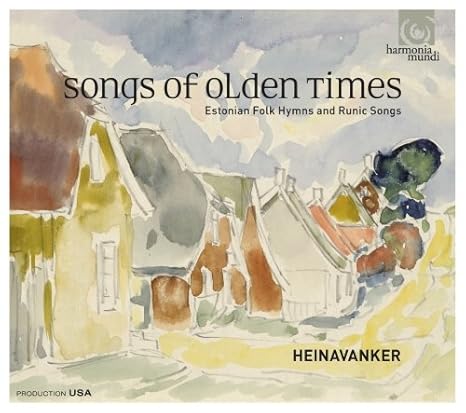
Album Review: "Songs of Olden Times" by Heinavanker | An Album a Day Keeps the Doctor Away

Image result for heinavanker songs of olden times

WHO: Heinavanker; Margo Kõlar, director
WHAT: Estonian runic songs
RELEASED: September 2013
LABEL: Harmonia Mundi

I've mentioned this album more than once before. I know that.

But this morning, I woke up to day umpteen of isolation and it was slushy and gray and blah outside. It put me in a bad mood. This album was all I could think to listen to. So I listened as I was cooking, and it hit the spot.

Frankly, now that I'm through the album, I still can't think of listening to anything else. I may start from the beginning and listen through again.

Happy first day back to "school," guys. Stay strong.

Sunday, March 22, 2020

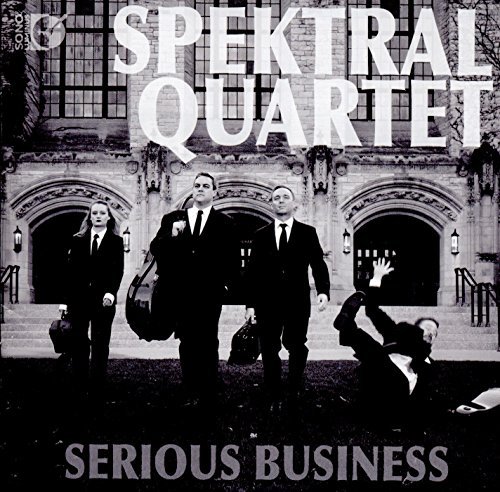
Album Review: "Serious Business" by Spektral Quartet | An Album a Day Keeps the Doctor Away

Image result for spektral serious business
And I oop--

WHO:
 Spektral Quartet
WHAT: New works by Sky Macklay, David Reminick, and Chris Fisher-Lochhead, plus a Haydn quartet
RELEASED: January 2016
LABEL: Sono Luminus

Challenge: I'm going to write this post before my oxtails come out of the pressure cooker in half an hour. For those of you who care: onions, garlic, stock, and red wine (a little bit for the oxtails, a little bit for me 😉). That's it.

Classical music is too damn serious. Have you ever dropped your program during a piece? People will literally look at you as if they want to throw you off a bridge.

Classical music hasn't always been so serious -- you can thank Richard Wagner for that -- but rarely is it overtly funny (barring opera buffa, of course). Haydn had his moments, even Mozart and Beethoven stepped into parody-land once in awhile.

For this album, The Spektral Quartet asked three composers to try their hands at "funny music" with wildly different results. Sky Macklay composed a piece that consists entirely of cadences -- Many Many Cadences as the title so creatively describes. The cadence, of course, functions as a tonal stabilizer. Macklay forces the quartet to hop between cadences with such speed that any sense of stability is lost, even though there is theoretically a "stabilization" every few seconds.

David Reminick chose absurdist poetry as his starting point; The Ancestral Mousetrap requires the quartet to sing a libretto by poet Russell Edson. They sing very well, proving my theory that instrumentalists are sometimes better singers than singers. One of the members sounds like Elvis Costello -- whoever does the bulk of the singing on the 4th movement.

The final premiere on the album, Chris Fisher-Lochhead's Hack, uses the instruments of the quartet to model the sounds produced by standup comedians during their routines. My linguist brain was intrigued. On the album, it doesn't evoke human speech so much, but it's so cool when they map the composition over the comedian's bit. Either way, cool piece.

And then in the middle of all this fun new music came the Haydn "Joke" quartet. I've played it. It's funny. But also, I kind of wish they had commissioned another new piece? I'm not exactly complaining, I'm always in favor of a good performance of a good Haydn quartet. But it also seemed a touch out of place.

Anyway, great album. Go listen. My oxtails are calling.

Saturday, March 21, 2020

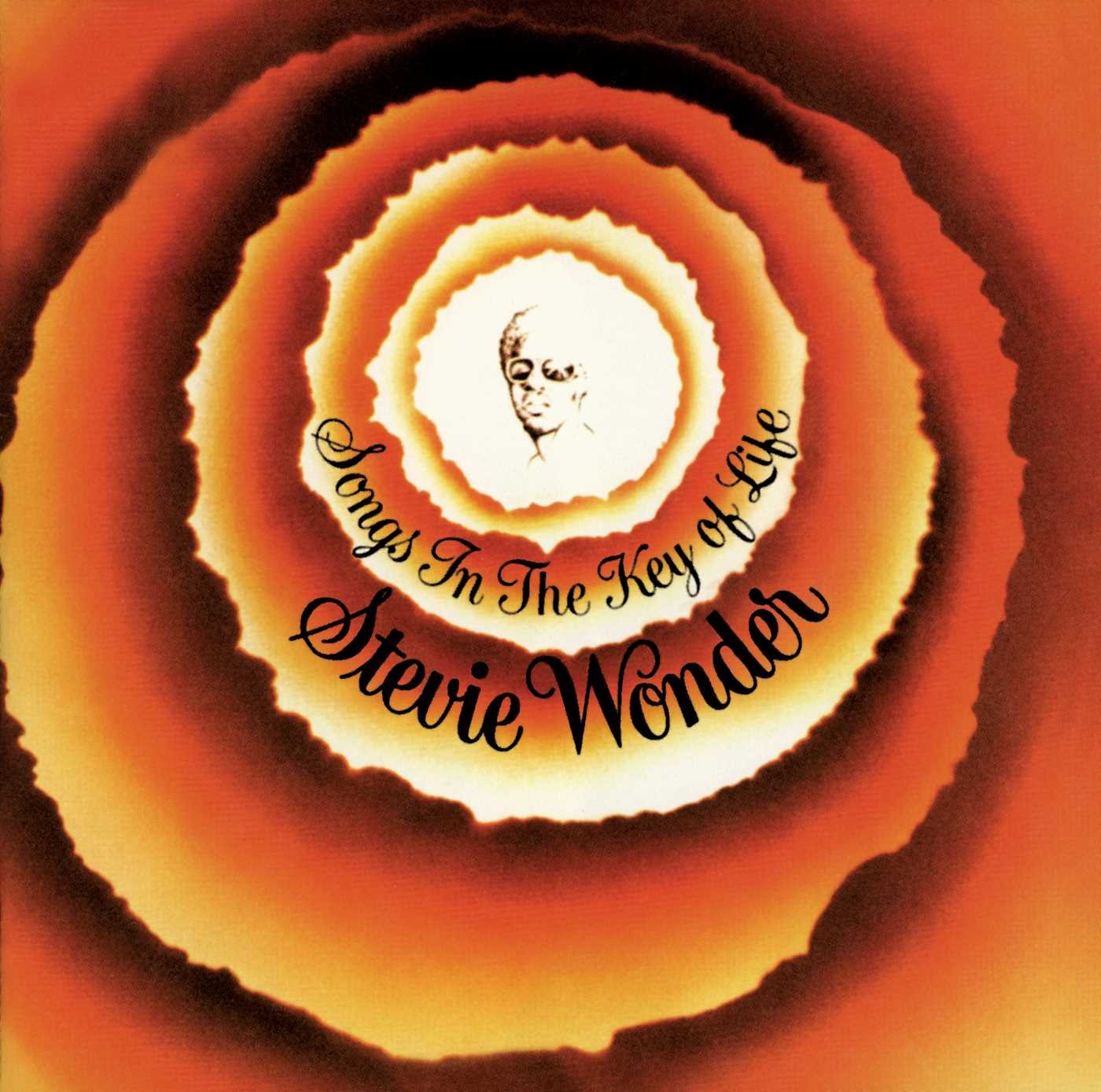
Album Review: "Songs in the Key of Life" by Stevie Wonder | An Album a Day Keeps the Doctor Away

Image result for songs in the key of life

WHO: Stevie Wonder
WHAT: Stevie Wonder (need I say more?)
RELEASED: September 1976
LABEL: Tamla Records

I felt like listening to Stevie Wonder today.

It would be criminal of me to review this album. Coincidentally, I need a day off from writing.

If you haven't listened to this album, look at yourself really closely in the mirror and evaluate your life choices. Then go listen. Now.