Wednesday, August 14, 2019

[44] Mostly Mozart Festival Orchestra plays Beethoven at David Geffen Hall | #1Summer50Concerts


WHO: Mostly Mozart Festival Orchestra; Andrew Manze, conductor; Vilde Frang, violin
WHAT: BEETHOVEN Violin Concerto; Symphony No. 3, "Eroica"
WHERE: David Geffen Hall
WHEN: July 23, 2019 at 7:30pm

Not gonna lie, I've been a scaredy cat this summer. I chickened out of talking to Caroline Shaw. I haven't gone up to talk to any artists after concerts unless I know them.

Well, I decided that was going to change a couple weeks ago. After this concert, I spotted someone with a violin a couple feet ahead of me. The strange thing was that she wasn't in concert black, even though the concert had ended not five minutes before.

And then I looked at her hair and had a light-bulb moment. I turned to my friend and said, "I recognize those beautiful blonde highlights."

It was Vilde Frang, walking back to the subway. As one does when in New York.

Yeah, I accosted Vilde Frang on the street to tell her what a great performance she gave. We talked for all of 30 seconds. I found out that the cello is her favorite instrument (not that I asked that specifically -- what am I, a middle schooler at an open rehearsal Q&A session?). It was moderately awkward. She seemed flattered. I would have been intimidated, butt then again, a chubby 20-year-old outwardly gay concertgoer with two days' worth of five o'clock shadow isn't exactly something to be scared of.

But of course, I didn't tell her I was reviewing the performance. Maybe should would have been a little more intimidated by me then.

Me at, like, every single concert so far this summer

Everything I said to her was well-deserved. Her performance was one that satisfied my inner musician. She didn't show off; it felt like her mission was to deliver the most honest, enjoyable interpretation she could muster. Vilde Frang served the music, which is something that so few of the big popular soloists do effectively. During the orchestral interludes, she seemed to get lost in the texture, staring off into the distance, making way for her colleagues -- she treated the orchestra as equals, not inferiors -- to work their magic. Her playing was aggressively precise, but didn't sacrifice any of that introspective simplicity that I crave from middle Beethoven.

I walked out of the first half of the concert convinced that the Beethoven violin concerto was the best piece ever written. I kind of get that way every time I hear the Beethoven concerto. I'm not sure if that opinion is defensible, or even if I believe it. But you know, even if I don't truly believe it, I'd be happy to defend that opinion any day.

In my first post of the summer, when I went to see the S.E.M. ensemble, I mentioned that I turned down an opportunity to see the NY Phil playing Beethoven's Third™ because I knew I'd get to see it again in the near future. The fact that, not even two months later, a different orchestra is playing the same piece in the same hall should validate my decision.

That said, I'm pretty sure the MMFO did a better job than the NY Phil would have. I mean, the orchestra gets together every year to play *mostly* Mozart (oh, that's why they call it that!), so it felt like they were in a more appropriate mindset for that late-classical style. The word that Andrew Manze's interpretation drew to mind was light -- even in the loudest climaxes, there was still a wind blowing the orchestra from underneath, keeping them bobbing along to the sometimes-rollicking, sometimes-sagging beat. Special mention should go to the first oboist of the orchestra, Katherine Needleman, whose solos contributed to the levity from atop the orchestral texture. All of her solos, whether twenty measures or two, made me feel that amazing shiver up my spine.

God, I'm so glad I went. And now I've proven to myself that I have the balls to approach performers after concerts. Now, I try to rationalize it by assuming that people like to hear how great they are. But is that actually true? Do performers actually like being approached by strangers?

I don't know, maybe my *good friend* Vilde Frang will be able to answer that!

Tuesday, August 13, 2019

[43] Mostly Mozart Festival presents "The Magic Flute" at David H. Koch Theater | #1Summer50Concerts

Aaron Blake running from the dragon who, if you think about it, catalyzes the entire plot line
(© Stephanie Berger, courtesy of Lincoln Center)

WHO: Aaron Blake (Tamino); Vera-Lotte Böcker (Pamina); Evan Hughes (Papageno); Wenwei Zhang (Sarastro/Speaker); Aleksandra Olczyk (Queen of the Night); Mostly Mozart Festival Orchestra and Chorus; Louis Langrée, conductor; Susan Andrade and Barry Kosky, co-directors
WHAT: MOZART The Magic Flute
WHERE: David H. Koch Theater
WHEN: July 20, 2019 at 7:00pm

(Note: other than the headline photo, photos are of the alternate cast, not the one I'm reviewing)

I had my suspicions before seeing this production, but now I'm fully convinced: Barrie Kosky is a maniac.

Not the dangerous kind of maniac. But I have never heard tell of a Barrie Kosky production that was not weird, scary, or downright crazy in one way or another. And quite frankly, that's not a bad thing. I mean, who else would have the idea to do a silent film-themed, mostly-animated Magic Flute?

Yes, you read that right. White powdered faces. Bowler hats. A Nosferatu-clad Monostatos. And possibly the best (only?) animation design I've ever seen in an opera.

The Andrade/Kosky Magic Flute is the proprietary production of the Komische Oper Berlin, the Berlin opera company which at one point specialized in operetta. Their 2019-20 season is somewhat more varied (read: ungapatchka), including new interpretations of tragedies like La traviata, Händel's Jephtha, and Stravinsky's The Rake's Progress, alongside German translations of Fiddler on the Roof, The Wizard of Oz, and a new "football operetta" based on the 1938 film Roxy and the Wonderteam. So, the folks over at the Komische Oper are no strangers to wackadoodle ideas.

After achieving success in its original run in the 2016-17 season, the production has been making rounds worldwide. In the upcoming season, you can catch it in LA, Houston, Warsaw, and for yet another stint at home in Berlin. And it's not going to fade from the limelight anytime soon.

I don't know guys, the red high heels really don't go with the masks...
(© Stephanie Berger, courtesy of Lincoln Center)

The Lincoln Center cast was hand-picked from the many European productions, along with some American stars (both established and up-and-coming). Before I start in on the individual reviews, I just have to mention that the singers had a job that was infinitely harder than usual -- they had to sync themselves not just with the orchestra, but with the minute details of the animation. That meant military-precision blocking and timing. So I'm willing to give the performers something of a break (although Evan Hughes's torso *did* twirl the other direction from his animated legs at one point -- that was pretty funny, and entirely consistent with the goofy character of Papageno).

Vera-Lotte Böcker's Pamina was perfectly balanced for the production. Her acting was self-contained, but still leaned heavily on the animation for additional zing, just as it should when the animation is providing so much of the plot's drive. Her singing was beautifully emotional, especially in the famous "Bei männern" duet with Evan Hughes's Papageno. Despite his moderately constipated facial expression, Evan Hughes sang the part well, with a good dose of both buffo zeal and compassion-inducing eyelid-batting.

Dumbo sequel or indie rock album cover? Vote now on your phones.
(© Stephanie Berger, courtesy of Lincoln Center)

Aaron Blake, whose pointed face and pronounced makeup gave him the look of a ventriloquist dummy, played Tamino with overpronounced, wide-eyed facial expressions, as if to remind the audience that Mozart can be fun, too. He executed his arias with utmost bravura, his tenor soaring above Louis Langrée's finely-tuned orchestra. Wenwei Zhang wowed both as a tweed-clad Sarastro and an offstage speaker, possessing the perfect profundity to counteract Hughes and Blake. Only Aleksandra Olczyk fell short as the Queen of the Night -- her first aria was interesting enough, but a lagging tempo in the famous "Der Hölle Rache" kept her from imparting the necessary fire into the difficult bits.

Papageno and Papagena wishing that lovemaking wasn't so fun
(alternatively: Mozart's adaptation of 101 Dalmatians)
(©Stephanie Berger, courtesy of Lincoln Center)

Oh, and the first thing I thought when the trio of young muse-boys sang for the first time was, "Huh, why do these tiny children speak better German than any of the leads?" And then I read the program and realized that they were soloists from the famous Tölzer Knabenchor, the same choir that did the original period-performance recordings of the Bach Passions with Nikolaus Harnoncourt. God, I wish I could tell you their names. They sounded amazing. But they weren't listed. Sigh.

I have to give the production credit for being the most accessible I've ever seen. The production could entertain anyone, even people who say they hate opera. The animations were fast-paced, with added jokes and nods to popular culture -- Papageno has a brief kung-fu moment about ten minutes into the opera. Andrade and Kosky replaced the dialogues with silent-movie style panel-discussions, accompanied by a slightly out-of-tune fortepiano playing mostly Mozart works (an intentional nod to the festival?). The whole concept was ingenious, and Paul Barritt deserves a medal for those animations.
The speaker-head
(© Stephanie Berger, courtesy of Lincoln Center)

I only had a couple bones to pick with the production. The biggest one was that it sort of played a little too far into the stereotypical-woman trope that Schikaneder outlines in his libretto. The offstage speaker that Wenwei Zhang sang was represented as a talking, steampunk-ish male head. Inside the head was inscribed German "words of virtue" including Weisheit (wisdom), Kunst (art), and Wahrheit (truth). At the end of the scene, along came a female counterpart to the male head, inscribed with such "feminine" words as Klatschen (gossiping), Einkaufen (shopping), and Tratschen (another word for gossiping). I can totally understand how a German audience might find that funny. But come on guys, it's 2019. And the fact that they kept that part in German against the rest of the translated projections made it feel like the jab was intended to fly over the audience's head. Not cool.

On a slightly less serious note: there was this one pair of stockinged, red-high-heeled legs that were reused time and time again throughout the entire opera. It was a gag for a little while. But after the third or fourth time, it was just....too much leg.

Did Papageno's bells really need legs? Come on.

Qualms aside, I think this kind of thing is what the opera world needs to maintain popularity into another generation. There's more to opera than white tie and tails and stuffy, stodgy plot lines of yesteryear. Even those shows with less-than-desirable themes can be updated so that everyone can enjoy them.

So yes, I think Barrie Kosky is a maniac. But I also think he's a genius.

Sunday, August 11, 2019

[42] Vijay Iyer Sextet at The Village Vanguard | #1Summer50Concerts

The wire-rimmed glasses and sweater really make Vijay look like he 
teaches at Harvard....oh wait, what's that? He does teach at Harvard?

WHO: Vijay Iyer, piano; Graham Hayes, cornet/flugelhorn/electronics; Steve Lehman, alto saxophone; Mark Shim, tenor saxophone; Stephan Crump, bass; Jeremy Dutton, drums
WHERE: The Village Vanguard
WHEN: July 19, 2019 at 8:30pm

My 17-year-old brother made an impromptu trip to NYC for a weekend with two very, very clear conditions. The first was that we go on a pizza crawl through lower Manhattan. The second was that I had to take him to the Village Vanguard. But not necessarily in that order.

So I plucked him off his MegaBus (which was an hour late, but frankly who's surprised?) and we moseyed (ran?) on down to The Vanguard. He didn't care what was playing. I, of course, did.

My brother's listening habits are eclectic. He's a bassist, both jazz and classical; on any given day, he'll jump from Kanye to Brahms's German Requiem and back to Vince Staples or Brockhampton. Right now, he's sitting in the corner of my apartment singing both parts to "Maria" from West Side Story in (more or less) the correct octave.

He's got a few albums he goes back to time and time again. Dietrich Fischer-Dieskau singing Winterreise. The Beach Boys's Pet Sounds. Kendrick Lamar's To Pimp a Butterfly. But the one he goes back to most often is of drug-addled pianist-composer-genius Bill Evans sitting at The Vanguard's Yamaha alongside his trio.

"Alice in Wonderland" is his favorite

We went down the stairs. He smelled the Vanguard smell. We sat down below one of those framed records. And he turned to me and said with a shit-eating grin, "You know who sat there? Bill Evans. Bill Evans sat there.

"Now, who are we seeing tonight?"

"Vijay Iyer."

"Who?"

So I explain. Vijay Iyer. Music cognition PhD candidate turned jazz (and occasionally classical) composer. With his sextet, whose alto saxist is also a PhD-level composer, and whose drummer got picked up straight out of college (he's like 24 now -- feel inadequate yet?).

"But is he as good as Bill Evans?"

What the hell am I supposed to say to that? Like, less heroin? Except even when you strip the drugs out of Bill Evans's charts, they're still totally different from Vijay Iyer's? Because they're both geniuses?

I decided on the most concise way to say just that: "Shut up and listen."

And so he did.

The quartet did the same thing that the Uri Caine Trio did back in concert #2 -- they basically played for an hour straight, blurring the transitions between charts so you didn't realize you were in a different realm until you were already there. I often found myself bopping my head to the beat, except that Vijay Iyer's style is marked by sudden slight changes in beat pattern, so I'd end up on the offbeats or something ridiculous like that.

I don't know what any of the charts are called (the Sextet was *too cool* to announce) but I can tell you that they were all amazing. The upbeat songs let the rhythm section show off their technical prowess -- Stephan Crump's bass playing and mouth movements were each something to behold, and Jeremy Dutton imparted the most expression one can into an unpitched instrument. The downbeat songs let the horn players show off their ability to fill the the spaces above the sparse, but aurally complex chord structure. And regardless, Vijay Iyer was there with his exquisitely-voiced comping and wildly virtuosic solos.

And speaking of space and solos, the most fascinating thing was how the soloists used empty space. Steve Lehman's alto solos tried to fit the most notes into the smallest space: exhausting, but impressive. Graham Haynes used an echo/looping effect on his cornet solos, basically playing a few notes and waiting for the loop to fade before playing a few more: intellectual, but minimal. Mark Shim trod the line, his solos gaining momentum like a loose car down a steep hill before hitting a brick wall of silence.


Of course, it wouldn't be a Vijay Iyer concert without the obligatory politically-charged rant that he improvises over the final chords of his set. The theme is always the same: the struggle is Far From Over (coincidentally, the name of the Sextet's most recent album). According to my friend, Iyer actually mentioned Trump by name in his Tuesday set, essentially echoing the message that YG & Nipsey Hussle so eloquently purvey in the popular song linked below. This particular evening, there was an elderly couple in the front row that particularly jived with what Vijay had to say. #woke

My brother and I both left the Vanguard happy into one of the hottest nights of the summer; we made the wise, wise decision to traipse around the Village and the Lower East Side in pursuit of pizza. Two slices and a whole pie later, we patted our sweaty bellies. It had been a good night.

John's of Bleecker Street, the favorite pie of the night

Wednesday, August 7, 2019

[41] Teatro Nuovo presents Rossini's "La gazza ladra" at the Rose Theater @ Jazz at Lincoln Center | #1Summer50Concerts

Hannah Ludwig welcoming the audience as Pippo (PC: Steven Pisano)

WHO: Soloists, Chorus, and Orchestra of Teatro Nuovo; Rachelle Jonck, maestro al cembalo; Jakob Lehmann, primo violino e capo d'orchestra
WHAT: ROSSINI La gazza ladra
WHERE: Rose Theater @ Jazz at Lincoln Center
WHEN: July 18, 2019 at 7:30pm

Concert #41: In Which I See a Three-And-A-Half-Hour Opera That Usually Gets Cut Down to Two Hours for a Reason

Don't get me wrong, I'm not faulting Teatro Nuovo for this. I totally understand wanting to play every note that the composer wrote.

But Rossini wrote this opera for a different audience. Back in the early 1800s, the opera was as much a place for social hour as it was a place for musical edification. The 20-minute scenes sung by the protagonist's first cousin's husband's servant were the perfect opportunity for Signore and Signora Garganelli to go over and play cards with their aristocratic friends.

But it's the 21st century. Friends are obsolete. Our phones are the new "friends."

Okay, maybe that's kind of a dystopian read on things. But Wagner invented this idea that music should be all-consuming and everyone should be quiet and do nothing but listen. And now we just sit and listen and roll our eyes at people who cough (don't lie, I do it too -- concert halls literally provide free cough drops, but you can't be bothered to pick a few up before the performance?).

Anyway, this is all a long-winded way of saying that I understand why The Met cuts Gazza ladra to two hours. But I'm glad I got to see the whole thing -- again with that reproducibility factor!

You've definitely at least heard the overture to La gazza ladra ("The Thieving Magpie"). It's a favorite among film producers, most notably used in A Clockwork Orange. Couldn't tell you where in the movie -- I don't do psycho-crime movies.

ANYWAY, now that my anti-establishment cynicism is out of the way, I really really enjoyed Teatro Nuovo's performance. The orchestra sounded as great as ever, and I think they saved their real A-cast for this performance. The acting was more acute, though that could possibly be because the staging was slightly more...well, staged. There was a long table in the middle of the stage that at least gave the performers something to work with.

The many faces of Hans Tashjian (PC: Steven Pisano)

The highlight of the performance was mezzo Hannah Ludwig as Pippo, the cheeky trouser-role servant who eventually exonerates the protagonist from her execution (have I mentioned that Italian tragedies are indistinguishable from Italian comedies until the last ten minutes?). Not only did she sing beautifully, but she sparkled in the role, at once naive and all-knowing. Bass Erik van Heyningen's constantly-concerned portrayal of the defected soldier Fernando Villabella was poignant, coupled with a sweetly roaring bass. Hans Tashjian, the main villain, brought an intentional apathy to his character, reinforcing his nuanced vocal technique with an impressive repertoire of cunning smirks, each distinct from the last. And of course, I'd be remiss if I didn't mention the sorrowful song of the protagonist herself, Alisa Jordheim as the condemned (then not) Ninetta.

To the uncredited chorus member who played the magpie: the feather-boa-plus-tuxedo look is a keeper. He managed to be the funniest character, even though he only sang two solo lines -- the way he raced around the stage had a Road Runner-esque flair.

The orchestra, as usual, sounded great; a few of them even joined in on some of the buffo fun, the principal flautist and oboist each in their own little solo world until the oboist "realized" that everyone was concentrating on the flute player's thirty-second notes instead of her quarter notes.

So yes, I sat through three and a half hours of opera on this one Thursday night. But I don't have a single regret. I've said it once, and I'll say it again: reproducibility factor never steers me wrong!

Monday, August 5, 2019

[40] Teatro Nuovo presents Bellini's "La straniera" at Rose Theater @ Jazz at Lincoln Center | #1Summer50Concerts

PC: Steven Pisano

WHO: Soloists, Chorus, and Orchestra of Teatro Nuovo; Will Crutchfield, maestro al cembalo; Jakob Lehmann, primo violino e capo d'orchestra
WHAT: BELLINI La straniera
WHERE: Rose Theater @ Jazz at Lincoln Center
WHEN: July 17, 2019 at 7:30pm

I open my computer. My stomach is in knots. The clock is counting down. Sweat pours down my face. I begin to hyperventilate. The stress is killing me. My hand, shaking violently, reaches for the mouse.

Yeah, that's what happened last time I had to choose between two concerts I really wanted to go see. Sometimes I think I'm too invested, y'know?

Anyway, I know I said at the beginning of the summer that I was choosing concerts based on what thought I would like most. Unfortunately, I like a lot of things, and sometimes I can't choose. So I've had to rely on another metric for deciding on concerts: the reproducibility factor. I always take into account the likelihood of getting to see a given concert (or one similar) at some point in the future. That's why I decided to go see the SEM Ensemble instead of Beethoven's Eroica at the NY Phil for the first concert in this series; why I went to go see ChamberQUEER instead of Boston Early Music Festival at Caramoor; why (in part) I decided to go see Vivica Genaux instead of going to NYC Pride.

So, when Teatro Nuovo's staged operas rolled around, I cleared my schedule, put on a tie, and walked up the five flights of stairs to the Jazz at Lincoln Center lobby.

Okay no, not really. I took the elevator. But the necktie part is real.

The formal-clad choir (PC: Steven Pisano)

Bellini's La straniera ("The Stranger") barely ever gets performed, falling at the feet of his more famous Norma, Puritani, and Sonnambula. The plot, as with many bel canto operas, is predicated upon a misunderstood love triangle -- Arturo loves Alaïde (the straniera in question), but thinks she is having an affair with Valdeburgo. Arturo tries to kill Valdeburgo until the "oh shit!" moment when he realizes that Valdeburgo is Alaïde's brother. Valdeburgo survives the attempt, Alaïde is dragged off for the murder, Arturo is urged to marry the woman he was originally planning to marry before any of this started (her name is Isoletta, she's only mildly relevant).

Except then it turns out that Alaïde is actually queen of France. So when Arturo botches his own wedding to beg Alaïde to run off with him, she is summoned back to the throne. Arturo is understandably sad. He kills himself. Alaïde is also sad. She threatens to kill herself. Curtain.

Ah yes, the Italian tragedy: only distinguishable from the Italian comedy in that, at the end, everyone dies instead of marrying each other.

So, I'm going to go out on a limb here and say something. I think comparing the Teatro Nuovo orchestra and choir is unfair. The singers are part of a young artists' program, still gaining valuable experience in the operatic field. The orchestra is the usual circuit of period-performance freelancers, many of whom I've already seen elsewhere this summer. So here are their separate reviews:

THE SINGERS: Great voices up on that stage. Tenor Derrek Stark was a poignant and relatable Arturo; soprano Christine Lyons's arias brought Alaïde's alienation to the forefront; baritone Steven LaBrie's Valdeburgo was rich and sweet, but not overly covered; mezzo Alina Tamborini rocked a confused Isoletta. But, for the great singing tone, the acting was somewhat anemic. Perhaps if there had been more staging to work off of, it would have been better, but the body movements were muted and awkward, the facial expressions barely expressive at all. Only LaBrie seemed to occupy the full character of his role. The chorus, made up of the rest of the young artists in the program, sounded as good as any professional opera chorus, their Italian perfect even in those infamous tongue-twister passages.

LaBrie as Valdeburgo (PC: Steven Pisano)

THE ORCHESTRA: Teatro Nuovo has a 60-piece orchestra that functions as a chamber ensemble. The concertmaster, sitting on the podium at the front, shares conducting responsibility with the maestro, sitting at a keyboard instrument (a late-model fortepiano, in this case) in the middle of the orchestra. The configuration of the orchestra is strange, to say the least -- the violins face each other (firsts facing the stage, seconds with their backs to the singers), the winds sit in an octet in the middle, the basses are split on either side of the ensemble. It made for an interesting sound, from the audience's perspective. The first violins and wind soloists are the center of attention in a bel canto orchestra, and they came through loud and clear. I'm not going to pretend that the modern configuration, with a real conductor serving solely as a musical interpreter and everyone facing the same way, isn't an innovation -- there's a reason the MET orchestra doesn't sit like Teatro Nuovo. But the orchestra's seating didn't seem to affect their accuracy and poise; they were fantastic in every sense of the word. I buy the configuration both as a musical and intellectual exercise. Special nod to harpist Parker Ramsay, who sat onstage to accompany two arias with very, VERY prominent parts.

Overall, an enjoyable evening. The entire concept had a novel sparkle to it, enough to offset any blandness in the acting. I was entirely satisfied -- the reproducibility factor seldom steers me wrong.

Friday, August 2, 2019

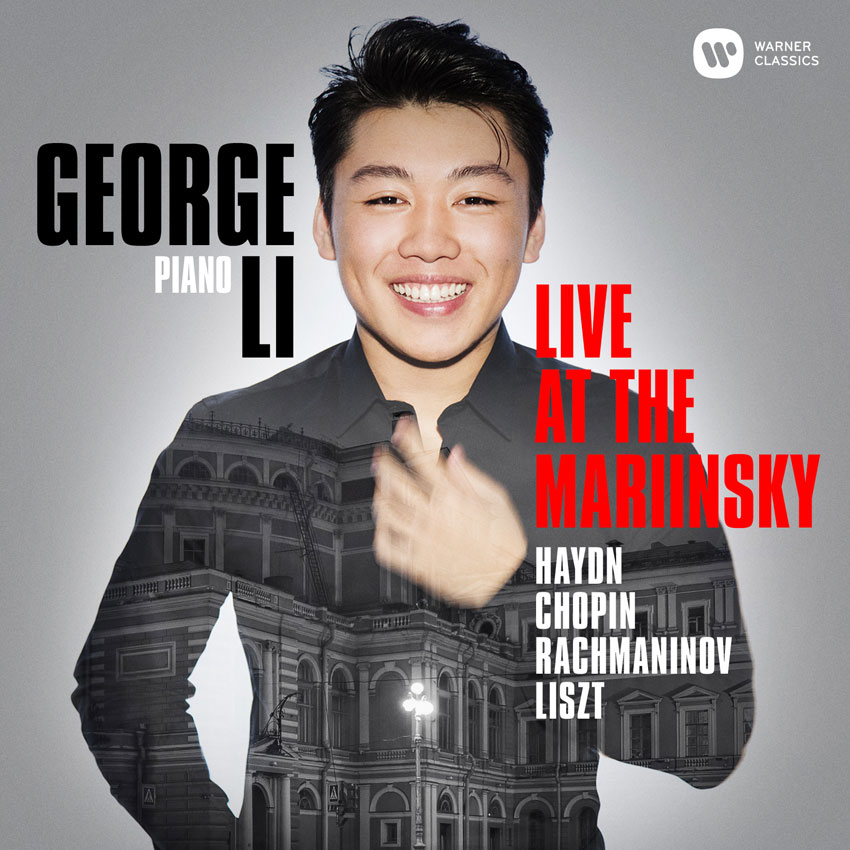
[39] George Li plays Beethoven and Schumann at Merkin Hall | #1Summer50Concerts

Image result for george li


WHO: George Li, piano
WHAT: BEETHOVEN 32 Variations in C minor, WoO 80; Andante Favori in F major, WoO 57; Sonata in C major, Op. 53 "Waldstein"; SCHUMANN "Vogel als Prophet" from Waldszenen, Op. 82; Carnaval, Op. 9
WHERE: Merkin Hall at the Kaufman Center
WHEN: July 16, 2019 at 8:00pm

This International Keyboard Institute and Festival (IKIF) is stuck between a rock and a hard place, programming-wise. On the one hand, it seems like they want to program interesting things -- some pianists come in with interesting pastiche recital ideas. But in their two weeks of twice-daily concerts, there was an overwhelming amount of music by pianists, for pianists (yeah, Liszt, I'm looking at you). Just like, an overwhelming amount of pretty good soloists playing Beethoven after Schumann after Brahms -- all composers I like very much, but like...what else is new guys?

So I decided I'd only go to one of the concerts, and this is the one I chose. I chose it because I like Beethoven and I like Schumann and I've heard George Li is good. Sound logic, if you ask me. And I think I chose the right concert, music-wise.

George Li is one of these people who went out and won all the big competitions when he was a teenager so by the time he finished his undergrad (at the Harvard-New England Conservatory exchange program) his career was already made. Sigh. If only...

He played well, for the most part. His Beethoven, while nice, was not necessarily to my taste. The interpretations seemed overly cerebral -- he thought very hard about the placement of each note in time and space. The result was playing that felt wordy, for lack of a better descriptor. Each note felt like it was meant to evoke a very specific descriptor: this note was joyful, that one was anguished. I think that particular aspect cost him a sense of big-picture scope that would have helped tremendously.

Li's Schumann, though, was something to write home about. Once he had a concrete picture as a goal for his interpretation, his musicality snapped right into place. His Carnaval was stunning, his "Eusebius" movement especially tender. But the only thing better than Carnaval were the five minutes of Waldszenen that preceded it. Mystic and exotic, the seemingly aimless movement ambled with futility-laden intent.

The best pianists know how to handle adversity (aka upright pianos)

I closed my eyes to listen to that movement of the Waldszenen. And just when I did, a phone went off. And then another. And then a third one. All told, five phones went off during those four minutes.

Yeah, let's talk for a second about the audience. The read I got was that it was mostly teenage IKIF attendees and their tiger parents. The woman sitting next to my date was on her phone the entire concert. Someone made a whisper before one of the pieces and no fewer than three people loudly shushed them (if you shush loudly, you're part of the problem). And worst of all -- George Li, the poor kid, obviously tired from a full recital and his first encore (Liszt's transcription of Schumann's Widmung), was forced to pull out the Liszt Campanella. The audience oohed and aahed. Behind Li's saccharine façade, you could see the same eyeroll that my date and I gave each other at Campanella's opening octave D#'s. For Christ's sake, let George Li do a Philip Glass concert or something. He's obviously bored.

TL;DR George Li gets a solid A. The audience gets a quadruple F-.

Thursday, August 1, 2019

[38] Chamber Music Society of Lincoln Center plays Mozart, Brahms, and Arensky at Alice Tully Hall | #1Summer50Concerts


WHO: Anthony McGill, clarinet; Bella Hristova, violin; Nicholas Canellakis, cello; Juho Pohjonen, piano
WHAT: MOZART Violin Sonata No. 32 in B-flat major, K. 454; BRAHMS Clarinet Trio in A minor, Op. 114; ARENSKY Piano Trio No. 1 in D minor, Op. 32
WHERE: Alice Tully Hall
WHEN: July 14, 2019 at 5:00pm

I have exceptional luck when it comes to getting into sold-out concerts. From Chunky in Heat at the very beginning of the summer, to Pierre Hantaï in mid-June, and a couple others pre-summer, I usually can negotiate myself into at least standing room.

I've only been turned away from one concert this summer, and that was the first of the Chamber Music Society of Lincoln Center's first summer evening concert on July 10. The Wednesday evening concert, which featured works of Schubert and Dvořák alongside Mendelssohn's rarely heard piano sextet, was sold out except for one seat which was offered to me at a premium of $85 -- to be expected considering the lineup, which included famed pianist John Kimura Parker, NY Phil principal violist Cynthia Phelps, and Tokyo Quartet cellist Clive Greensmith.

So I decided to come back with some friends and try for the next concert. Three $10 tickets later and we were sitting in the third row waiting eagerly for the downbeat.

Our anticipation was met with a heaping bowl of meh.

I mean, it wasn't unpleasant. The notes were correct, at least. But the musicians were, for the most part, dialing it in. Bella Hristova's Mozart wasn't particularly musically interesting, not that you could hear her above Juho Pohjonen's hammer-hands. I think the Mozart might have suffered from Hristova's nerves, though -- her Arensky was much looser and more refined.

Nick Canellakis's vibrato covered up anyone who he played with, most notably clarinetist Anthony McGill. From what I could hear of him, McGill played the most genuine performance of the evening, granted I could hear precious little over the opaque stylings of Canellakis and Pohjonen. And Pohjonen had possibly the most awkward stage presence I've ever seen, his face motionless and his body just kind of jerking around.

I don't want to belabor negativity, but I'll finish by saying this: I could see Canellakis being a great soloist in a thousand-seat concert hall. Pohjonen as well. I know for a fact Hristova can play the shit out of her instrument -- see the video at the top of this post. But this was simply not their day.

At least there was free wine after the performance :)

P.S. I'm no style guru, but CMS seriously needs to learn that white jacket + black tie is not an indoor look. Period.