Sunday, November 10, 2019

Review: International Contemporary Ensemble performs George Lewis's "Soundlines"

Peep: Shick and Lewis trying to explain the meaning of music
in half an hour, in terms that a middle schooler could understand

WHO: International Contemporary Ensemble; Vimbayi Kaziboni, conductor; Steven Schick, percussion and orator
WHAT: GEORGE LEWIS Soundlines; P. Multitudinis
WHERE: Skirball Center for the Performing Arts @ NYU
WHEN: October 18, 2019 at 7:30pm

One of my friends told me I should drop everything to see this concert. By the time he finished telling me why, my tickets were already bought. I'm easily swayed.

The first amazing thing about this concert was the sheer density of objects and individuals onstage. In addition to the large Skirball stage, a large vertical platform stood front and center -- the kind of platform off of which I flung (and broke) a bow in my freshman year of high school while playing in the orchestra for Pippin. (That was my second broken bow that year. I broke the first by literally sitting on it during an orchestra rehearsal. I was a clumsy child.)

Spilling out of the pitch-black underbelly of said raised platform was a smattering of unusual percussion instruments -- drums, various shakers and rainsticks and whatnot. The conductor sat in the partially-lowered orchestra pit, visible to both those on the platform and on the stage. Basically, I'm trying to say that the setup was weird.

Within the first few measures of Soundlines, two LED panels lit up the dark underside of the platform, revealing the rest of the percussion setup surrounding a blank-faced Steven Schick.

Schick proceeded to tell the tale of an artistic mission upon which he embarked a few years ago: a daring seven-hundred-mile walk from San Diego to San Francisco. George Lewis designates his musical setting of Schick's memoir as a melodrama, but Schick's performance was anything but hyperdramatic. His face remained largely neutral through the piece, one of the more impressive feats of solo performance I've seen in the last year.

Lewis used the vast percussion set to emphasize Schick's oration syllable-for-syllable -- that was where the melodrama of this piece came from. The instrumental accents did not always match the syllable stress of the speech. That was part of the fun. Schick took it all in stride. His body was one, and the hands that operated the mallets were one with the mouth that narrated.

The rest of the ensemble snuck onstage at the end of the piece, and they seamlessly transitioned into P. Multitudinis, more a soundscape than a piece with distinct melody and harmony. The musicians were divided into distinct instrumental groups -- a wind quintet atop the platform, a string quartet stage right, a pianist stage left, a couple of hodgepodge ensembles in the side balconies. Each group had some discrete number of musical modules to play; it wasn't clear exactly how they decided when to switch, but from what I could tell motion was predicated on finger-numbers and Macarena-like hand signals. Conductor Vimbayi Kaziboni kept things moving by slinking around between groups, checking in as a waiter does on a table of guests. Amusing, and who am I to argue with results?

And the best thing about it all was the speech that George Lewis gave afterwards. He was very, very happy. And for me, that enhances the experience so very much. Satisfied composer + satisfied audience = satisfied critic.

Saturday, October 19, 2019

Review: The Juilliard Orchestra plays Thorvaldsdottir, Prokofiev, and Bartók


WHO: The Juilliard Orchestra; Jeffrey Milarsky, conductor; Jaewon Wee, violin
WHAT: ANNA THORVALDSDOTTIR Metacosmos; PROKOFIEV Violin Concerto No. 2; BARTÓK Concerto for Orchestra
WHERE: Alice Tully Hall
WHEN: October 17, 2019 at 7:30pm

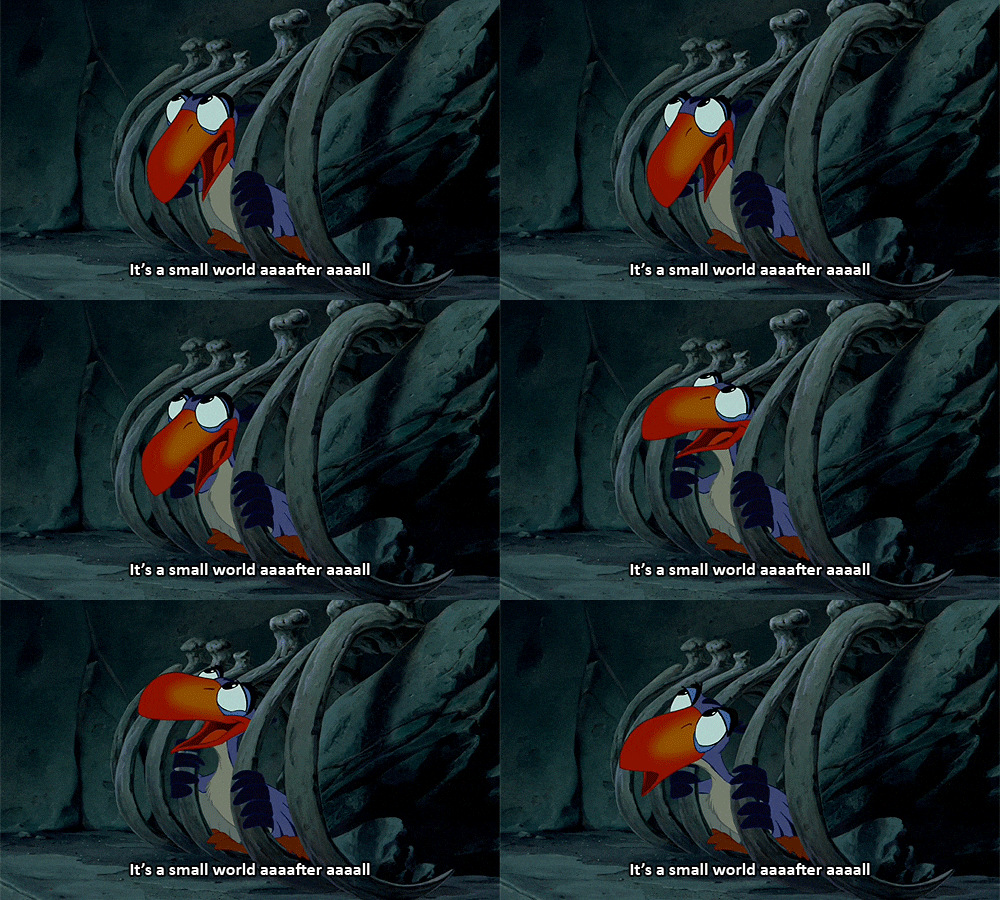
God, why is the music world so small?

I think I jinxed it by mentioning that I didn't see anyone I knew at the Dover Quartet the other day. But every concert since then, I've randomly run into at least one person I know.

As soon as I'm through Alice Tully security check, I run into a music camp friend. Then another. Then I sit down, and I find out that no fewer than five close music camp friends are in the Juilliard Orchestra for this concert.

Image result for it's a small world gif
Anyway, my last two reviews have been really, really long, so I'm going to try to keep this one relatively short. I saw the Juilliard Orchestra last year with phenom conductor Barbara Hannigan (who was giving a recital across town at the Park Avenue Armory -- sold out to the rafters, naturally), and they sounded tremendous. The centerpiece of that program was also Bartók (his suite from The Miraculous Mandarin), so I figured, why not?

From my sample size of two (2) concerts, I've come to a conclusion about the Juilliard Orchestra: they'll never be bad. It's an orchestra comprised of the best young musicians around. The intention, the musicality, that will always be there.

But sometimes, Juilliard students have busy weeks. That's what this concert sounded like: an orchestra of phenomenal musicians, each of whom had fifteen million other things on their minds this week.

Consequently, the Thorvaldsdottir was probably the best-played thing on the program, and my favorite. Metacosmos sort of smears time in a way, blurring the lines between beats such that precision is not so important as transparent, visceral emotion. That's kind of a given for most of the musicians at Juilliard -- another day at the office.

But the orchestra began to fall apart behind Jaewon Wee's Prokofiev. Some of the orchestra knew the parts, but there was a critical mass of musicians who failed to look at the conductor's beat, resulting in a slow, but steady phasing effect between strings, winds, and brass. Luckily, Wee put up a well-polished performance that all but covered the missteps of the orchestra. I didn't necessarily feel like I was in the palm of her hand, but hey, we can probably blame that on the orchestra.

The Bartók was vigorous, if a little sloppy. The couples in the giuoco delle coppie ("game of the couples" were coordinated and well-rehearsed; the trumpets and trombones deserve a special mention for the chorale at the midpoint of that movement. The principals were all so very well-prepared, every solo sending my jaw straight to the floor. But once again, that phasing effect was persistent and ever-present. Maybe that burden falls on the conductor -- Milarsky's conducting seemed serviceable, though not particularly clear.

So, in conclusion, the Juilliard Orchestra is always worth seeing, even when they're not at their finest. When they bring in big name conductors, the quality is usually better (a friend was telling me about a few weeks ago, when Karina Canellakis conducted Ein Heldenleben -- best concert he'd ever been to). But when it's a staff conductor, just be warned: a bunch of great musicians do not an orchestra make.

For the love of god, Juilliard Orchestra, treat yourselves to a glass of wine, some Real Housewives, and a nap before your next concert. You all deserve it.

Review: Hannah Lash's "Desire" at Columbia

Woman and "Man" (PC: longtime Kinhaven photographer Rob Davidson)

WHO: Kirsten Sollek, contralto; Daniel Moody, countertenor; Christopher Dylan Herbert, baritone; JACK Quartet; Rachel Dickstein, director; Daniela Candillari, music director
WHAT: HANNAH LASH Desire (world premiere)
WHERE: Miller Theatre @ Columbia
WHEN: October 16, 2019 at 8:00pm

I've been on the board of Yale's undergrad opera company for a couple years now, and I really truly love it. But when programming season comes around, we often hit trouble. There are only so many operas that are a) small enough that they can fit into one of the tiny theaters set aside for student use and b) fit our personnel (see: The Great Tenor Drought of 2017).

So we often end up with operas in one of three categories:
  • court-commissioned Baroque operas that we can pull off with a combined cast and orchestra of 10 people
  • edgy 20th-century chamber operas, often psychological thrillers or horror operas
  • scaled-down productions of classic operas
And I love all that we do. But the thing is...sometimes, it feels like composers always assume that every opera company in existence has infinite money and resources. And increasingly, that is not the case. There's a space in the market for new operas which are compact, minimal, and relevant.

JACK x JACKson Pollock (PC: Rob Davidson)

Luckily, Columbia has identified that void in the repertoire, and is filling it steadily, year by year, with their Chamber Opera Commissioning Initiative. Established in 2017, Desire is their second project; their first show, Missy Mazzoli's Proving Up, met great critical success when it premiered last year. But Columbia has had a long history with chamber opera, premiering works of Britten and Virgil Thomson in the 1940's; more recently, they staged U.S. premieres of works by Olga Neuwirth and Iannis Xenakis.

Unlike much of the modern opera I've seen last year (sorry to @ you again, Chunky, but it was bound to happen sooner or later), Desire didn't feel like it had an overwhelming number of moving parts. The plot was straightforward, if cryptic; the movement onstage was slow and deliberate; it felt weirdly comfortable in the best of all possible ways. This opera seemed to strive towards profundity rather than outright experimentalism, a goal which it met with flying colors.

All of the motion that was taken out of the staging was siphoned into the complex string-quartet score. There was never a moment when Hannah Lash left the room unfilled, whether by scuttling exchanges, insane leaping figures (yes, I saw that time when the cellist had to leap a full foot and a half up his fingerboard), or lilting nods to the passion-waltzes of high romantic opera.

In isolation, the pacing of the libretto (written by the composer) remained largely the same throughout -- the sentence length, structure, and syntax barely varied throughout. But Lash's plain words were brought to life by the virtuosic vocal lines; the composer altered the rhythmic elements of the music to impart a broad emotional palette into the text. In a way, it was reverse text painting: the music seemed to determine the meaning of the text, rather than vice versa.

The three-person cast was headed by contralto Kirsten Sollek as a woman who existed in two worlds: a dark gray bedroom and a shimmering mystery-garden. Though contraltos are rarely main characters, here it seemed right, her rich, chesty mid-range nestling squarely between the shrill countertenor of the garden inhabitant (designated in the program as a man, but his costume suggesting, in the wise words of my date, "more of an origami Transformer") and the concerned baritone of the woman's husband.

The final showdown (PC: Rob Davidson)

Daniel Moody's voice was exactly what I wanted out of a new-music countertenor, bright and full of forward-propelling vibrato. Christopher Dylan Herbert (see my review of him from this summer) filled his sweet voice with a surging sense of bewilderment and discomfort. And the seemingly-superhuman JACK Quartet....I simply don't think there are words. The amount of collective brainpower, acuity, and passion they bring to these treacherous new scores never fails to amaze. And yet, through the complex ebbs and flows of the music, they always maintain the most incredible sense of calm, as if they are incapable of making a mistake.

This production was genius. I can only hope it comes back around during my lifetime. Any regional new music ensemble would (or at least should) jump at the chance to stage this show -- I know I'd make the trek to see it again.

Wednesday, October 16, 2019

Review: Dover Quartet and Emanuel Ax at Zankel Hall (and a few updates)

Carnegie didn't have a photographer for the concert, so I'm reusing photos from Dover's
Caramoor concert this summer. Sue me. (Actually, please please don't.) [PC: Gabe Palacio]

WHO: Dover Quartet; Emanuel Ax, piano
WHAT: BRITTEN String Quartet No. 1; BRAHMS String Quartet No. 3; SCHUMANN Piano Quintet
WHERE: Zankel Hall @ Carnegie
WHEN: October 15, 2019 at 7:30pm

First update: I'm on Twitter now! Follow me at https://twitter.com/EmeryKerekes to keep up with all of CMG's adventures!

Second update: I made it to October break in (more or less) one piece. And you know what that means: another concert binge.

I know I've been making noise about a ten-concerts-in-five-days October blitz. But a couple weeks ago, after one too many nights staying up until 3am doing schoolwork, I looked at the list of ten concerts I had planned and only one thought popped into my head:

"This feels like a bad idea."

So I'm only going to seven (maybe eight) concerts this break. And I'm going to blog about all of them, but it's not going to be a formal concert blitz. I'm just going to blog for fun. You know, like a normal blogger -- quality over quantity (what the hell was I on when I thought up of #1Summer50Concerts?). The reviews will come out over the next few weeks.

I love finding ways to put off schoolwork. So, a few weeks ago, when I should have been writing papers, I reached out on a whim to the Carnegie press office, asking if they had any extra tickets for this particular concert. They were so nice, but the gist of what they said was: "Get in line."

Yesterday morning, literally the day of the concert, I got the coveted email: there's an extra ticket, it's yours if you want it, just let me know. I squealed. My breakfast date (Sarah, I know you're reading this) rolled her eyes and didn't talk to me for the rest of the meal.

I dropped my alternate concert plans (we all have those, don't we?) and booked it to Carnegie as soon as my train got in (twenty minutes late, by the way). I sat down and looked around; for the first time in who knows how long, I didn't recognize a single other person in the audience.

I see good concerts all the time. I see great concerts less often, but still regularly. But only once in a while do I see a concert and think, "Wow, that was stupid good."

Well, the Dovers are stupid good.

 PC: Carlin Ma

Okay, confession time. You may recall that I reviewed the Dover Quartet this summer for Opera News, but I couldn't really tell you guys what I thought because I didn't want to give the magazine old news. Well, that review is now in print, so I can say whatever I want. So full disclosure: I've known that the Dover Quartet was fantastic for, like, four months now. But now I can finally say it loud and proud: I'm a diehard Dover fan.

Of course, I'm glad I got to see this whole program. But I'm especially glad that I got to hear the Dovers' take on Britten. Outlandish but not wholly unfollowable, Britten's first quartet proved the perfect canvas for Dover to release their inner cheekiness. The quartet managed to invoke that dry British sense of humor in a way that was full, unfettered, and most importantly, entertaining. The tender violin duets of the first movement were so theatrically interrupted by bawdy prestos that there may as well have been a laugh track. Cellist Camden Shaw's eyebrows tracked the satire through the off-kilter scherzo. The slow movement highlighted violist Milena Pájaro-van de Stadt's flawless playing (to quote the older European gentleman sitting next to me: "Viola playing doesn't get much better than that!"). And the blazing three-minute finale brought everything to a close with adequate pomp and circumstance.

Oh yeah, the Brahms was also great. But like...the Britten.

This is how Barber originally wrote the Adagio for Strings before revising it
twice (once for string orchestra, once for choir). I think it's best for quartet.

And then there was the Schumann. It takes one hell of a quartet to be a match for Emanuel Ax, and I've seen instances where Ax plays with a chamber group that is most certainly not up to his level. But this was perfect. Dover is very new-school, Ax is very old-school, and the collaboration let each explore aspects of the other's playing. The quartet was a little bit warmer and rounder; Ax kept his crisp touch, but was lighter on the pedal than usual. The result was a harmonious tone that could only be described not as the Dover Quartet, not as Emanuel Ax, but as "the Dover Quartet with Emanuel Ax."

The performance was so fantastic that I barely noticed the faint, but ever-present sound of the NQRW trains roaring past the underground Zankel Hall. Whose bright idea was that, again?

Thursday, September 19, 2019

Quick Post: Kaleidoscope

Is this selfie terrible? Yes. Does it have (most) of Dashon Burton it it? Also yes.
Also, first person to comment "Nice glasses," gets a kick in the shins.
(left to right: baroque cellist Alice Robbins; Dashon Burton; soprano Michele Kennedy; a fraction of my face)

This is going to be really quick because I'm putting off a problem set that I haven't started (eek!) which is due tomorrow (double eek!).

Remember prisoner of the state (concert 11 of 50 from this summer)? Remember how I mentioned that my job got me into a rehearsal meant for "classical music influencers"? Well, I didn't mention that it was a rehearsal where the covers were singing instead of the main cast. And Eric Owens's cover was Yale grad and Roomful of Teeth member Dashon Burton.

Frankly, I thought he was as good as Owens, if not better. I got to tell him that tonight. And now he thinks I'm an influencer because I was at that rehearsal. So what the hell, let's keep up the façade.

Anyway, tonight the nascent Kaleidoscope vocal octet (nonet, actually, because one of their members was missing) had their second performance ever. I've mentioned a few of the singers here before, most notably Enrico Lagasca, the bass over whom I fawned in concert #13's Cavalieri. Plus Grammy-winning tenor Karim Sulayman, fantastic countertenor Reginald Mobley, early soprano (and my voice teacher because I'm the luckiest person EVER) Sherezade Panthaki, the list goes on, all-star after all-star. Their mission is to celebrate diversity in the classical music world.

Kaleidoscope did a workshop-concert, so they only sang for about 20 minutes. Bach, Caroline Shaw (*sigh*), and a premiere by absent member Jonathan Woody.

But from those 20 minutes, I can safely say they're going to be big. Like, really big. Music with a mission is more powerful, more important, more relatable. And Kaleidoscope isn't just people who can sing. It's people who can articulate a noble cause through music.

They don't have any recordings -- this is only their second concert, after all -- but keep an eye (and an ear) out. This won't be the last you hear of Kaleidoscope.

Monday, September 16, 2019

[Finale Pt. 3] The Outtakes: Blooper Reel | #1Summer50Concerts

Pro: this train only makes two stops between New Haven and Grand Central
Con: they gave us one of the shitty old trains without comfy seats and electrical outlets

As I head down to NYC for a self-care day that includes a matinee at the Met and an evening concert at the NY Phil (neither of which I'm going to write about, because SELF-CARE), I figure now is as opportune a time as any to tell you about a few times when fate got in the way of my concert schedule. Sometimes, shit happens.
  • I got rained out of the Met Live in the Parks concert I was planning on attending. The headliners were tenor Ben Bliss, baritone Nathan Gunn, and soprano Ying Fang, who I had the fortune to interview not a week before. She's just lovely. So is her voice. Sigh.
  • I mentioned this briefly in a prior post, but the first Chamber Music Society concert I tried to go to was completely, 100% sold out. Like, not a seat left. So we rushed to two Broadway theaters and tried to get rush tickets. No luck. We ended up at Upright Citizens' Brigade seeing comedy, which was sort of my default free-evening thing to do.
  • After my first Caramoor concert (with Vivica Genaux), I wrote a whole post on Metro-North -- I think it was for the second night of ChamberQueer. I got home and pressed the post button, and the entire thing disappeared. That might have been the low point of my whole summer.
  • Concert #1 was slated to be the NY Phil's free Memorial Day concert. But by the time my friend got there to get us tickets, the line almost snaked around an entire city block. I love music. But not that much.
  • I was having a good day. Had lunch with friends, sat in a Columbia coffee shop for an hour and a half trying to write my first Opera News review (I got two sentences in that time, neither of which I liked at all), and then had a reading with one of my Bennington quartets. I was slated to go to the Martina Arroyo Foundation's Fledermaus with a friend that night. I caught the D train downtown from Harlem-125th St because the 1 train wasn't running that weekend. Around 81st St, we stopped. Power outage, apparently. I stood there looking like an annoyed New Yorker, because what else was I supposed to do. After about 15 minutes, it became eminently clear we weren't going anywhere anytime soon. So I did something hardcore. I sat down on the floor of the D train and I started writing that Opera News review. By the time we got rescued an hour and a half later, it was pretty much done. Silver linings! Of course, my poor friend was waiting for me at the Fledermaus performance, but I had no service to tell her that I was stuck. Sigh.
  • There was a mystery concert #51, but you have to ask me about that in person.
Thanks for sticking with me throughout this project, and stay tuned for Classical Music Geek's Concert Blitz, October 15-20 -- I'll be attending 10 concerts in those five days!

Saturday, September 14, 2019

[Finale Pt. 2] The Credit Reel: The Emery Awards | #1Summer50Concerts

An approximate rendering of what an Emery award might look like -- because who doesn't
want to have my badly-photoshopped face sitting on their mantelpiece for the rest of time?

EDIT: Things got so busy that I'm just getting around to this post now. I guess it makes sense to keep with the trend of always being three weeks behind this summer?

I saw too many amazing, abnormal, and downright wacky things this summer not to do an awards post. So here goes nothing:

BEST OUTFIT (CONCERT BLACK): Conrad Tao; Davóne Tines
Pianist Conrad Tao wore a black t-shirt with black capri chinos to his performance of Messiaen's Quartet for the End of Time at Bargemusic. Baritone Davóne Tines beat the Caramoor heat by rocking a black suit with no shirt underneath.

BEST OUTFIT (NON-CONCERT BLACK): Aisslinn Nosky
At ChamberQUEER, violinist Aisslinn Nosky stood out from the fashionable performer core with a black velour tailcoat alongside shamrock-green velcro sneakers.

MOST EFFECTIVE INTERMISSION COSTUME CHANGE: Vivica Genaux
Mezzo-soprano Vivica Genaux started her concert at Caramoor in a colorful dress with a four-foot train; after intermission, she returned to the stage in the brightest white pantsuit I've ever seen.

MOST OBSCURE INSTRUMENT: the douçaine
Piffaro's concert at the MET Cloisters was studded with weird baroque instruments, but the douçaine was the only one I hadn't heard of. Turns out it's like the bassoon's less useful French cousin.

CONCERT MOST SIMILAR TO AN ACID TRIP (NOT THAT I WOULD KNOW):
Chunky in Heat literally had a talking tree who introduced himself by describing two flies having sex. I don't think that happens in real life (but correct me if I'm wrong). Barrie Kosky's Magic Flute was only marginally closer to how life actually works; the whole performance just felt like one big leg-filled hallucination.

MOST AGGRESSIVE HEAD-BOBBING: Vijay Iyer Sextet
My neck was sore afterwards.

FEWEST FUCKS GIVEN: Pierre Hantaï
I saw him outside smoking a cigarette 15 minutes before the concert. And then at intermission, when the entire audience crowded around to record him tuning the DiMenna Center's harpsichord, he just kind of rolled his eyes and continued with his business.

BIGGEST EYEROLL: George Li
After a beautiful Liszt/Schumann encore that would have made the perfect end to the concert, the audience forced George Li onstage to play La campanella, the most overused virtuoso piece alive. The audience murmured in delight. Li most certainly did not.

BEST FAMOUS PERSON ENCOUNTER: Vilde Frang
Because she was the only one I talked to. Because I'm a wimp.

Reid Anderson's improvised bit-du-jour was about the Chia Pet that inspired Orrin Evans to write his song "Commitment." He also may or may not have been high at the time. I mean, who can blame him -- it was the second set of the night!

BEST PERFORMANCE OF A PIECE I HAD NEVER HEARD BEFORE AND DON'T CARE TO HEAR AGAIN: Teatro Nuovo playing Donizetti's Symphony in e minor
Yes, excavate obscure pieces. But for the love of god, only excavate the good ones!

MOST MEMORABLE CONCERT THAT I HAVE SINCE FORGOTTEN: NY Phil playing Corigliano's First Symphony
It was a lovely performance. But it was, like, concert #3. After the novelty had worn off. I still remember it fondly, but it was just overwritten by all the other great stuff I saw this summer.

PERFORMANCE THAT EVERYONE 65+ LOVED AND EVERYONE 65- HATED: Stonewall
There were a lot of old gays in the audience who were 200% convinced they had just seen the third coming of Christ. The younger crowd scoffed, wishing they had gone to see Der Rosenkavalier instead for their fill of soprano-soprano relationships.

BEST MOTIVATIONAL SPEECH: Vijay Iyer
"The fight...is....far. from. over. Which coincidentally is the name of our newest album!" TL;DR Fuck Donald Trump, but without saying those actual words.

BIGGEST DRAMA QUEEN: Brian Giebler
I understand the red-black double-sided sequin jacket. But you did NOT need to have a breakdown on the conductor's podium. 10/10 excellent entertainment.

BIGGEST COINCIDENCE: Cavalieri at St. Thomas
The bass section leader of the St. Thomas choir (he also played the small role of Consiglio)? Yeah, he teaches at Yale now. And I'm in his seminar. Emotions and Sacred Music in the Early Modern World. We're just niche like that.

ASSHOLE OF THE SUMMER: The Guy Who Yelled Bravo Too Early
I said it once, and I'll say it again. FUCK. YOU.

MOST FEELINGS: Kinhaven
You can catch me live-streaming for their annual fundraiser on Monday. I hate fundraising. But I love Kinhaven more than I hate fundraising.

BEST AUDIENCE PARTICIPATION: Lacunae
Apparently, discussing your feelings with the other seven (7) people in the audience is in vogue now. Who knew?

Wadada doesn't exactly deal in children's music, but his grandkids -- three or four of them aged between 2 and 12 -- were all sitting right in the front row. Part of his between-the-pieces intermission was talking to them exactly as a grandpa should -- "how was the drive? how was your day at school?"

BEST ONSTAGE NAP: Camille Bertault
Her band thought they had seen every crazy trick in her book. And then, for the final verse of one of her pieces, she feigned drunkenness and slowly laid down onstage. I don't think I've ever seen a drummer look more confused in my entire life.

A world in which David Lang's compositions are not angsty is a world in which I don't want to live.

BIGGEST SUMMER REGRET: Not Talking to Caroline Shaw
Yeah, I'm still not over it. Supposedly she got ahold of that blogpost. And then I got back to school and next thing I know I'm conducting one of her pieces with the Yale Glee Club. I don't believe in god, but someone is taunting me.

The look on Davóne Tines's face at the "ha NOPE!" moment of Dover Beach was alone worth the train ride. At the end of the concert, I would have happily sat through the whole thing again.

BEST CONCERT I SAW THIS SUMMER: Quartet for the End of Time at Bargemusic
Holy shit. That's all I could say. That's all I can say.
(Runner-up: ChamberQUEER Opening Concert)

MY FAVORITE CONCERT I SAW THIS SUMMER: ChamberQUEER Opening Concert
I have never left a concert with my heart more full than when I left ChamberQUEER. The NYC summer music scene's best-kept secret, and the thing I will miss most if I end up anywhere but NYC next summer. I'm smiling just thinking about it.
(Runner-up: Quartet for the End of Time at Bargemusic)